Showing posts with label legislation. Show all posts

Monday, April 17, 2023

Environmental laws circa 1970

The Journal of Global History recently published Lena Joos's "‘Only One Earth’: Environmental Perceptions and Policies before the Stockholm Conference, 1968–1972". The article is based on a comparative study of sixty-three preparatory country reports for the UN Conference on the Human Environment 1968–1972 (UNCHE). One of the article's sections, "Environmental policy measures around 1970 in global comparison", has a lot of information on environmental laws in these countries at the time, including a table with dozens of laws from various countries on a variety of environmental issues. Joos writes that legal measures were the most widespread reported approach to solving environmental problems:

In 1972, forty-nine countries (78%) had legal regulations on the environment in place. Three different forms of legal measures can be distinguished at the national level. Firstly, environmentally significant changes to the legal framework, for example, laws, which defined the responsible actors and empowered them with the requisite powers. Other measures of this type were laws that regulate, for example, the granting of licenses and the privatisation or nationalisation of environmentally significant goods. For example, authorities issued licenses for hunting animals (Botswana, Israel), forest areas (Brazil, DRC), and industrial sites (Denmark, Israel, Norway). Privatisation was not mentioned in any report; nationalisation of forests occurred in Nepal (1956) and Iran (1963); nationalisation of the land was introduced in Senegal (1964). Overall, however, measures concerning ownership were rarely reported, even in socialist countries. The second form, legal requirements, can further be divided into precepts and prohibitions. For instance, countries set emission standards for industries (Canada, Japan), motor vehicles (Denmark, Ireland, the USA), or required filters for the production process (Brazil, FRG, Norway, Portugal, Sweden, Ukraine, Yugoslavia). Prohibitions aimed at preventing actions harmful to the environment were widespread and mentioned in 71% of the reports. The most famous example was the prohibition of the pesticide DDT, which was banned by nineteen of the sixty-three countries between 1969 and 1971. Closely linked to the requirements and prohibitions was the third form of legal measures: the sanctioning of environmentally damaging behaviour, e.g. fines for polluting activities.

Not all countries surveyed implemented legal environmental standards. And the mere existence of environmental legislation says little about the level of detail and the design of the laws. Thus, while many countries had environmental laws, in most, these were fragmentary. Around 1972, according to the reports, only Japan, Sweden, the GDR, and Switzerland had comprehensive environmental laws. In all other cases, the laws covered only one specific sector of the environment such as the protection of wildlife, air preservation, soil conservation, nature and landscape protection, water and sea protection, town planning, forest conservation, noise, radiation protection, waste management, and pesticides. In terms of the implementation date, individual environmental laws were in some cases implemented before 1950. However, most of the laws mentioned in the country reports originated in the fifteen years before the UNCHE. The large-scale establishment of environmental legislation was thus a fairly recent development around 1970 and can be connected to some extent to the preparatory process of the UNCHE.

This is an interesting and important argument, though I'd like to see more evidence before being convinced that a law enacted in 1960 should be credited to the preparatory process of the UNCHE. 

12 June 1972 - Meeting of the Second Committee of the United Nations Conference on the Human Environment, Stockholm, Sweden. At the presiding table during the meeting of the Second Committee (left to right): Mr.Luis Perez Arteta, Programme Director of the Second Committee; Joseph Odero-Jowi (Kenya), Chairman of the Second Committee, and M. Plehn-Mejia, Committee Secretary. (Photo Credit: UN Photo/Yutaka Nagat)
Joos goes on:

Wednesday, February 1, 2023

The legal environment and communal irrigation

The latest issue of the International Journal of the Commons has an article by Steven M. Smith, "Dynamics of the Legal Environment and the Development of Communal Irrigation Systems". From the Introduction (citations removed):

Archinia, Acequia System of El Rancho de las Golondrinas

Given the importance of external forces to the success of the commons, calls to integrate political ecology with the commons literature are becoming a common refrain. The combination can be approached from both directions: how do power structures shape institutions and how do institutions shape power structures? I take a historical perspective to explore both questions and their dynamic relationship. Specifically, I consider how external legal changes alter the incentives for how local users organize themselves and how those changes in local organizations alters the political coalitions, affecting subsequent legal changes.

To explore the question, I document and analyze the evolution of the legal environment and the development of communal irrigation systems, known as acequias, in current day New Mexico, US. Acequias have been held up as a case of a long-lived successful communal management regime of a natural resource . In the region of study, some acequias date back to the 16th century when Spain first colonized the area. The acequias have experienced sizeable shifts in their external legal surroundings, most rapidly and significantly during the US territorial period (1851–1912), that can be used to assess the relationship of external legislation and communal irrigation systems.

Monday, January 30, 2023

50 years ago

Daniel Farber goes back to the history of American environmental law again in his recent Legal Planet post, "50 Years Ago: Environmental Law in 1973". Farber writes:

Like today, 1973 was a time of political turmoil. The bitterly divisive Vietnam War was winding to an end, and much of the news that year was dominated by the Watergate scandal that ultimately brought down President Nixon. One subject stood outside the political turmoil: environmental law. In an EPA survey, 85% of the public thought pollution was a big problem.

The passage of the ESA highlights the extent of the national consensus over the environment. It’s a controversial law today, but it passed the Senate unanimously and the House by a 355-4 margin. In signing the bill into law, President Nixon said: “Nothing is more priceless and more worthy of preservation than the rich array of animal life with which our country has been blessed. It is a many-faceted treasure, of value to scholars, scientists, and nature lovers alike, and it forms a vital part of the heritage we all share as Americans.”  He congratulated Congress for “taking this important step toward protecting a heritage which we hold in trust to countless future generations of our fellow citizens."

After summarizing some judicial decisions of the year, Farber continues:

Thursday, January 12, 2023

"Environmental law" - a response to Farber

I have some objections to a recent post by Dan Farber at Legal Planet, "Learning to Name Environmental Problems"

Farber raises the interesting issue of when various issues seen today as "environmental problems" became thought of as such by the law, both in terms of seeing various issues – air pollution, water pollution, wilderness protection, and so on – as parts of a larger problem, and with regard to use of modern terms like "environment" and "pollution". But I think his answers are problematic.

Farber focuses on US Supreme Court decisions, finding its earliest uses of "air pollution" and "water pollution" and references to wilderness as something worthy of preservation in decisions from the 1960s. He also goes on to state that "The 1960s were also Congress’s first forays into issues like air and water pollution, wilderness protection, and the endangered species.  These developments set the stage for the blossoming of federal environmental law with the passages of NEPA, the Clean Air Act, the Clean Water Act, and other major legislation in the decade that followed."

Even allowing for methodological nationalism and the focus on the unrepresentative Supreme Court, this is all rather strange.

Paul E. Wolfe, Los Angeles County Air Pollution Control District vehicle, Burbank, 1947-1950?

Sunday, December 4, 2022

Nazi legislation against animal cruelty


From Sydney Criminal Lawyers, on Lexology (via Legal History Blog): "The History of Laws Against Cruelty to Animals". A particularly interesting section discusses the Nazis:

There can be no words to sufficiently encapsulate the appalling atrocities perpetrated by one of history’s most evil people, Adolf Hitler, and his fascist Nazi party.

And one must take special care before giving credit for any act to the person at the helm of history’s most disgusting and shameful political, social and cultural regime, whereby millions of innocent men, women and children were tortured and murdered, including the systematic use of humans for medical experimentation, annihilation of ‘undesirable’ groups in society including the disabled and slaughter of large segments of targeted racial and religious groups.

Hitler and his extreme right-wing party exemplified the very worst of humankind, and the regime’s ultimate demise was a Godsend to all moral people.

But the irony must also be acknowledged that while on the way to murdering millions of human beings, the famously vegetarian and dog-loving Hitler took unprecedented steps to protect non-human animals from cruelty. And many of the enacted laws go way further than present day legislation.

In that regard, 24 November 1933 saw the German parliament (the Reichstag) the under the Chancellorship of Hitler and Presidency of Hermann Göring) pass the Reichstierschutzgesetz, or Reich Animal Protection Act, which is listed in the above table.

The law imposed a total ban on the almost-universally accepted, and even encouraged and publicly funded, practices of vivisection (operating or experimenting on live animals) and slaughter of animals without anaesthetic.

In a 1933 speech approved by Hitler, Göring declared an end to the “unbearable torture and suffering in animal experiments” and warned that those who “still think they can continue to treat animals as inanimate property” would be sent to concentration camps.

The regime saw a range of further prohibitions to protect animals including bans on animal trapping, the boiling of crustaceans such as crabs and lobsters, live baiting, neglect and cruel acts to domestic animals, and severe restrictions on hunting.

And so it was – perhaps history’s most evil regime was ironically perhaps the most benevolent in the treatment of non-human animals.

This is just one one section of the long post, which includes a chronology of developments and a discussion of Australian law. 

Tuesday, October 25, 2022

A prize for my article

I'm happy to report that my article,  "Horizontal and vertical influences in colonial legal transplantation: water by-laws in British Palestine", recently was awarded the best article prize by the Israel Association for Law and History. (See related posts here.) I'd like to reproduce (in translation) one point made by the  prize committee in its statement, as I think it could be useful for others' research:

Beyond the excellence of the article itself, the committee believes that Schorr's article can serve as a model for future studies of legal transplantation. The article considers not only the process of transplantation as a product of the sovereign or lawyer's will, but also the material objects through which transplantation takes place - letters, memos, newspapers, and statute books - and it shows the importance of prosaic, everyday factors for this process, such as bureaucratic practices or even the location of law libraries.

In short, material factors matter - a point that environmental history knows full well, but is often shortchanged by legal histories.

Jerusalem Water Works. Ras el Ain. Engine room (Matson, 1930s?)

Tuesday, October 18, 2022

More on the Clean Water Act at 50


Legal Planet's Richard Frank posted today on the US Clean Water Act's 50th birthday. An excerpt:

The CWA as enacted a half-century ago was enormously ambitious and, with the benefit of hindsight, quite naive: in the law’s legislative findings, Congress declared that “it is the national goal that the discharge of pollutants into the navigable waters be eliminated by 1985.”  That obviously did not, and will not, happen.

Nevertheless, and with the possible exception of the Clean Air Act, no law enacted as part of the outpouring of federal environmental legislation in the 1970’s has proven more successful and transformational than the CWA.  The nation’s rivers, streams, lakes and ocean waters are dramatically cleaner and healthier than they were a half-century ago.

That’s primarily due to two key features of the CWA: first, a nationwide permit system designed to mandate aggressive application of pollution control technology to limit pollution from “point sources” such as factories and power plants.  The second feature is a massive infusion of federal funding to state and local governments to upgrade sewage treatment plants across America.

Another key element of the CWA is its incorporation of “environmental federalism” principles.  Subject to federal review and approval (and incentivized by generous federal funding), willing states were allowed to assume responsibility for administering and enforcing the CWA’s federal permit systems.  California was the first state to seek and obtain this delegation of federal CWA authority in 1972, and most–but not all–states have since done so as well.

Yet another important element of the CWA has been its incorporation of the principle of private enforcement.  In virtually all other nations, enforcement of water pollution control and other environmental laws is the sole responsibility of government regulators.  But the CWA authorizes and incentivizes private citizens and organizations to enforce the statute as well.  Today, the private enforcement model is replicated in many of the nation’s environmental laws.  But far more private enforcement actions are brought under the CWA than any other federal environmental statute.  And the number of private CWA enforcement lawsuits far exceeds those brought by federal and state regulators.

More on the history of the Clean Water Act here and here

Wednesday, September 28, 2022

The US Clean Water Act at 50

Another 50th anniversary: Legal Planet reports that the California Environmental Law & Policy Center at U.C. Davis School of Law will convene a conference to commemorate the 50th anniversary of the federal Clean Water Act on Friday, October 7th. Highlights include "a stimulating conversation between two water quality experts who were instrumental in drafting the Clean Water Act in 1972 and California’s landmark Porter-Cologne Act, the state’s comprehensive water pollution control statute that both predated and influenced the CWA."

The free, in-person conference will be held at the U.C. Davis School of Law.  Advance registration is required.


Saturday, July 23, 2022

The Wildlife and Countryside Act 1981

The latest  issue of the English Historical Review has an article by Matthew Kelly, "Habitat Protection, Ideology and the British Nature State: The Politics of the Wildlife and Countryside Act 1981". The abstract:

The Wildlife and Countryside Act 1981 was the most important piece of environmental legislation passed by a British government since the National Parks and Access to the Countryside Act 1949. It sought to enhance the protection of listed flora and fauna, prevent further damage to existing habitat and resolve issues that had arisen with respect to rights of public access to the countryside. Although the bill was long and complex, many of its provisions sought to rationalise existing statutes or extend existing provision rather than create new powers. Provisions seeking to protect habitat proved highly contentious. The proprietary interest resented what it saw as an unjustified interference in private property rights; statutory bodies were alarmed that the centralising aspects of the Act would empower ministers at the expense of their ‘scientific’ independence; and the emergent environmental lobby, increasingly frustrated by the cautious approach of the statutory bodies, was determined that the bill’s habitat protection provisions be strengthened. This article examines the lengthy and disputatious consultation and parliamentary process in terms of longer-term frustration with the apparent weakness of statutory protections and how it brought the environmental effect of agricultural intensification into mainstream political debate. This article contextualises the growing insistence that there was a public interest in the health of the natural environment and situates the argument with respect to what environmental historians have started to analyse as the history of the ‘nature state’, a distinct realm of state activity comparable to the welfare state, warfare state or security state.

Friday, May 6, 2022

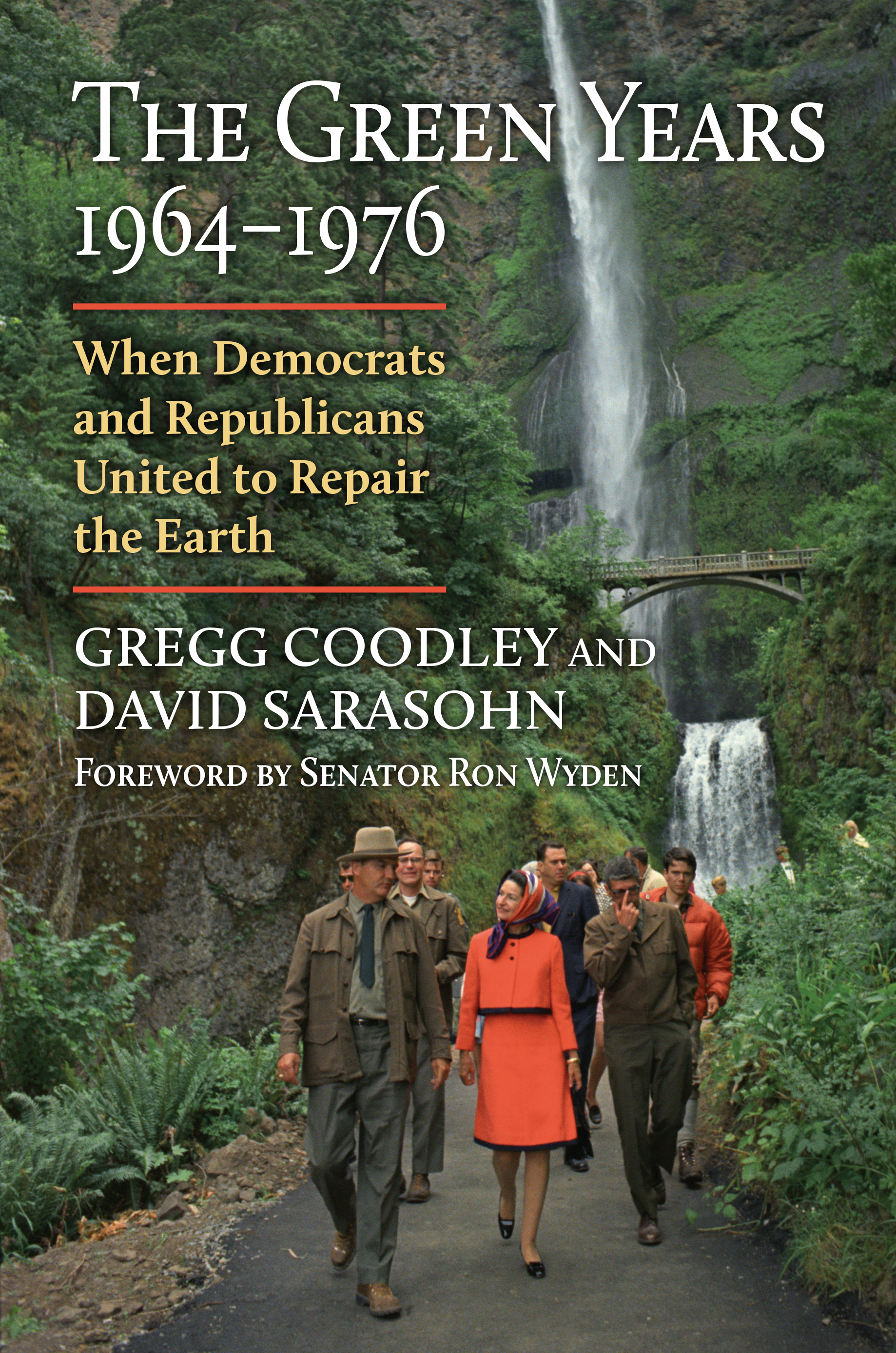
When Democrats and Republicans united to repair the Earth

H-FedHist recently published a review by Bart Elmore (recent recipient of the Dan David Prize) of Gregg Coodley and David Sarasohn's The Green Years, 1964-1976: When Democrats and Republicans United to Repair the Earth (U. Press of Kansas, 2021). Elmore writes:

Building on the work of numerous environmental historians—including Robert Gottlieb, Martin V. Melosi, Carolyn Merchant, Roderick Nash, Adam Rome, and Paul Sutter, among many others—Coodley and Sarasohn offer here an exhaustive play-by-play account of the legislative battles between 1964 and 1976 that led to the passage of some of the most important environmental laws in the United States. The central takeaway of this book is that though Democrats controlled Congress throughout these years, “all environmental laws passed from 1964 to 1976 commanded huge bipartisan support” (p. 257). Coodley and Sarasohn explore how political compromises formed to yield environmental laws, like the Clean Water Act of 1972 or the Toxic Substances Control Act of 1976, but also save room for concluding chapters that discuss the factors that led Republican Party members away from supporting environmental legislation in the 1980s and beyond.

*****

An important point of emphasis in the section on the late 1960s and early 1970s is that though Nixon was never personally passionate about environmental issues—he once “walked on the beach in wingtips,” quip Coodley and Sarasohn— key members of Nixon’s staff, especially Pacific Northwesterner John Ehrlichman and Council of Environmental Quality adviser Russell Train, were major proponents of big legislation designed to preserve and protect America’s wildlands, waters, and natural resources (p. 4). The central message here is that Nixon’s impressive environmental legacy—which included the signing of the National Environmental Policy Act in 1970, creating the EPA the same year, and supporting the Clean Air Act and the Endangered Species Act of 1973—was largely a product of Nixon’s calculating desire to maximize political capital by supporting signature legislation that had widening popular support from constituencies on both sides of the political aisle.

But Coodley and Sarasohn are careful to point out that Nixon’s willingness to push for environmental laws did not last forever. The turning point in the book is the winter of 1971 and 1972 where Nixon began to express serious concern that he would soon face major backlash from pro-industry voters if he continued to support stiff environmental regulations. “I have an uneasy feeling that perhaps we are doing too much,” he wrote his chief of staff, H. R. Haldeman, in February 1971. “Just keep me out of trouble on environmental issues,” he told Ehrlichman around the same time (p. 142). Nevertheless, despite Nixon’s waning interest in environmental issues, Republican members of Congress continued to find common ground with Democratic colleagues even as the toxic political bitterness of the Watergate scandal embroiled the nation. 

The review goes on to discuss the book's treatment of the post-Nixon years, as well. 

Thursday, March 3, 2022

Yellowstone at 150

Anna Price of the Library of Congress's In Custodia Legis recently posted on the 150th anniversary of the creation of Yellowstone National Park, the US's first. Price goes through the legislative history of the statute creating the park, as well as some of the legal issues that arose, including American Indian treaty rights and potential conflicts with settlers claiming preemption and homesteading rights. The latter issue, as the blog points out, also arose in the context of Yosemite Park in the 1872 US Supreme Court Case of Hutchings v Low (a.k.a. The Yosemite Valley Case).

poster designed by Don C. Powell (LOC)

Thursday, December 31, 2020

Clean Air Act turns 50

Dan Farber recently posted on the subject at Legal Planet. Here's part of what he had to say:

No doubt we could design a more effective and efficient regulatory scheme if we were start over. But the Clean Air Act has nonetheless had a major impact.  Here’s what EPA has to say on the subject  — and remember, this is from the Trump EPA, which is no fan of regulation:

  • Experience with the Clean Air Act since 1970 has shown that protecting public health and building the economy can go hand in hand.

  • Clean Air Act programs have lowered levels of six common pollutants — particles, ozone, lead, carbon monoxide, nitrogen dioxide and sulfur dioxide — as well as numerous toxic pollutants.

  • From 1970 to 2017, aggregate national emissions of the six common pollutants alone dropped an average of 73 percent while gross domestic product grew by 324 percent. This progress reflects efforts by state, local and tribal governments; EPA; private sector companies; environmental groups and others.

  • The emissions reductions have led to dramatic improvements in the quality of the air that we breathe. Between 1990 and 2017, national concentrations of air pollutants improved over 75% for lead, carbon monoxide, and sulfur dioxide; 56% for nitrogen dioxide (annual); and 22% for ozone. Particulate concentrations improved more than a third between 2000, when trends data begins for ultra-fine particles, and 2015.

For more on the history of the Act, see here


Friday, December 11, 2020

Climate change and the US Clean Air Act

President Nixon signs the Clean Air Act of 1970
Richard Revesz recently posted a piece on climate change regulation, "Bostock and the End of the Climate Change Double Standard", forthcoming in the Columbia Journal of Environmental Law. The abstract explains that the article "performs a deep dive into the legislative materials surrounding the enactment of the Clean Air Act of 1970. After uncovering a treasure trove of sources that had not previously been part of the public discourse, it shows how, under the interpretative approach of each of the three opinions [in the US Supreme Court decision of Bostock v. Clayton County (2020)], greenhouse gases are unquestionably pollutants for the purposes of the Clean Air Act."

The article goes on to argue that

Despite the abundance of legislative history demonstrating Congress’ awareness of and concern about climate change, much of the evidence was not brought to bear in arguments in support of the Act’s authority to regulate greenhouse gases.... The analysis of the legislative history undertaken here, therefore, is largely new to the dialogue surrounding the Clean Air Act’s authority to regulate greenhouse gases, and provides considerable evidence of the scope of Congress’ awareness of issues involving global climate change preceding at the time of the passage of the Act.

*****

Despite the lack of virtually any discourse surrounding the references to climate change in the legislative history of the Clean Air Act of 1970, the legislative materials... provide considerable evidence that Congress understood and was concerned about issues surrounding climate change during the time of the Act’s debate and passing. 

The article goes on to detail the many statements and reports regarding climate change in general and global warming in particular that were part of the legislative history of the 1970 Clean Air Act Amendments. 

Thursday, July 23, 2020

Control of outdoor advertising

The Historical Journal recently published James Greenhalgh's "The Control of Outdoor Advertising, Amenity, and Urban Governance in Britain, 1893–1962". The abstract:
This article examines the control of outdoor advertising in Britain, tracking its development as a mirror of the practices of spatial governance. It evidences both a largely forgotten, yet radical change in the urban environment, whilst also functioning as a lens through which we might examine local government's role in driving change in the visual environment of cities and towns. The article argues that, despite important early work by preservationist organizations, local corporations and councils were the principal drivers of legislation, altering attitudes in central government that ultimately led to stringent control of outdoor advertising in urban space. Beginning in the nineteenth century, but coming to the fore during the interwar period, corporations and councils pushed for ever greater controls over the size and siting of billboards, hoardings, and posters. In doing so, they deployed a language of amenity, and conjured with seemingly social democratic notions of citizens’ rights to push their agenda. The study is thus revealing of the ways in which town planning, patterns of holistic control in the visual environment, and the philosophy of urban modernism shaped even the most mundane, extant urban areas and left a lasting impression on the urban landscape.

Thursday, October 17, 2019

NEPA and executive power

During these days of executive/legislative tension in the US, the Journal of Policy History recently published John Hart's "The National Environmental Policy Act and the Battle for Control of Environmental Policy". The abstract:
In 1969, a public debate between President Nixon and Congress took place during the legislative passage of the National Environmental Policy Act and centered on two very different and competing conceptions of how presidential advice should be organized in the Executive Office of the President. It focused on the proposed establishment of the Council on Environmental Quality. The outcome of the ensuing battle represented a complete victory for congressional interests against the expressed wishes of the president. The nature of the debate has been overlooked in the literature on the presidency, but it highlights fundamental issues about agency design and presidential control of the institutional presidency. It also highlights broader concerns about the degree of congressional involvement in shaping the Executive Office of the President.
"New council on environment," Michigan Daily, January 30, 1970

Sunday, September 8, 2019

Molecular bureaucracy

The latest issue of Environmental History has an article by Evan Hepler-Smith, "Molecular Bureaucracy: Toxicological Information and Environmental Protection". The abstract:
Legal and political claims about environmental chemicals typically address such substances on a molecule-by-molecule basis. This article argues that this approach is not determined solely by the nature of chemicals. Rather, it is the product of legal structures, administrative procedures, regulatory lists, information systems, and nomenclature conventions, which I collectively term “molecular bureaucracy.” This article traces the development of molecular bureaucracy, a global framework of environmental governance grounded in American regulatory infrastructure, and its political and environmental consequences. It does so by following the history of per- and polyfluoroalkyl substances, synthetic chemicals in widespread use since the 1950s whose toxicity has become a prominent subject of research and public concern since the late 1990s. Molecular bureaucracy originated in a classification system based on molecular identity developed to make chemical information accessible to the late nineteenth-century synthetic chemicals industry. It came to structure environmental law and politics through, first, the efforts of 1960s US policy-makers to render toxic hazards subject to government control through computer-based information coordination and, second, a vision of chemical holism within the nascent US Environmental Protection Agency and the Toxic Substances Control Act, which sought to accommodate the global environment to rational administration by aggregating diverse toxic hazards and reframing them as abstract chemical substances. The history of molecular bureaucracy offers valuable insights for present-day efforts to ground toxic substances scholarship and politics in alternative conceptions of environmental chemicals.
(Chemická informatika)

Friday, April 19, 2019

LBJ's Green Great Society and environmental law

Dan Farber recently posted at Legal Planet on the environmental aspects US President Lyndon B. Johnson's "Great Society". From the post:
When he announced the Great Society in a commencement speech at the University of Michigan, Johnson gave the environment a leading place. He began his May 1964 speech with the plight of American cities, where he decried “the decay of the centers and the despoiling of the suburbs.” Then he turned to the environment: “The water we drink, the food we eat, the very air that we breathe, are threatened with pollution. Our parks are overcrowded, our seashores overburdened. Green fields and dense forests are disappearing.” He added, “For once the battle is lost, once our natural splendor is destroyed, it can never be recaptured. And once man can no longer walk with beauty or wonder at nature his spirit will wither and his sustenance be wasted.”
Johnson’s Presidency was accompanied by a surge of environmental laws. Here are some of the laws he signed:
1963 The Clean Air Act
1964 The Pesticide Control Bill
The Water Quality Act
The Wilderness Act
1965 The Water Resource Planning Act
The Water and Sanitation Systems in Rural Areas Bill
The Solid Waste Disposal Bill
The Safe Water Conservation Act
1966 The Air Quality Act
National Historic Preservation Act
Endangered Species Act
1967 The National Water Commission
Wild and Scenic Rivers
Wetlands Preservation Bill
Many of these laws are remembered today only as the preludes to the stronger laws that followed in the 1970s. But these Johnson-era laws provided the foundation for that later legislation, and they set the precedent for vigorous federal protection of the environment.
For a different list of environmental laws signed by LBJ, see here.

Monday, February 25, 2019

The Wild and Scenic Rivers Act at 50

John Day River, Oregon
Michael Blumm and Max Yoklic recently posted "The Wild and Scenic Rivers Act at 50: Overlooked Watershed Protection". The abstract:
The Wild and Scenic Rivers Act (WSRA) marked its fiftieth anniversary in 2018 without much fanfare. The WSRA has been somewhat overshadowed by the Wilderness Act, which preceded it by four years, and by the National Environmental Policy Act and the pollution control statutes which followed in the 1970s. But the WSRA was a significant conservation achievement, has now extended its protections to over 200 rivers, and has the potential to provide watershed protection to many more in the future. This article explains the statute and its implementation over the last half-century as well as a number of challenges to fulfilling its laudable goals of protecting free-flowing rivers, their water quality, and their “outstandingly remarkable values.” We make a number of suggestions to the managing agencies and to Congress if the WSRA’s achievements over the next half-century are to match the last fifty years, including reviving congressional interest in study rivers, updating managing agencies’ river plans to focus on non-federal lands within river corridors, and ensuring that those river plans provide the watershed protection Congress envisioned when it included a significant amount of riparian land within WSRA river corridors. We also call for a new emphasis on rivers that should be studied for their restoration potential and for more states to take advantage of the statute’s unusual pathway for state-designated rivers to gain WSRA protections.

Monday, January 28, 2019

The Santa Barbara oil spill

Richard Frank posted yesterday at Legal Planet on the 50th anniversary of the Santa Barbara oil spill. Some excerpts:
In many ways, however, the January 1969 Santa Barbara spill remains the most consequential and transformative environmental disaster in American history.  That’s true for several related reasons.  First, it was the inaugural such environmental disaster captured and broadcast into millions of U.S. households on the evening news.  For weeks, the major TV networks provided gripping, daily accounts of the biological damage and adverse economic effects produced by the Platform A blowout.  And that had a profound effect on the national psyche, with televised footage of dead and dying animals, fouled beaches and oil-saturated ocean waters underscoring in the most stark way the myriad costs associated with oil and gas development in coastal waters.
Second, the Santa Barbara oil spill provoked a strong and immediate response from government leaders.  Local officials complained bitterly to the media and public about the lack of adequate environmental controls and oil spill response efforts, noting presciently that the federal government that had issued the oil and gas leases–thereby earning substantial royalties from the oil companies’ offshore development activities–had an inherent conflict of interest when it came to regulatory oversight of those same activities.  Federal officials had a more muted reaction to the spill: President Richard Nixon visited the area to view the spill and cleanup efforts on March 21st, telling the assembled crowd, “…the Santa Barbara incident has frankly touched the conscience of the American people.”  But on April 1st, a hastily-adopted, temporary federal drilling ban was lifted, and oil and gas development in federal waters resumed off the California coast.
Longer term, however, the Santa Barbara spill would have a direct and positive effect on American environmental policy and law.  Later that year, Congress would enact the National Environmental Policy Act (also a half century old this year).  And NEPA was but the first in a torrent of environmental legislation passed by Congress over the next decade–including the Clean Air Act, Clean Water Act and Endangered Species Act–that to this day remains the basic framework of federal environmental law.
*****
The Santa Barbara oil spill also catalyzed a state government response that quickly made California a national and international leader when it comes to environmental policy and law.  In the immediate wake of the disaster, the Republican-dominated California Legislature created an interim Committee on Environmental Quality, directing it to develop recommendations for state environmental legislation.  The most important outgrowth of that initiative was passage in 1970 of the California Environmental Quality Act; modeled on but significantly stronger than NEPA; CEQA remains California’s most important, cross-cutting environmental law, as well as the most powerful “little NEPA” statute in the nation.  And when the California Legislature balked at passing a law specifically designed to prevent ocean and coastal damage exemplified by the Santa Barbara oil spill, state voters responded by enacting an initiative measure in 1972 creating the California Coastal Commission and the most powerful system of coastal regulation and preservation in the nation. 

Wednesday, January 9, 2019

The interplay of case law and regulations

Dave Owen posted had this interesting thought this week at Environmental Law Prof Blog, regarding a recent discussion on canonical environmental law cases:
The idea of a canonical environmental law case might be an oxymoron.  After all, with a few constitutional law exceptions like Lujan, most classic environmental law cases interpret statutes, which generally means the case is less important than the statute, which suggests, in turn, that the statutes are really the canon.  But that's kind of boring; if we agree that the environmental law canon is the Clean Air Act, the Clean Water Act, RCRA, and so on, that makes our field sound dull in comparison to fields where cases really have defined the law.  So perhaps, if a canon, to speak metaphorically, includes the giant trees within a forest of law, we should treat the underlying statutory and constitutional framework as the soil out of which those trees grow.
But even if my strained metaphor works, that still doesn't explain why the canon should involve cases.  Cases are good teaching devices, and they do matter, but they're badly overrated.  In many areas of environmental law, regulations have much more reach and importance.  So perhaps the question we professors really should be debating, as we procrastinate class preparation and the final stages of grading, is which environmental regulations make up the field's canon. 
I agree with Dave's point that statutes and regulations are much more important in environmental law than case law (and that this is a challenge in teaching the field!). However, over time I have become increasingly aware of how important litigation has been historically in spurring and shaping environmental regulation, a point made by (among others) Karl Boyd Brooks in Before Earth Day.

I recently had a conversation with an Israeli (non-lawyer) environmental professional who had been involved in drafting noise regulations in the 1980s, who explained to me that they were designed to reflect the guidelines laid out by an Israeli Supreme Court nuisance case in the 1970s. From my lawyer's perspective this made no sense, as the case was decided according to traditional principles of nuisance law, which should have been largely irrelevant to the noise regulations, enacted under statute. But to the engineers and scientists working on the regulations, the rules laid out by the court seemed to represent some kind of eternal truth, one they were bound to give expression to in the regulations. I think that this type of thing has happened quite a lot.