Showing posts with label corporations. Show all posts

Tuesday, March 14, 2023

The history of Sierra Club v Morton

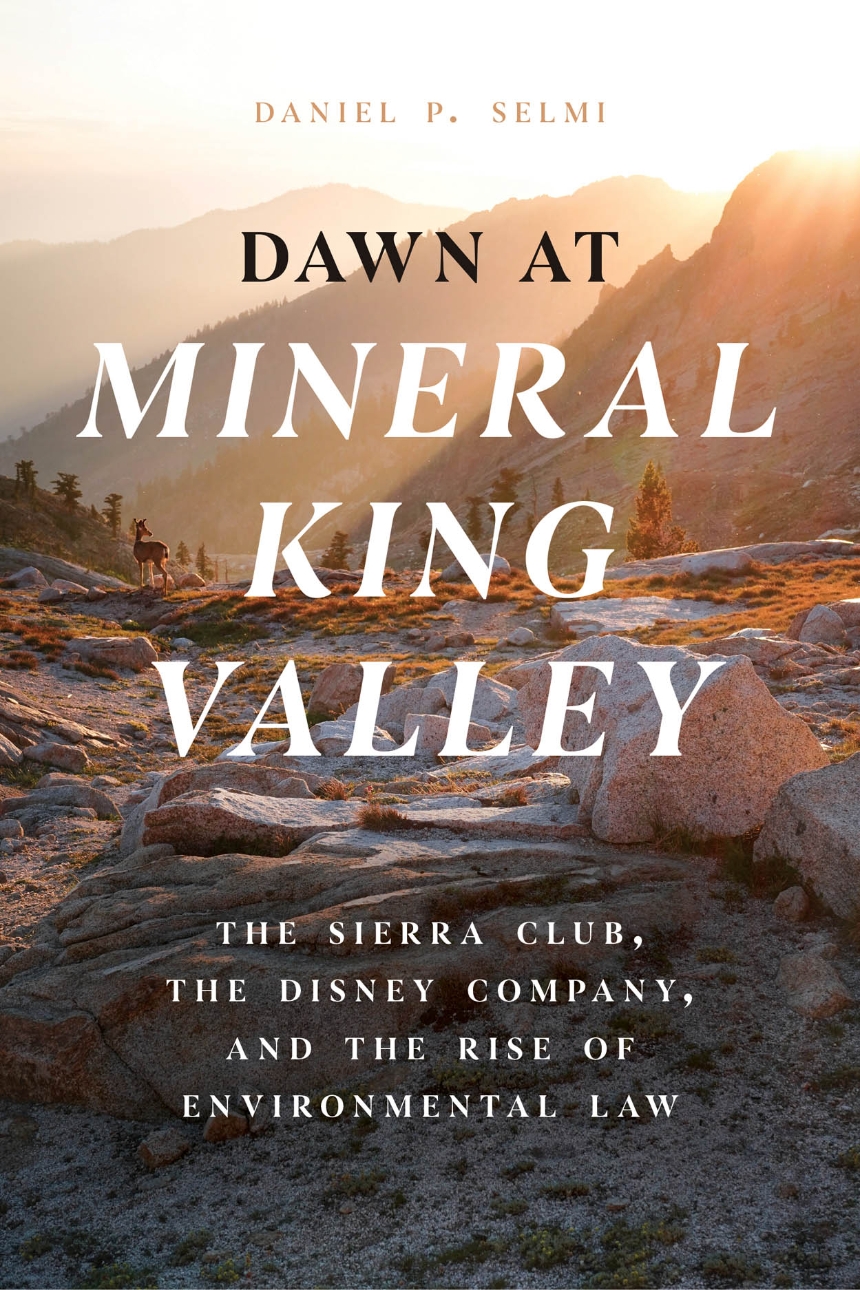
Jotwell recently ran a review by Angela Fernandez of Daniel P. Selmi's Dawn at Mineral King Valley: The Sierra Club, the Disney Company, and the Rise of Environmental Law (U Chicago Press, 2022). Fernandez writes:
Sierra Club v. Morton [known to some as the "Should Trees Have Standing" case - DS] is a seminal 1972 U.S. Supreme Court case on standing, the essential procedural question of who has a legal right to initiate a lawsuit based on a plaintiff’s alleged injury traceable to a defendant’s unlawful conduct. Daniel Selmi’s new book provides a deep dive into the history and context of this famous case, showing that it was about much more than the majority decision’s denial of the Sierra Club’s standing. And it was not, as some have claimed, launched as a test case to establish standing for environmental groups or the entities themselves, the possibility William O. Douglas went into in his famous dissent dear to the hearts of those interested in the Rights of Nature.
*****

Despite the fact that Selmi seeks to de-center standing in his history of the case, or at least destabilize the understanding that standing was what Sierra Club v. Morton was always meant to be about, he presents an excellent and thorough discussion of the issue. Selmi explains that the Sierra Club insisted on its general interest in a case that would impact the environment of concern to its members rather than Club members’ actual use of the area, which the Supreme Court indicated it would have accepted. As Justice White reportedly put it: “Why didn’t the Sierra Club have one goddamn member walk through the park and then there would have been standing to sue.” (P. 204.)

Thursday, March 2, 2023

Weak states and the commons

Vincent Geloso and FĂ©lix Foucher-Paquin have posted "Weak States and the Commons: Fisheries and Economic Development in the Gaspesian Peninsula circa 1830". The abstract:

The inefficiencies of common property fisheries are well-known to economists. To avoid over-exploitation, they propose multiple forms of government solutions like taxes, quotas and the enforcement of property rights regimes designed to avoid over-harvesting. However, can there be efficient arrangements under statelessness or in the presence of weak states? One such example is the Gaspesian Peninsula (in the Canadian province of Quebec) during the first half of the 19th century. There, a single firm (the Charles Robin Company) came to dominate the market and it was able to effectively to restrict entry. In this paper, we unveil that it was able to do so by reducing the prices of imported goods that it would give to local fishermen in exchange for a part of their catch. This had the effect of deterring fishermen to contract with other merchants as well as deterring other merchants from entering the market. It also had the effect of making the region, contrary to what historians depict, richer than most regions of Canada at the time. We take this as an example of the ability to deal with commons problems in the presence of weak states.

Alexander Henderson, Causapscal River (1872-1875)

Friday, November 3, 2017

Postwar America's greatest environmentalist

More on working-class environmentalism and the law (see, most recently, here): Jacobin recently ran a piece by Connor Kilpatrick claiming that "Postwar America’s greatest environmentalist was a labor leader". There's a lot here also about politics, religion, climate skepticism and more. Some excerpts:
Today, the AFL-CIO lobbies Congress to pass the Keystone XL pipeline while noted NASA climate scientist James Hansen, one of the first to link global warming to fossil fuels, is repeatedly arrested for protesting such projects. And while in 2017, the idea that the interests between wonky environmentalists and jobs-focused trade unionists would diverge seems like common sense, it’s only because the bad guys won.
But it wasn’t a preordained victory. For nearly a decade in the 1960s and ’70s, environmentalism seemed to be on the cusp of a popular reckoning against the powers of capital. And it found an ally in the labor movement which, for a few years, looked like it might be able to not only cling to life but find a way back into the heart of American society.
[Tony] Mazzocchi and his union, the Oil, Chemical and Atomic Workers International (OCAW), were the primary muscle behind the 1970 Occupational Safety and Health Act (OSHA), signed into law by Richard Nixon. Looking back on that victory, which mobilized both labor and the burgeoning environmental movement, Mazzocchi said: “We have demonstrated that an unpopular idea can be generated into a powerful political program that’ll reignite the consciousness of the American people.”

Sunday, October 15, 2017

Colorado water law yet again

Colorado water law continues to spur scholarship. The recent issue of Environmental History has a review by Michael Weeks of  Robert Crifasi's A Land Made from Water: Appropriation and the Evolution of Colorado’s Landscape, Ditches, and Water Institutions (University Press of Colorado, 2015). From the review:
While the book presents no definitive argument, Crifasi is skeptical of claims that water management in the West has been synonymous with concentrated power. Rather, his often meandering narrative suggests that water developed roughly along practical and evolutionary lines, with users and institutions responding logically to changing water needs.
Most of the text centers on the period from Colorado’s 1858 Gold Rush to the early twentieth century. Heavy doses of environmental determinism appear throughout. Crifasi argues that failed adventures in ditchdigging and the need to move water across property lines pushed farmers to enlist the aid of the territory/state of Colorado to form water districts and employ water commissioners and state engineers to oversee water management. Shared need propelled farmers to pool their resources to form mutual irrigation companies. The evolution of Colorado’s Doctrine of Prior Appropriation was a commonsense response to shared need that enabled users to quantify and prioritize water rights as well as prevent property owners from hoarding the resource. In Crifasi’s telling, even corporate attempts to monopolize and privatize water in the late nineteenth century were a natural part of the region’s agricultural evolution since concentrated capital propelled the development of sophisticated canals that could bring uplands into production.
One of Crifasi’s most intriguing, yet underdeveloped sections addresses water measurement and distribution. Employing William Cronon (Nature’s Metropolis, 1991), he argues that for water to be fairly distributed in an arid climate, it had to become a commodity that could be broken down into discrete measurable units. This meant water users had to translate malleable units such as the miner’s inch into standardized ones such as cubic feet per second. It also explains why users employed Colorado State Water Engineers to monitor stream measurements, water priority, and the carrying capacities of canals and ditches, as well as why the state agricultural college produced some of the nation’s first irrigation engineers. With a fine attention to detail, Crifasi then shows how water, once commodified, enabled irrigation companies to call for water releases based on their shareholders’ water rights, the priority of their holdings, and the availability of the resource.
Within these strengths of the book lies two of its weaknesses.

Thursday, July 20, 2017

Dutch drinking water

David Zetland and Bene Colenbrander recently posted "The Evolution of the Dutch Drinking Water Sector". The abstract:
Dutch drinking water companies (DWCs) have brought more water of better quality to more people over the past 160 years, but their institutional environment has changed with social priorities. We divide these changes into four eras in which an initial solution leads to a new constraint that forces a change in priorities and thus DWC actions. The first era begins around 1850 when polluted common pool water attracts sellers of drinking water as a private good. Priorities changed around 1900 as the government pushed for a network expansion that would bring drinking water services to all as a public good. The third era began around 1950 as strains on common-pool budgets and water supplies shifted the focus to rationalization and efficiency. The fourth and current era began around 1970 with DWCs being asked to restore ecosystems and play a larger role in the community. These shifts demonstrate how the path towards clean, safe drinking water may twist and turn as new opportunities eclipse past successes and changing priorities shift the relative costs and benefits of different actions.

Monday, October 24, 2016

All the elements of tragedy were there

(courtesy Old Merthyr Tydfil)
Friday marked the 50th anniversary of the horrific Aberfan disaster, in which a mountain of coal waste buried part of the Welsh town, killing 28 adults and 116 children. (The title of this post is a variation on the refrain from Keidrych Rhys's poem, "Aberfan: Under the Arc Lights", quoted by Prince Charles at the commemoration ceremony.) As the New York Times reports:
At the inquest, when a child’s cause of death was listed as asphyxia and multiple injuries, one father famously said: “No, sir. Buried alive by the National Coal Board. That is what I want to see on the record.”
Iain McLean has done some interesting work on the policy lessons of the disaster, including some legal ones:
The legal framework for corporate manslaughter already existed in 1966. The managing director of a local firm had been prosecuted in 1965 for allegedly instructing a welder to cut up a disused river bridge starting in the middle. The welder had done so and was drowned when the bridge collapsed. The prosecution failed because it could not prove that it was the managing director who had given the order. But two of the counsel who subsequently appeared before the Aberfan Tribunal had also appeared in that case, with reversed roles. The prosecuting counsel in 1965 was counsel for the National Coal Board at the tribunal. The defence counsel in 1965 was counsel for the teachers' unions (who had lost five of their members) at the tribunal. Why then did they not consider the possibility of prosecution of the NCB? Partly because the idea was too mind-stretching; partly because it is always difficult, in a large organisation, to prove that a directing mind (mens rea) was behind a piece of criminal negligence. The Law Commission recommended in 1996 that a specific offence of corporate killing should be introduced. The Labour Party accepted this proposal and put it into its 1997 General Election manifesto. It still has not been implemented. This may be ascribed to corporate lobbying....

Monday, February 1, 2016

The Colorado Doctrine in business history


I'm pleased that my book, The Colorado Doctrine: Water Rights, Corporations, and Distributive Justice on the American Frontier (Yale UP, 2012) continues to get reviewed. The latest is one by Todd Holmes in Business History Review. Holmes sums up the book well:
The book begins with an in-depth investigation of the mining laws that emerged in the Colorado territory following the 1859 discovery of gold. Here Schorr sets an impressive tone for the following chapters, as he seamlessly interweaves his legal and historical training in research and analysis. Drawing on ninety-one mining codes from seventy-eight districts, Schorr demonstrates how the principle of equality, modified by the rule of sufficiency, limited mining claims in both size and ownership. And as he shows, this Lockean principle of equal access soon spread from land to water. From Colorado's territorial laws and constitution to the 1882 Coffin decision that etched the young state into legal history, the water monopoly bestowed in common law to riparian lands was consistently undercut and, ultimately, abolished in favor of the broader distribution achieved through the system of prior appropriation (first in time, first in right). In the final two chapters, Schorr charts how the principle of distributive justice continued to influence Colorado's water laws in the decades that followed; in the process, he squarely challenges the varying interpretations of corporate greed and market efficiency often ascribed to the law of appropriation. Contrary to Gilded Age stereotypes of corporations running amok in the West, Colorado courts consistently ruled in favor of small farmers and placed heavy restrictions on the size, access, and contracts of irrigation companies. Such efforts of fair distribution, however, did not make for efficient markets—a fact that Schorr details in his chapter on the beneficial use clause and the diminishing productivity inherent in its restriction on water right transfers.
A couple of the earlier reviews were covered here and here; Google Scholar has links to a lot more.

Saturday, November 21, 2015

Garrett Hobart

According to Michael McGuire at This Day in Water History, today is the 116th anniversary of US Vice President Garrett Hobart's death. McGuire writes:
While much is known about Hobart’s role as vice president (1897-99), his role in the formation of private water companies and his support of these companies through legislation is less well known. Hobart was elected to the New Jersey Assembly and Senate during the early part of his career. During the 1870s and 1880s there was a lot of legislative activity that appeared to be for the benefit of private water companies.
In 1881, one bill that was introduced by Garret A. Hobart, then a state senator, was designed to give private water companies the power to acquire and distribute water resources independent of municipal or state control.  While not explicitly stated, the bill purportedly had a single intention of giving one company, the Passaic Water Company, more power to access water supplies to prevent water shortages at the factories of Paterson which were forced to idle production in the summer season.
The bill was not successful, which was undoubtedly due in part to the widespread suspicion that the bill would grant powers to companies to export New Jersey water supplies to New York.  “[New York speculators] have been attracted by the magnificence and extent of New Jersey’s water-shed, and by the sweetness and purity of its waters.  Last year’s scheme was said to be intended to enable the tapping of New Jersey’s hills for the New York supply.”
Hobart was a resident of Paterson, New Jersey for most of his life. In 1885, Garret A. Hobart joined the Board of the Passaic Water Company and two years later was elected President of the Company.  Hobart was described in one source as representing a syndicate of New York capitalists. The company had been supplying Paterson and the surrounding area since 1857.
The East Jersey Water Company was formed on August 1, 1889 for the stated purpose of supplying Newark, New Jersey with a safe water supply.  All of the men who were shareholders of the new company (including Hobart) were identified with the Lehigh Valley Railroad Company. However, the company’s vision extended far beyond a water supply for Newark. The company began as a confidential syndicate composed of businessmen who were interested in executing grand plans for water supply in northern New Jersey and New York City. Nothing came of these grand plans.
For more, including omitted citations, see the blog.

Sunday, October 11, 2015

Oil and gas interests, government, and legal scholarship

Over on Jotwell, Ezra Rosser recently gave a glowing review to Oliver Houck's recent article, "The Reckoning: Oil and Gas Development in the Louisiana Coastal Zone", writing that it "is easily one of the best articles that I have read in the last ten years and should be required reading regardless of one’s specialty". There's no abstract for the article, but I'll quote at length from the review, which not only outlines the environmental-legal-historical argument, but also has some valuable thoughts on legal scholarship:
Sam Kittner, State Capitol of La. and Exxon Explosion, December 24, 1989 (LOC)
Professor Houck convincingly argues that the state government and oil and gas interests are seen as essentially the same, so much so that Houck refers to them collectively simply as “the company.” Louisiana actively courted oil and natural gas development to such an extent that the very state entities tasked with protecting the coastal zone participated in the promotion of development above all else, even above reason. As the article shows, it would be inaccurate to say that the state became the puppet of corporate interests or that it rubber-stamped the web of canals that destroyed the wetlands because nearly every Louisiana institution was and is invested in the rush to please big energy. Problematically, the list of those involved in opening up the wetlands, in denying the connection between development and destruction, and in attempting to shift the restoration costs away from oil and gas companies and unto the American taxpayer includes not only the ironically named Louisiana Department of Natural Resources, which time and again saw itself as an industry partner, but also parish governments, state-university academics and centers, politicians at the federal, state, and local levels, and even major environmental groups. As Professor Houck shows, no part of the Louisiana coast has been spared from devastation caused by “the company,” yet “the company” is unwilling to take responsibility and has largely succeeded in avoiding the costs associated with such destruction.
Tamara Lotner Lev, a doctoral student writing (under my supervision) on environmental regulation of offshore oil and gas drilling, has come to a similar conclusion about the role of Israeli regulators, calling it "reverse capture".

Rosser also sees Houck's article as a model piece of scholarship:

Saturday, September 6, 2014

Public utility, past and future

William Boyd recently posted "Public Utility and the Low Carbon Future", in which an interesting historical survey of the concept of public utility in Progressive, American thought serves as the backdrop for discussion of future climate policy. The historical part of the article connects the law of utility regulation to the thought of the American Legal Realists, institutional economists, and pragmatists. From the abstract:
This Article argues that a revitalized and expanded notion of public utility has a critical role to play in efforts to decarbonize the power sector in the United States.
PECO Delaware River Power Plant
In making this argument, the Article looks back to an earlier, more expansive concept of public utility as articulated by Progressives, legal realists, and institutional economists in the early twentieth century. This earlier concept of public utility contains valuable insights for dealing with the current challenges of decarbonization. The Article shows how this broader concept of public utility was substantially diminished by a confluence of external challenges and a sustained intellectual assault mounted by economists and lawyers starting in the 1960s. The narrowed understanding of public utility that resulted, it is argued, has distorted our views regarding the role of markets and disruptive technologies in the sector. In fact, basic public utility principles continue to govern a significant amount of activity across the power sector, including in both wholesale and retail electricity markets. And there are important unrealized possibilities embedded within the public utility concept that hold considerable promise for reforming current regulatory and business models in the face of rapid technological change and growing decarbonization imperatives.
Such principles and possibilities are particularly important in ongoing efforts to increase renewable energy and finance large low-carbon generation projects. They also hold great promise for ongoing efforts to plan for and optimize the integration of increasingly large amounts of distributed energy resources such as rooftop solar, demand response, and energy storage. Indeed, when one looks at the overall scale, complexity, and sequencing of investments needed to decarbonize the power sector over the coming decades (however it comes to be organized), it is clear that the broad concept of public utility offers essential tools for planning and coordinating such investments over the long time horizons contemplated and for managing a system of increasing complexity.

Tuesday, September 2, 2014

Environmental-legal conflicts in the western Mediterranean mining industry – Portugal

[We have today a guest post from Paulo Eduardo Guimarães, Senior Lecturer in Contemporary History at the University of Évora and researcher at NICPRI (Research Unit on Political Science and International Relations). Paulo presented a paper on this topic at the recent World Congress on Environmental History at Guimarães.]

The growth in the demand for sulphur and copper by the British world economy was directly responsible for the spurt in the exploration of old mine deposits of pyrite ores beginning in the middle of the 19th century in the western Mediterranean. As consequence, the roasting of pyrites in blast furnaces or in open air ‘telleras’ in large scale operations led to conflicts with landowners, farmers, peasant communities, miners, and local populations affected by acid rain and sulphur smoke.

The old open pit mine of Sao Domingo (1958-1965), now full of acid waters
The violent incidents of Rio Tinto in 1888, when the Spanish army intervened to repress a peaceful demonstration against that pollution, killing about two hundred men and wounding an indeterminate number of other protesters, became the landmark of that conflict in the historiography of the western Mediterranean mining industry. However, violent reactions against modern mining industries were not exceptional in this part of the world. An account of these types of industrial conflicts in Portugal shows the emergence of popular violent reactions against mining operations due to environmental disruption. These included the occupation of mining fields, ‘Luddite’ actions (destruction of machinery, forests, and mining infrastructure), and sabotage in larger explorations located in the southern Alentejo province and in the mines of the Aveiro district.

The detailed analysis of each incident reveals a more complex picture than the label ‘peasant protest’ or ‘environmentalism of the poor’ suggests. Not only peasants and poor people were involved in collective actions against mining companies; landowners and farmers made use of legal instruments. Yet they were often unsuccessful in court, as the mining law favoured the foreign capitalist ventures. The use of ‘expropriation for public utility’ was a sword of Damocles hanging over these disputes, and the companies often used it.

Wednesday, July 9, 2014

Interest groups and environmental policy

Last year's Political Studies published an article by Andrew Cheon and Johannes Urpelainen, "How do Competing Interest Groups Influence Environmental Policy? The Case of Renewable Electricity in Industrialized Democracies, 1989–2007". The abstract:
lobbyists.jpgIn this article, we examine the effect of competing interest groups on environmental policy. We argue that the supporters of environmental policy should be the most influential in the absence of opposition, while the opposition's importance is maximized when the supporter coalition is strong. This highlights an important asymmetry between competing interest groups: supporters are decisive in the absence of opposition, while the opposition is only relevant if the supporters are already strong. We test the argument against data on renewable electricity generation in nineteen OECD countries, 1989–2007. Heavy industries have particularly strong incentives to oppose policies that support renewables, because heavy industries’ profitability depends on inexpensive electricity. We find that the supporter coalition has a positive effect on the growth of renewable electricity generation, but the positive effect diminishes with the strength of manufacturing. Moreover, heavy industry has a negative effect on the growth of renewable electricity generation and this effect increases with the strength of the supporter coalition.
Not very surprising conclusions.