Showing posts with label energy. Show all posts

Wednesday, February 16, 2022

Fossil fuels and Jim Crow

Dan Farber recently posted at Legal Planet on "Jim Crow and the Fossil Fuel Industry":

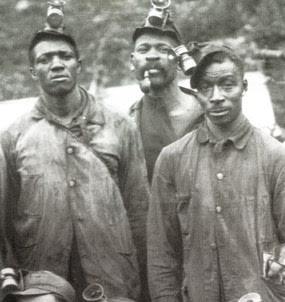
This being Black History Month, I thought it would be worthwhile looking at the fossil fuel industry’s racial history.  Given the historic concentration of the oil and coal industries in the South, it is no surprise to find that these industries have also been deeply entangled with Jim Crow and its legacy of discrimination.

The conclusion:

In sum, the racial history of the oil and gas industry seems to have been much worse [than that of the coal industry], associated with more virulent and blatant racism. Blacks were nearly excluded from the industry.  In contrast, blacks found jobs in the coal industry, but only at the bottom of the job ladder. Those bottom rungs were decimated by new technology. In the end, the result in both industries was much the same: a workforce largely empty of Black faces. 

Black miners at New River Gorge (NPS)
Wednesday, January 2, 2019

Climate science, history, and the law

Bill Kovarik recently posted at "Environmental history timeline" on a lawsuit against Exxon-Mobil, raising some interesting questions. Some highlights:
The lawsuit is based in part on an investigation by the Center for International Environmental Law which accused Exxon-Mobil Oil Corp. of working to dismiss climate change science and political action despite having had a scientific understanding of climate change “as early as” three or four decades ago, (or sometimes 1977, or 1968). The research grew into an “Exxon Knew” campaign. It was greeted with enthusiasm by environmentalists like Al Gore and Bill McKibben and with skepticism by Independent Petroleum Association of America and by Exxon-Mobil itself.
The key issue seems to be when Exxon knew climate change involved C02 from fossil fuels. Many of the Exxon Knew stories start along these lines: “In the 1960s, the American Petroleum Institute (and / or Exxon) made a troubling discovery.”
From an historical standpoint, the question ought to involve the broader context of scientific research. If API and Exxon researchers knew about climate change, what about the rest of the engineering and scientific community?
The fact is that the topic was a constant source of concern and research across the related scientific communities for a century and a half. Scientists concerned with climatology and glaciology and many associated geophysical sciences have studied climate change for generations. 
As seen here, the Washington Post carried an article May 4, 1953 on a Gilbert Plass paper at American Geophysical Union, quoting him specifically pointing to fossil fuel use as increasing climate warming.  Plass and other climatologists regularly published on these and related topics, with much of that generation’s research converged in the International Geophysical Year (1957-58).
Kovarik goes on to discuss many other scientists and others who warned about greenhouse gas induced climate change beginning in 1856.
So, clearly, Exxon knew, but so did everyone else.
In confining the discussion to Exxon’s own knowledge and actions, for example in a series of Inside Climate News articles, we have a legal strategy rather than an appreciation for the history of science. When we say “Exxon knew” as early as the 1970s or 80s, we ignore the long trail of scientific discovery beforehand, and we leave the field open to highly selective interpretations of trends.

Sunday, June 17, 2018

The source of disenfranchisement for rural Americans

Slate's Issac Chotiner recently interviewed Eliza Griswold on her new book, Amity and Prosperity: One Family and the Fracturing of America (Macmillan, 2018). In the interview (and presumably the book) Griswold displays a strong historical sensibility about the legal-environmental roots of some of America's (and hence the world's) current predicament. An excerpt:
Isaac Chotiner: What is it that is “fracturing” America?
Eliza Griswold: These days we are hearing so much about this rural/urban divide. What does that really mean? What is the source of disenfranchisement for rural Americans? Much of it stems from natural resources. Rural Americans have paid for the energy appetites of urban Americans for more than a century.
I think a lot people in urban America would hear that and say, “Well, the people who are voting for candidates who are less interested in environmental protections are coming from rural America, and the people who are voting the opposite way are coming from urban America.” What do you say to that?
The urban American understanding of how regulation plays out on the ground in rural America is woefully inadequate. First of all, we don’t understand how for more than a century in many places in Appalachia, rural Americans have had their land ruined, as well as their health and their communities, in a search for the natural resources that feed urban Americans.
On top of that, if you talk to farmers, if you talk to Appalachian farmers … First of all, none of them simply farm, they have two jobs. Often that second job has to do with resources. They are either coal miners or former steelworkers. But how regulation plays out in their life on a daily basis has to do with farming, and farm regulation has driven many small farms out of business.
So, there’s this huge double standard where, if you talk to a pork farmer in Amity, he’s going to tell you that he has to pay $100 every time the vet comes out to take his shots. And that he has to fence his stream and the cows can’t go into the water. And he can’t drive his tractor across the stream either. Yet for more than a century, extractive industry has been able to come in and do whatever it wants to do. Until finally, here’s oil and gas, here are frackers who are actually paying money for mineral leases. Who are urban Americans to come in and wag a finger and say, “You don’t have the right to make any money off your land.” They don’t even understand how regulation practically works on the ground.

Monday, May 21, 2018

Just price

Thomas Aquinas
(detail from Valle Romita Polyptych by Gentile da Fabriano (c. 1400))

William Boyd recently posted  "Just Price, Public Utility, and the Long History of Economic Regulation in America". The abstract:
This Essay investigates the history of “just price” and its influence on the concept and practice of public utility regulation in the United States. It begins with a discussion of the Scholastic understanding of just price and its relationship to commutative justice, with particular attention to the problem of coercion in economic exchange. The Essay then discusses the centrality of just price to broader ideas of moral economy and to economic thought and regulation in colonial America and the early United States. The heart of the Essay shows how the idea of just price influenced public utility regulation as it took shape during the late nineteenth and early twentieth centuries. As the Essay demonstrates, received understandings of just price were fundamental to the public utility idea and were at the heart of battles over the proper approach to utility valuation and rate regulation during the first half of the twentieth century. The Essay concludes with a discussion of efforts to restructure formerly regulated industries during the last quarter of the twentieth century, with particular attention to the challenges faced by the Federal Energy Regulatory Commission as it seeks to ensure that prices in restructured natural gas and electricity markets are just and reasonable. Although much of the Essay’s purpose is descriptive, several larger points emerge from this study. First, the history of just price reveals that relations of reciprocity and fairness in exchange are at the very core of the public utility idea. When seen from this perspective, public utility represents an important experiment in translating abstract principles of economic justice and fair pricing into working rules for governing key systems of provisioning in a modern industrial society. Second, the history of just price reminds us that prices are more than signals; that they are also relationships and that price relationships can be coercive. At root, the economics of just price is an economics of coercion and, as such, an economics that resonates quite strongly with efforts by Progressive lawyers, legal realists, and institutional economists to develop an approach to law and economics (and economic regulation) that would put coercion at its center. Third, the history of just price shows that competitive markets, when functioning properly, can be powerful instruments for protecting consumers and facilitating fairness in exchange. But it also underscores the importance of taking individual markets on their own terms and recognizing that some markets, and the mechanisms of price formation at their center, are more vulnerable to disruption and manipulation than standard economic models suggest. Finally, at the most general level, the history of just price reminds us that for a very long time—far longer than the lifespan of classical and neoclassical economics—ethical and social concerns have been intimately bound up with conceptions of economy, economic life, and the provision of necessities.

Saturday, December 2, 2017

US energy regulation

Hauling crude oil to a refinery in Casper, Wyoming, c. 1900
(Casper College Western History Center)
Dan Farber at Legal Planet posted the other day on how the US federal government's regulation of the energy sector goes back a while:
To hear some of the debate, you’d think that the Obama Administration breached some longstanding barrier that left energy policy to the states and the market. If there ever was such a barrier, it disappeared over a century ago, with the onset of World War I.  Ever since then, the federal government has been actively shaping energy production, distribution, and sale.  We wouldn’t have the oil industry or the coal industry we have today if the Feds hadn’t been involved.  That’s not to mention all the money the Feds poured into building dams for hydroelectric power. Putting aside hydro, efforts to move the nation away from reliance solely on fossil fuels dates back sixty years when Congress decided to promote the use of nuclear power.
Simply listing federal statutes is enough to show how pervasively the Feds have been involved. Here is a timeline of major federal actions with a sentence about what each one did. I’ve included only a couple of the Supreme Court decisions that have helped shape the law, and none of the major administrative actions, such as the Federal Energy Regulatory Commission’s (FERC’s) deregulation of wholesale electricity prices and revamping of power grid management. I’m also excluding environmental regulations, which obviously have had a substantial impact on the energy sector. Nevertheless, the number and scope of federal interventions is overwhelming:
1906.  Congress passes the Hepburn Act, which limited ownership of oil pipelines by oil producers.
The rest is at Legal Planet.

Thursday, October 19, 2017

Bevin Boys - WWII coal conscription

Bevin Boys report for duty in 1943 (Express)
The blog "ART and ARCHITECTURE, mainly" earlier this week had an interesting post on something I knew nothing about, despite my once-future career as a military historian. It seems that Britain conscripted nearly 50,000 men to work in its coal mines, in place of the military service, during the period 1943-48. From the blog:
Coal was essential for military production during WW2; somehow Britain had to match the quotas needed to keep fact­ories churn­ing out the munitions required at the front. And as Britain was unable to import coal in wartime, the production of coal from local mines had to be increased. But how? 36,000 miners were already cons­crip­t­ed for army duty and had left their collieries.
Ernest Bevin, wartime Minister of Labour and National Service and a former Trade Unionist, believed the short­age could be remedied by using conscripted men to fill the vacancies in the mines, keeping production at the rates requir­ed. In Dec 1943 he announced a scheme in Parliament. 
A ballot would take place to put a fixed perc­ent­age of cons­cript­ed men into the underground collieries rather than into the armed services. “We need 720,000 men continuously employed in this industry. This is where you boys come in. Our fighting men will not be able to achieve their purpose unless we get an adequate supply of coal.” Any refusal to comply with the Direction Order would result in a heavy fine and/or imprisonment under the Emergency Powers Act in force back then.
There's lots more on the story at the blog, worth a read.

Monday, August 21, 2017

Oil, competition, and Martians

The Public Domain Review recently posted (courtesy of archive.org) a fascinating and entertaining animated short from 1956 by the American Petroleum Institute, entitled "Destination Earth". As the Review explains:
Produced at the height of the Cold War, and made at the behest of the American Petroleum Institute (still the biggest lobby for the U.S. oil and gas industry), this great little promotional film from John Sutherland Studios champions not only the wonders of oil as might be expected, but also free-market capitalism. The surprisingly humorous cartoon tells the story of how the suspiciously Stalin-like leader of Mars, named Ogg, sends a rather calamity-prone citizen to Earth to find a better power source for his poorly-running “state limousine”. The exploring Martian, of course, lands in the United States and soon discovers the many and myriad delights of petroleum, and that, in contrast to his home planet, competition between companies is rife. His take-home lesson (and one drilled into the viewer on numerous occasions) is that “competing for the customer’s dollar” is key to the success of the oil industry and, of course, the thriving country as a whole. Delivering the news to Ogg back on Mars, the leader replies defiantly that “competition is downright un-Martian”, but the ordinary Martians are not to be deterred and soon rise up to overthrow Ogg and set up a thriving oil industry (and capitalist culture) of their own — the short ending with the slogan “destination unlimited” writ proudly across the screen.

Monday, October 24, 2016

All the elements of tragedy were there

(courtesy Old Merthyr Tydfil)
Friday marked the 50th anniversary of the horrific Aberfan disaster, in which a mountain of coal waste buried part of the Welsh town, killing 28 adults and 116 children. (The title of this post is a variation on the refrain from Keidrych Rhys's poem, "Aberfan: Under the Arc Lights", quoted by Prince Charles at the commemoration ceremony.) As the New York Times reports:
At the inquest, when a child’s cause of death was listed as asphyxia and multiple injuries, one father famously said: “No, sir. Buried alive by the National Coal Board. That is what I want to see on the record.”
Iain McLean has done some interesting work on the policy lessons of the disaster, including some legal ones:
The legal framework for corporate manslaughter already existed in 1966. The managing director of a local firm had been prosecuted in 1965 for allegedly instructing a welder to cut up a disused river bridge starting in the middle. The welder had done so and was drowned when the bridge collapsed. The prosecution failed because it could not prove that it was the managing director who had given the order. But two of the counsel who subsequently appeared before the Aberfan Tribunal had also appeared in that case, with reversed roles. The prosecuting counsel in 1965 was counsel for the National Coal Board at the tribunal. The defence counsel in 1965 was counsel for the teachers' unions (who had lost five of their members) at the tribunal. Why then did they not consider the possibility of prosecution of the NCB? Partly because the idea was too mind-stretching; partly because it is always difficult, in a large organisation, to prove that a directing mind (mens rea) was behind a piece of criminal negligence. The Law Commission recommended in 1996 that a specific offence of corporate killing should be introduced. The Labour Party accepted this proposal and put it into its 1997 General Election manifesto. It still has not been implemented. This may be ascribed to corporate lobbying....

Thursday, March 10, 2016

The Storm King controversy

The recent Environmental History has a review by Ted Steinberg of Robert Lifset's Power on the Hudson: Storm King Mountain and the Emergence of Modern American Environmentalism (U Pittsburgh Press, 2014). Steinberg writes:
Con Ed seemed to be cruising toward its goal of building the plant when Scenic Hudson, an environmental group formed in 1963 to stop the project, began reckoning with the full ecological impact of the hydroelectric plant. Writer Robert Boyle had discovered that the Hudson River was alive with marine life. Boyle equated the prospect of licensing a plant in the Storm King area with the thought of slaughtering sheep in his own living room. The idea was slowly dawning on environmentalists that the hydroelectric plant would doom the river’s population of striped bass. Lifset argues that the introduction of ecological issues transformed the environmental movement in the Hudson Valley and helped lay the groundwork for its ultimate success.
This increased focus on ecology alone would never have led to the demise of Con Ed’s plans were it not for an equally important turn in the law that Lifset also explores in his book. In 1965 a federal appeals court ruled that Scenic Hudson was an aggrieved party and had the legal standing to launch a challenge to the Federal Power Commission with respect to Storm King. The decision reprimanded the power commission for failing to create an adequate evidentiary record, thereby foretokening the later implementation of environmental impact statements.
*****
Lifset offers a solid work of history that draws attention to the role of both ecological and energy issues in shaping environmentalism. His focus on legal change is also a welcome addition for those seeking a fuller understanding of the environmental movement. 

Friday, November 27, 2015

American Energy Policy in the 1970s

American Energy Policy in the 1970s, edited by Robert Lifset (U. Oklahoma Press, 2014), was recently reviewed by Peter Grossman in Environmental History and by Fredric Quivik in Business History Review. Grossman is critical:
In general the book seems to be stuck in the 1970s in the same way current policymakers are stuck. It is a major lapse that there is not a careful reflection on the assumptions behind the policies proposed and enacted during the period. Nowhere is there a discussion of the neo-Malthusian mindset that underlay much of the thinking of members of both parties and led to policies such as the enormous synthetic fuels program that were based on forecasts that seemed to fit the facts but turned out to be simply absurd.
Nor does there seem to be an appreciation of the conditions under which policy action was undertaken. Political leaders on both sides, as Jay Hakes argues correctly in his essay, often agreed on the need for aggressive policies—even when they disagreed on what precisely those policies should be. But the most radical legislation was enacted in a state of near panic in which the sense of national crisis was all pervasive. As policymakers, members of Congress and officials of the Nixon, Ford, and Carter administrations needed to be seen as “doing something” about a problem that was so deeply afflicting the general public (but which neither the public nor the policymakers actually understood). In the summer of 1979, for example, legislators were said to be afraid to go back to their districts for the July 4 holiday because of voter anger, and they were said to be ready to vote for any legislation that promised a solution “even if its [sic] wrong.”
There are other curiously 1970s-blindered claims. It is at least suggested that the United States missed a great opportunity to develop alcohol fuels—called gasohol then, ethanol, today—but the ethanol program made no sense, then or now. In fact, in 1978 the Department of Agriculture produced a report that ethanol would have a negative energy balance—more energy would be needed as an input than would be produced as output—and that it would raise food prices. Ronald Reagan, who often seems a bad guy in the story for killing some of these programs, did not end gasohol and synfuels because they were passed by Democrats, but rather because they made no economic sense in the 1980s and in fact never did unless you accepted the gloomy Malthusian vision especially prevalent in the Carter administration.
The most pertinent observation in the book is that of historian Joseph A. Pratt, which is noted only in passing. Pratt is quoted to the effect that a political system like that of the United States is “uniquely ill-suited to handle energy policy.” That seems an irreducible constraint on the kind of activist (often grandiose) energy undertakings of the 1970s and an issue that should have had a much larger place in these essays.

Tuesday, September 23, 2014

Storm King again

We've posted on the 1960s Storm King controversy before, and plan to do so again, soon. In the meantime, here's a notice (by way of Legal History Blog) of the recent publication of Storm King Mountain and the Emergence of Modern American Environmentalism by Robert Lifset (U. Pittsburgh Press, 2014). The publisher's description:
The beauty of the Hudson River Valley was a legendary subject for artists during the nineteenth century. They portrayed its bucolic settings and humans in harmony with nature as the physical manifestation of God’s work on earth. More than a hundred years later, those sentiments would be tested as never before. In the fall of 1962, Consolidated Edison of New York, the nation’s largest utility company, announced plans for the construction of a pumped-storage hydroelectric power plant at Storm King Mountain on the Hudson River, forty miles north of New York City. Over the next eighteen years, their struggle against environmentalists would culminate in the abandonment of the project. 
Robert D. Lifset offers an original case history of this monumental event in environmental history, when a small group of concerned local residents initiated a landmark case of ecology versus energy production. He follows the progress of this struggle, as Con Ed won approvals and permits early on, but later lost ground to environmentalists who were able to raise questions about the potential damage to the habitat of Hudson River striped bass. 
Lifset uses the struggle over Storm King to examine how environmentalism changed during the 1960s and 1970s. He also views the financial challenges and increasingly frequent blackouts faced by Con Ed, along with the pressure to produce ever-larger quantities of energy. 
As Lifset demonstrates, the environmental cause was greatly empowered by the fact that through this struggle, for the first time, environmentalists were able to gain access to the federal courts. The environmental cause was also greatly advanced by adopting scientific evidence of ecological change, combined with mounting public awareness of the environmental consequences of energy production and consumption. These became major factors supporting the case against Con Ed, spawning a range of new local, regional, and national environmental organizations and bequeathing to the Hudson River Valley a vigilant and intense environmental awareness. A new balance of power emerged, and energy companies would now be held to higher standards that protected the environment. 

Wednesday, July 9, 2014

Interest groups and environmental policy

Last year's Political Studies published an article by Andrew Cheon and Johannes Urpelainen, "How do Competing Interest Groups Influence Environmental Policy? The Case of Renewable Electricity in Industrialized Democracies, 1989–2007". The abstract:
lobbyists.jpgIn this article, we examine the effect of competing interest groups on environmental policy. We argue that the supporters of environmental policy should be the most influential in the absence of opposition, while the opposition's importance is maximized when the supporter coalition is strong. This highlights an important asymmetry between competing interest groups: supporters are decisive in the absence of opposition, while the opposition is only relevant if the supporters are already strong. We test the argument against data on renewable electricity generation in nineteen OECD countries, 1989–2007. Heavy industries have particularly strong incentives to oppose policies that support renewables, because heavy industries’ profitability depends on inexpensive electricity. We find that the supporter coalition has a positive effect on the growth of renewable electricity generation, but the positive effect diminishes with the strength of manufacturing. Moreover, heavy industry has a negative effect on the growth of renewable electricity generation and this effect increases with the strength of the supporter coalition.
Not very surprising conclusions.

Wednesday, May 7, 2014

Collective action and energy transitions

Andreas Malm's interesting "Fleeing the Flowing Commons: Robert Thom, Water Reservoir Schemes, and the Shift to Steam Power in Early Nineteenth-Century Britain", published in January's issue of Environmental History, sheds some historical light on contemporary issues of energy and environment. The abstract:
Figure 1
Plan of the Shaws’ waterworks, 1827, in
A Brief Account of the Shaws Water Scheme,
and Present State of the Works
(from the article)
In the 1820s and 1830s, British industry faced a choice between two energy sources to fuel its expansion: water and coal. A series of water reservoir schemes were proposed to scale up the power capacity of rivers in the central manufacturing districts, but the schemes with the largest potentials were never realized. Instead, the industry veered toward steam power, fatefully linking self-sustaining growth to the combustion of coal for mechanical energy. This article presents the first inquiry into the fate of the reservoir schemes. It describes the work of Robert Thom, leading Scottish engineer, champion of water, and critic of steam, and traces the fate of several plans in Lancashire. It demonstrates that water, contrary to the dominant narrative of coal in the Industrial Revolution, was consistently the cheaper alternative. The reservoir schemes had the drawback of obliging manufacturers to coordinate their energy consumption, submit to planning, and contribute to collective funding of construction work. In an environment of free competition, this ultimately proved unfeasible. This raises questions on the perception of the role of energy in the Industrial Revolution, as well as of the prerequisites for a future transition to renewable energy sources.