Douglas Brinkley, biographer of Theodore Roosevelt and his environmental legacy, has produced a sequel on his distant cousin, Franklin Delano Roosevelt (FDR). In a comprehensive ecobiography, Brinkley shows in some detail how committed an environmentalist FDR was, protecting federal lands, encouraging state conservation efforts, making wildlife protection a national priority, and dedicating the federal government to soil protection and forest replanting. Although FDR’s romance with federal dams undercuts the assertion somewhat, the Brinkley biography successfully shows that FDR has a legitimate claim to being the foremost of environmental American presidents.
Showing posts with label biography. Show all posts
Showing posts with label biography. Show all posts
Wednesday, June 20, 2018
FDR and the environment
The Journal of Land Use and Environmental Law recently published an extended review by Michael Blumm of Douglas Brinkley's Rightful Heritage: Franklin D. Roosevelt and the Land of America (HarperCollins, 2016). The abstract:


Sunday, April 30, 2017
Charles Wilkinson
Robert Fischman recently posted "Wringing Wonder from the Arid Landscape of Law". The abstract:
 |
| Charles Wilkinson |
Charles Wilkinson’s estimable contribution to public land law scholarship is widely cited but only partly understood. From the mid-1970s to the mid-1980s he upended the field by elevating the diffuse public interest, displacing creation and adjudication of private property interests as the field’s focus. However, his subsequent scholarship grappled with an even more important challenge that has been far less noted. Beginning in the late 1980s, Wilkinson explored how legal institutions should determine the pluralistic, public interest. In trailblazing articles and books, he rose to the challenge with site-specific details, compelling narratives, and aspirational themes. This work undermined the dominance of exogenous preference accounting as a means of identifying the public interest. Instead, often employing methods from the humanities, Wilkinson promoted planning as a deliberative, value-shaping process for crafting resource management objectives. His scholarship of the past thirty years redefined the relevant inquiries for public land law scholarship. In particular, he established bioregionalism, time, culture, and wonder as place-building concepts essential for translating justice and equity into public natural resources decisions.
Wednesday, June 8, 2016
ELI interviews of environmental law pioneers
The Environmental Law Institute (where years ago I spent a great summer internship as a law student) recently uploaded interviews with 24 people involved in creating the legal framework for modern environmental law in the US, along with short biographies of the interviewees. Scott Fulton, ELI's President, explains:

[Sorry I've been lax in blogging lately. As always, I'm happy for others to pitch in with posts!]
Nearly 50 years ago, thousands of Americans rallied in the spring of 1970 to celebrate the first Earth Day, an event that marked the beginning of the modern environmental movement. As we approach the 50-year milestone, the Environmental Law Institute has interviewed and recorded the stories of 24 of the men and women who inspired, created, and implemented U.S. framework laws to protect public health and the environment. We asked them why they chose to work on environmental problems and what caused the rise in public concern and support for new environmental laws in the early days. We learned how sweeping new laws like the Clean Air Act and the Clean Water Act came to be created and carried out by able leaders from both political parties, what innovations in those laws made environmental law work well, and where they fell short of expectations.
[Sorry I've been lax in blogging lately. As always, I'm happy for others to pitch in with posts!]
Friday, October 23, 2015
Peter Sand on Karl Neumeyer as precursor of transnational environmental law
Alongside the thread on early environmental law courses, people have been wondering about the first environmental law textbook. Today Peter H. Sand, Lecturer in International Environmental Law at the University of Munich, joins us for a guest post on a contender for the title (see also his comment here). Peter writes [notes are after the jump]:
The history of international environmental law as an academic topic is generally associated with the emergence of treaties and case law on specific sectors such as shared watercourses, the oceans, or – from 1900 onwards – selected wildlife species. Doctrinal attempts at identifying common (trans-sectoral) elements, and a coherent discipline of international regulation and governance in this field, did not make their appearance until well into the second half of the 20th century, with a prevailing and near-exclusive focus on public international law.
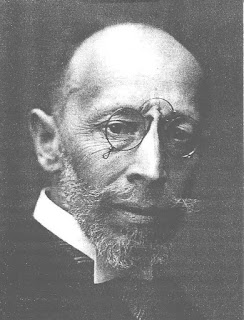
One notable exception was the pioneering work of Karl Alexander Neumeyer (1869-1941), who approached the subject from his distinct perspective of conflict of laws, in a monumental four-volume treatise titled Internationales Verwaltungsrecht (International Administrative Law, 1910-1936).[1] His life-time vision was the development of a new unified system of rules applicable to the transnational aspects of administrative law, to match the well-established conflict rules of private international law and procedure. And in the process, as part of an effort to demonstrate the pragmatic foundations of his approach in different sectors of public administration, he also assembled and analyzed a unique compendium of contemporary legal source materials that would indeed qualify today as typical ‘transnational environmental law’.


The history of international environmental law as an academic topic is generally associated with the emergence of treaties and case law on specific sectors such as shared watercourses, the oceans, or – from 1900 onwards – selected wildlife species. Doctrinal attempts at identifying common (trans-sectoral) elements, and a coherent discipline of international regulation and governance in this field, did not make their appearance until well into the second half of the 20th century, with a prevailing and near-exclusive focus on public international law.
One notable exception was the pioneering work of Karl Alexander Neumeyer (1869-1941), who approached the subject from his distinct perspective of conflict of laws, in a monumental four-volume treatise titled Internationales Verwaltungsrecht (International Administrative Law, 1910-1936).[1] His life-time vision was the development of a new unified system of rules applicable to the transnational aspects of administrative law, to match the well-established conflict rules of private international law and procedure. And in the process, as part of an effort to demonstrate the pragmatic foundations of his approach in different sectors of public administration, he also assembled and analyzed a unique compendium of contemporary legal source materials that would indeed qualify today as typical ‘transnational environmental law’.

Chapter 8 in volume 2 of Neumeyer’s treatise (pp. 1-135), published in 1922, was headed Naturkräfte und Naturerzeugnisse (forces and products of nature). The first section, dealing with internationally shared water resources and water power, is based on the author’s earlier study of “water uses in international administrative law” (1915),[2] criticizing the rigid territorial sovereignty principle invoked by the Austrian Administrative High Court in the notorious 1913 Leitha River case,[3] and advocating the reciprocal protection of foreign legal interests along the lines of the 1909 US-Canadian Boundary Waters Treaty.[4] Other sections deal with the transboundary regulation of mineral resources; agriculture, forestry, hunting and fishing (based in part on the author’s early practical experience as law clerk at a district court in the Bavarian-Austrian border region); and the management and conservation of marine living resources, including a discussion of the 1893 Bering Sea fur seals arbitration.[5] Karl Neumeyer’s emphasis on the need for a mutual ‘other-regarding’ accommodation of foreign concerns, across the entire spectrum of nature-related topics, was way ahead of his times.

Neumeyer taught international law – with a focus on history and conflict of laws – at the University of Munich from 1901 onwards, until the Nazi regime forced him into retirement in 1934 because of his Jewish ancestry and barred him from continuing to work with the Hague Academy of International Law (where he had first lectured in 1923) and the Institut de Droit International (which had elected him to full membership in 1926).[6] Ultimately, when he was notified of the impending eviction from his house and the confiscation of his library, he and his wife decided to commit suicide on 16 July 1941.[7] There is a memorial tablet at their former home near the university; a Neumeyer-Strasse in the city; and in 2008, the Munich Law Faculty (whose dean he was in 1931-32) named the building that houses its Institute of International Law (which he had helped to create) in Karl Neumeyer’s honor and memory.

Sunday, December 7, 2014
Lynton Caldwell and NEPA
H-Net recently posted a review by Laura Gifford of Wendy Read Wertz's Lynton Keith Caldwell: An Environmental Visionary and the National Environmental Policy Act (Indiana UP, 2014). Gifford writes:
As author Wendy Read Wertz rightly asserts, political scientist and environmental activist Lynton Keith Caldwell’s remarkable contributions to the development of the modern environmental movement have gone largely unrecognized—and this constitutes a grave omission. Based at Indiana University for most of his career, Caldwell, whose wide-ranging work over a long career in public administration, environmental studies, and environmental policy advocacy produced a bibliography of work some fifty-four pages in length (p. 398), has been referred to by many as the father of interdisciplinary environmental studies. Long before most, Caldwell understood that to craft effective environmental policy, policymakers must be trained to understand and appreciate the ecological world surrounding them. Public administration skills must be joined with scientific and even philosophical understanding of the planet as an integrated whole. Caldwell’s expertise in both public administration and environmental policy brought him into a position of international influence, and he traveled widely both to conduct training and to advocate for his systematic ecological vision. Domestically, his achievements include the creation of an interdisciplinary school of environmental studies at Indiana University and, perhaps most notable, a leading role in drafting the National Environmental Policy Act (NEPA) of 1969.
*****
Wertz has given a signal service in providing the field with a resource through which we can learn about this remarkable scholar. Her coverage of the NEPA, often regarded as the “Magna Carta” of U.S. environmental policy, is deeply insightful—though..., depending on the audience, further editing could have been useful. The field of environmental policy is richer for this addition. Serious scholars of NEPA, Caldwell, or environmental studies will find this volume a wonderful resource. More casual readers should bear in mind that some skimming may be required.
Subscribe to:
Posts (Atom)