Showing posts with label technology. Show all posts

Wednesday, October 17, 2018

Law and environmental-technological change

Construction crane at Norris Dam (TVA) (Currents of Change)
Yesterday's New York Times had a piece by Naomi Oreskes and Erik Conway on the need for government help in making the technological transformations necessary to avert disastrous climate change - in particular, phasing out fossil fuels by the year 2050. They write:
None of the major technological transformations of the 19th and 20th centuries were the product of the private sector acting alone and responding only to the market. Railroads, radio, telegraph, telephone, electricity and the internet were all the result of public-private partnerships. None was delivered by the “invisible hand” of the marketplace. All involved significant interventions by the visible hand of government.
What does this mean for us? Right now, government is widely seen as inefficient and ineffective, and our needs are thought to be best addressed by the private sector, through entrepreneurship, venture capital and Silicon Valley-style “disruption.” But unless we acknowledge the need for a substantial government role, we are going to be stuck, because change driven solely by the marketplace is unlikely to suffice.
Some might object that our current challenge is vastly different from those met by past technological changes, because we’re not just talking about a thing, like a radio or cellphone, but about changing our entire energy system. But these earlier transformations involved systems, too. Just as energy technology isn’t one thing, neither were the railroads, radio, electricity or the internet. Those systems all involved many parts, including federal, state and local policies to support them (the land grants that made the railroads possible, for instance, or role of the Federal Trade Commission in licensing radio and television stations). 

Sunday, October 15, 2017

Colorado water law yet again

Colorado water law continues to spur scholarship. The recent issue of Environmental History has a review by Michael Weeks of  Robert Crifasi's A Land Made from Water: Appropriation and the Evolution of Colorado’s Landscape, Ditches, and Water Institutions (University Press of Colorado, 2015). From the review:
While the book presents no definitive argument, Crifasi is skeptical of claims that water management in the West has been synonymous with concentrated power. Rather, his often meandering narrative suggests that water developed roughly along practical and evolutionary lines, with users and institutions responding logically to changing water needs.
Most of the text centers on the period from Colorado’s 1858 Gold Rush to the early twentieth century. Heavy doses of environmental determinism appear throughout. Crifasi argues that failed adventures in ditchdigging and the need to move water across property lines pushed farmers to enlist the aid of the territory/state of Colorado to form water districts and employ water commissioners and state engineers to oversee water management. Shared need propelled farmers to pool their resources to form mutual irrigation companies. The evolution of Colorado’s Doctrine of Prior Appropriation was a commonsense response to shared need that enabled users to quantify and prioritize water rights as well as prevent property owners from hoarding the resource. In Crifasi’s telling, even corporate attempts to monopolize and privatize water in the late nineteenth century were a natural part of the region’s agricultural evolution since concentrated capital propelled the development of sophisticated canals that could bring uplands into production.
One of Crifasi’s most intriguing, yet underdeveloped sections addresses water measurement and distribution. Employing William Cronon (Nature’s Metropolis, 1991), he argues that for water to be fairly distributed in an arid climate, it had to become a commodity that could be broken down into discrete measurable units. This meant water users had to translate malleable units such as the miner’s inch into standardized ones such as cubic feet per second. It also explains why users employed Colorado State Water Engineers to monitor stream measurements, water priority, and the carrying capacities of canals and ditches, as well as why the state agricultural college produced some of the nation’s first irrigation engineers. With a fine attention to detail, Crifasi then shows how water, once commodified, enabled irrigation companies to call for water releases based on their shareholders’ water rights, the priority of their holdings, and the availability of the resource.
Within these strengths of the book lies two of its weaknesses.

Tuesday, August 8, 2017

Tort and environmental regulation

Douglas Kysar recently posted "The Public Life of Private Law: Tort Law as a Risk Regulation Mechanism", which, among other things, takes issue with the supposed inability of tort law to deal with complex environmental issues; or as the New York Court of Appeals put it in the leading case of Boomer v. Atlantic Cement Co., "the judicial establishment is neither equipped... nor prepared to lay down and implement an effective policy for the elimination of air pollution".

Kysar argues that "rather than common law litigation being displaced by more sophisticated regulatory approaches, the latter instead may well have depended on the former for their sophistication", and backs up his claim with a case study (in order not to spoil the suspense in his article, after the jump):

Wednesday, October 12, 2016

A historical understanding of emissions standards and ambient standards

courtesy Ohio Citizen Action
A recent article by Craig Oren in the Environmental Law Reporter shows how history can help us understand current issues in environmental law.
The article is a response to an argument by Richard Revesz and Jack Lienke in their book Struggling for Air "that there was a tragic flaw in the Clean Air Act (CAA) Amendments of 1970: the 'grandfathering' of existing electricity generating units by exempting them from national emissions standards. This, they argue, encouraged pre-1970 units to continue to run without sufficient pollution controls and to injure health and the environment." They "trace the flaw to the actions of Sen. Edmund Muskie (D-Me.), sometimes called the father of the CAA. Senator Muskie chaired the Subcommittee on Air and Water Pollution of the U.S. Senate Committee on Public Works, the subcommittee with legislative jurisdiction over the CAA. In the authors’ view, Senator Muskie and the U.S. Congress missed the mark by not requiring that existing power plants meet national emission standards." (For more on Muskie, see here.)
Oren's article shows how a familiarity with the legal (and political) context in which the law was enacted is necessary for understanding it's contours, still very much with us today. Some excerpts (footnotes omitted):
The philosophy behind the [CAA] was that air pollution sources should be regulated according to the harm they did to health rather than on the basis of what control technology happened to have been developed for the category of source. Thus, the 1970 Amendments established emissions standards for new cars that were based not on what was achievable, but on what was thought necessary to protect the public health. In this way, the amendments were “technology-forcing”—they mandated that the auto industry do what was needed. The stationary source provisions came out of a similar approach: a desire to make industry invest in developing new ways to control air pollution control.
To accomplish this, the 1970 Amendments called for EPA to promulgate national ambient air quality standards (NAAQS) at levels that would protect public health and welfare, and required that states develop for EPA approval state implementation plans that would bring areas with excessive air pollution into attainment—that is, compliance—with these standards. For the health-based standards, the plans had to demonstrate that areas in violation would come into attainment—within three years. If the sources did not do what was needed to meet the standards, they could be forced to clean up or be shut down.... While there would be national emissions standards for hazardous air pollutants such as carcinogens, these standards would be based on what was needed to give ample protection to public health and welfare, not on what was feasible to do.
*****
But in one respect—new stationary sources—the Act adopted a technology-based approach. If regulation of sources were based exclusively on what was needed to achieve the air quality standards, then areas with clean air would have an advantage in attracting and keeping industry over those that did not. This, Nixon Administration witnesses testified, would undercut efforts to establish tough emission standards for new sources in dirty-air areas by shifting new sources to clean-air areas. This “site-shifting” would as a practical matter destroy air pollution abatement efforts by making them politically unpalatable, particularly to labor unions in urban areas that wanted to prevent plants from abandoning the Northeast for the South as the textile industry had done.

Sunday, April 10, 2016

How technological solutions changed the perception of environmental harm and law

Victor Flatt recently posted an interesting paper on the recent history of technology standards, "Technology Wags the Law: How Technological Solutions Changed the Perception of Environmental Harm and Law". Some excerpts:
The United States... passed landmark laws in the early 1970s that would eventually become the model for environmental legislation worldwide. In addition to carving out strong protections for health and the environment, these laws for the first time supported these goals with direct technological controls on pollution sources. For instance, in addition to requiring that the entire country was to reduce ambient pollution levels to a point at which public health would not be harmed, the 1970 Clean Air Act required new and modified sources of air pollution to install the ‘best pollution control’ that had been ‘adequately demonstrated’. The 1972 Amendments to the Clean Water Act, in addition to enshrining a goal of increased water quality for health and the environment, directed the EPA to set technology-based limits for pollutant discharges from existing industrial point sources. While technological requirements in these federal laws had their critics, the conventional story is that these controls were the first really successful method of reversing pollution in the United States and moving the country towards meeting its public health and environmental goals.
Why the United States finally embraced specific technologically related requirements to reach its public health and environmental goals at this time has many plausible answers. One explanation involves the popular view of technology at the time as a savior providing benefits to humanity.

Monday, July 14, 2014

Revisionist English nuisance law history: Part 2

[by Ben Pontin]

As explained in Part One, interpretations of English nuisance law’s contribution to environmental protection during the industrial revolution are changing. That is to say, increasing attention is being given to those instances where victims of industrial nuisance obtained remedies from the courts. Previously, emphasis had been placed on the doctrinal (notably in Joel Brenner’s account) and institutional limitations (in John McLaren’s) of victims of industrial nuisance obtaining a remedy. One of the turning points has been the close study of Adderley’s action against Birmingham Corporation in 1858 (the ‘Great Birmingham Sewage Case’), discussed in my book Nuisance Law and Environmental Protection.

In order to make sense of Adderley’s (and nuisance law’s) achievements – and why they do not fit within the traditional account of nuisance law failure – it is necessary to embrace a level of complexity in the social and economic backdrop of nineteenth century nuisance law that is lacking in the earliest leading studies of this subject. Thus, whereas Victorian Britain in Brenner’s account is characterised as dominated by urban and manufacturing interests in the face of which the courts daren’t say ‘no’ (McLaren is more nuanced), Adderley’s case suggests a power structure far more sympathetic to the plaintiff than hitherto contemplated by historians in this field. A power structure, that is, in which the landed aristocracy spun a persuasive enough (at the time) narrative of noble, honourable and authoritative resistance to the materialist excesses of industrialisation.

Sunday, July 13, 2014

Revisionist English nuisance law history: Part 1

[The first in a series of posts by Ben Pontin:]

English nuisance law is a tort to land that has attracted considerable – some would say disproportionate - interest within circles of environmental law history. In Coventry v Lawrence [2014] UKSC 13 (at [176]), Lord Carnwath commented on part of my contribution to the field as follows:
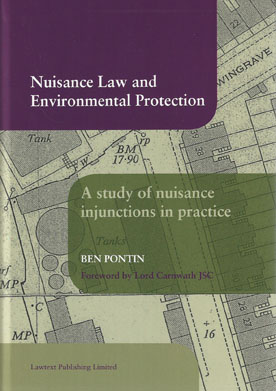
Ben Pontin in his valuable recent book Nuisance Law and Environmental Protection (2013) shows how since the middle of the 19th Century common law nuisance has played an important complementary role to regulatory controls, on the one hand stimulating industry to find better technical solutions to environmental problems, and, on the other, stimulating the legislature to fill gaps in the regulatory system. He sees the present appeal as an important opportunity for the Supreme Court to review the proper role of this part of the law of nuisance in the modern world. (p 184)
Coventry concerned the relationship between nuisance law and regulation, which is a topic that has been central to nuisance law history since the pioneering studies of Joel Brenner and John McLaren in the 1970s and 80s.

Brenner and McLaren argue in different ways to the conclusion that effective legal remedies for revolutionary pollution awaited statutory regulation later in the nineteenth century. Prior reliance on nuisance law, as it had evolved since antiquity, substantially (so the argument goes) failed to remedy industrialisation’s legendary ‘monster nuisances’. The explanation for nuisance law’s weakness provided by Brenner lies with courts moving away from ‘pre-industrial’ strict liability to favour the ‘wealth generating polluter’ in their disputes with neighbours seeking to protect their property and its amenity (Brenner, ‘Nuisance Law and the Industrial Revolution’ (1974) Journal of Legal Studies 403). McLaren’s explanation differs in its focus on litigation costs and similar ‘institutional’ limits of nuisance law in the face of the vast scale of industrial pollution (McLaren, ‘Nuisance Law and the Industrial Revolution – Some Lessons from Social History’ (1983) Oxford Journal of Legal Studies 155).

The Chancery Court claim in
AG v Birmingham
By contrast, my book offers a revised portrayal of nuisance law, as a success. It does so with reference to a small selection of in-depth case studies of specific instances of industrial nuisance litigation, beginning with Attorney General v Birmingham Corporation (1858) 4 K & J 528. Contextual records relating to the litigation underpinning this case reveal some intriguing events, and ultimately a remarkable practical achievement. Over the course of forty years of litigation, affecting hundreds of thousands of people, involving tens of millions of pounds of investment (on today’s currency calculation), the enjoined municipal defendant invented and adopted a sewage purification technology that satisfied the plaintiff (Sir Charles Bowyer Adderley) and led to the injunction’s lifting. The case inspired others to litigate sewage pollution, and thus it is understandable that Lord Robert Carnwath (again) in a recent article refers to the ‘Great Birmingham Sewage Case’ (in ‘Judges and the Common Laws of the Environment – at Home and Abroad’ (2014) Journal of Environmental Law doi: 10.1093/jel/equ009).

‘Great’ litigation in this and other fields of industrial pollution cannot be divorced from its complex social and economic backdrop, characterised by a territorial elite under threat from capitalism reinventing itself as a the nation’s guardian of ‘Nature’s treasures’. How gothic revivalism shaped nuisance law’s achievements is the subject of a blog to follow.