Showing posts with label labor. Show all posts

Thursday, July 28, 2022

Nuisance law and forced labor

I recently participated in the great Legal Histories of Empire conference that met in Maynooth, Ireland. There were a number of papers on environment-related topics (especially about the oceans), but one that really stood out for me was that of Erin Braatz on nuisance law in colonial Gold Coast (Ghana). 

Braatz showed that the largest category of criminal prosecutions in the Gold Coast was for nuisance, and especially sanitary offenses, and suggested a surprising (for me, at least) explanation: the colonial government's desire for forced labor. After the abolition of slavery, colonial rulers and settlers cried out for (cheap) working hands, and sentencing locals to terms of labor for nuisance violations was one way of providing them.

I've often noted before connections labor issues and environmental regulation, but Braatz's research suggests a new (and unsettling) angle.


Wednesday, February 16, 2022

Fossil fuels and Jim Crow

Dan Farber recently posted at Legal Planet on "Jim Crow and the Fossil Fuel Industry":

This being Black History Month, I thought it would be worthwhile looking at the fossil fuel industry’s racial history.  Given the historic concentration of the oil and coal industries in the South, it is no surprise to find that these industries have also been deeply entangled with Jim Crow and its legacy of discrimination.

The conclusion:

In sum, the racial history of the oil and gas industry seems to have been much worse [than that of the coal industry], associated with more virulent and blatant racism. Blacks were nearly excluded from the industry.  In contrast, blacks found jobs in the coal industry, but only at the bottom of the job ladder. Those bottom rungs were decimated by new technology. In the end, the result in both industries was much the same: a workforce largely empty of Black faces. 

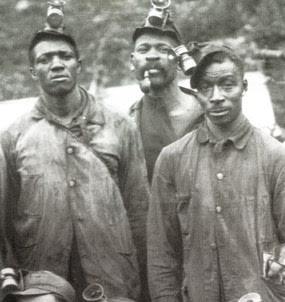
Black miners at New River Gorge (NPS)

Tuesday, March 2, 2021

Epidemics in late medieval law

The Journal of Interdisciplinary History of Ideas recently published a review by Lorenzo Coccoli of Mario Ascheri's Rimedi contro le epidemie. I consigli di diritto europeo dei giuristi (secoli XIV-XVI) (Aracne, 2020). Coccoli writes:

In the large and ever-growing body of scholarship on the social history of medieval and early modern epidemics, a tendency exists to favor the second of these three aspects, looking at social life in time of disease outbreaks mostly through the lens of criminal justice and the repressive power deployed by authorities in order to enforce their emergency regulations. There are several good reasons justifying that choice....

Nevertheless, one might still legitimately wonder whether a different set of judicial sources could provide a somehow different picture of the challenges the plague posed at various levels of society. The sudden disappearance of people and properties confronted survivors with a whole series of legal problems that were not reducible to the grammar of crime and punishment. How to establish, for example, the correct line of inheritance when potential heirs die one right after the other, and when, because of the general confusion caused by disorganization and fear, no medical records exist to prove who died first and who died later? Should rent still be paid even though tenants had fled the rented premises to find shelter in a safer place? More generally: should contracts still be honored even though the plague had prevented their full execution? Questions of this sort may lead to a richer historical understanding of social dynamics in times of health crises, by adding to the ‘vertical’ observation of the relationship between authorities and their subjects the ‘horizontal’ auscultation of the connections and exchanges between the subjects themselves. For one thing is sufficiently clear: although narrators, from Boccaccio to Manzoni through Defoe, have conventionally depicted plague-ridden communities as unruly places where people move and act ‘beyond the usual laws’, law itself kept in fact operating throughout the epidemic storm as the fundamental infrastructure of associated life.

*****

The second and third chapters... deal with the solutions envisaged and proposed (with greater or lesser confidence) by late medieval law doctors to the problems raised by epidemic outbreaks for, respectively, the public management of cities and the regulation of private business. Sannazzari, Aldobrandini and Previdelli’s tracts in fact capitalized on a large pool of earlier consilia, quaestiones and commentaria on Roman and Canon law, gathering and organizing sparse hints on the matter that could be gleaned from them. Sixteenth-century jurists seem to agree with their predecessors on the supernatural causes of the plague, which represented the distinctive way in which God chose to wage war against humans because of their sins. The warlike metaphor—which seems to still have some currency in today’s parlance about the present predicament—was not, however, a simple rhetorical device. In the works of ius commune jurists, the notion of bellum Dei was taken literally so as to draw some effective legal consequences from it and solve, by virtue of analogical interpretation, the occasional legal conundrums. Thus, for example, the difficulty over the possibility of imposing an emergency property tax on people who were normally exempted from all sorts of contribution could be dodged by noting that, in times of war, even those who were covered by fiscal immunity were compelled to pay for the sake of the common good. 

Thursday, January 14, 2021

The origins of American environmentalism

The upcoming issue of Environment and History has an interesting, extended review by Thomas Le Roux (translated from the original French review in Le mouvement social) of Chad Montrie's The Myth of Silent Spring: Rethinking the Origins of American Environmentalism (U Cal Press, 2018). According to the review, the book does not try to downplay the importance of Rachel Carson's Silent Spring, but rather to point out the rich history of environmentalism (and environmental regulation) long predating Carson's work, with sources in labor, public health, social justice, and other movements. An excerpt:

In the second half of the nineteenth century... local municipalities were pressed to provide public health services or access to drinking water. The fight against pollution was one of the main issues of the urbanising nineteenth century, and this is the subject of the second chapter, which exposes different types of action to protect urban environments between 1870 and 1945. In particular, women, industrial workers and racial minorities began to claim environmental justice. As unions organised, and within the context of a wider social movement during this period, the working and lower classes managed to have their voices heard in order to improve their living conditions in an insalubrious urban environment. Often pressured by radicals, socialists and reformers, a number of communities took action to address local injustices. For example, between 1897 and 1904, under the directives of the radical Mayor Jones, Toledo, Ohio inaugurated a municipal service for garbage collection, as did Milwaukee, Wisconsin, which was led by a socialist-leaning mayor after 1898. It is particularly interesting that environmental activists also found themselves fighting for better industrial hygiene to protect the health of factory workers. It is in this milieu that the socialist John R. Commons, who established several health and safety measures in Milwaukee, participated in creating the American Association for Labor Legislation. His work, alongside that of Professor Alice Hamilton, resulted in a more protective regime for industrial hygiene in Chicago and in the whole of the State of Illinois. In this urbanising world, the desire for nature was not only a privilege of the upper classes, but the contemporary push for segregation was such that numerous conflicts emerged regarding the use of forests, beaches or the rural surroundings of cities for a day’s relaxation. In the middle of natural spaces, unions and local communities created educational camps that focused on learning about natural environments for urbanites otherwise confined to their city districts or to their factories. These different actions diffused a renewed sentiment of the need for nature which was well-rooted prior to the second World War, and Montrie highlights that this need was reinforced with the federal program for conservation during the New Deal.

Friday, March 9, 2018

Ghostworkers and Greens

October's Environmental History had a review by Erik Loomis of Adam Tompkins's Ghostworkers and Greens: The Cooperative Campaigns of Farmworkers and Environmentalists for Pesticide Reform (Cornell UP, 2016). Tompkins's book seems to add to a growing body of work on the labor movement as a force behind important developments in environmental regulation. From the review:
Because legislation excluded agricultural workers from the New Deal’s labor protections, farmworkers lacked political power, forcing them to seek alliances with middle-class organizations to win their battles and protect themselves from the chemicals used by growers. Environmental organizations needed farmworkers to counter accusations of being anti-worker and to ground their claims in the lived experiences of the most affected populations. The UFW’s 1970 grape contract included provisions that banned growers from using chlorinated hydrocarbons such as DDT and dieldrin. This laid critical groundwork for environmental groups’ final push for an EPA ban on DDT in 1972. As the 1970s went on, the Sierra Club and other leading environmental organizations developed a growing awareness of social justice and believed they had a natural alliance with farmworkers. This can be overstated, as the 1990 letter sent by the Southwest Organizing Project to major environmental organizing accusing them of “racist and exclusionary practices” demonstrates. Perhaps Tompkins could have evaluated these accusations in the context of his work on environmentalist work with farmworkers, but he does not.
Three later chapters on state-level activism in Arizona, California, and Florida are where Tompkins digs deep into the details of coalition building. In Arizona, years went by with suburban white environmentalists and rural Latino farmworkers missing each other as they each went through waves of activism over pesticides. Finally, the two groups built a meaningful alliance after agricultural pesticide drift threatened expanding suburbs in the mid-1980s, leading to the Arizona Environmental Quality Act in 1986. In California, both groups fought Governor George Deukmejian’s deregulation efforts in the 1980s, but often with different priorities that hampered close cooperation, even as good relationships between them were cultivated and maintained. Finally, Tompkins closes the book with an examination of how farmworkers and environmentalists worked together in Florida and California against methyl bromide after growers’ associations launched a battle to resist the limitations on its use the United States agreed to in the Montreal Protocol in 1987 to fight ozone depletion. Greens and workers could not completely counter the growers’ power, but their work did raise public awareness about the chemical and led to growers seeking alternatives, even as it is still used today. 

Sunday, January 21, 2018

Historical Analysis in Environmental Law V: What is to be done? Police, public health, statutory nuisances, planning and zoning, labor law, and literature

In the last post in this series I suggested looking at the histories of commons regulation, forest law, and 'police' to better understand the historical roots of modern environmental law. Before moving on to note several other relevant areas of historical law, I would like to note that while critics (most recently Markus Dubber) have impugned police for its broad discretion and patriarchal foundations, these very elements were powerful enablers of environmental regulation in the public interest. Moreover, the opposing tradition that Dubber identifies—the Enlightenment ideal of the 'rule of law'—has often used the liberal ideal of private property to frustrate public-minded environmental regulation. In any case, police regulations, with their wide remit and geographic dispersion, are natural places to look for sources of modern environmental law. Noga Morag-Levine has indeed made the connection between early modern 'science of police' and later regulation of air pollution, but it is likely that 'police' was—for better or worse—a fertile source of much more of environmental regulation than we yet realize.

An important sub-set of police regulation was the public health law that grew up in the Victorian age as a response to the urbanization and industrialization of the period, giving expression to the sanitary movement's concern with the effects of environmental degradation on human health and welfare, particularly of the working classes. Public health statutes, bylaws, regulations, and licenses regulated issues such as smoke pollution, industrial odors, and sewage disposal. This highly developed area of law could be investigated for its influences on later environmental law, including its emphasis on technical solutions to pollution problems and the division of labour between central and local regulation that continue to characterize the field. Public health law is also likely responsible for the creation of a bureaucracy of professionals with expertise in the health and engineering aspects of pollution that would form the core professional staff of modern environmental regulators.

Associated with public health law in the Anglo-American world was the law of statutory nuisances. Statutory nuisances allowed for private and public administrative and criminal enforcement of prohibitions on various forms of pollution and encroachment on the public domain, and thus are a likely source of much modern environmental law. Moreover, this area of law may be a source of the prevalent confusion over the role of nuisance law in the pre-1970 area. It may be true that 'nuisance law' was the dominant vehicle for environmental regulation in this period; yet the category of 'nuisance' included not only a common law variant (private and public, the latter of which could be criminally prosecuted), but also statutory nuisance, with its explicit prohibitions on specific types of environmental harms and risks, such as discharges of pollution into water sources and emissions of 'noxious vapours'. If the law of nuisance one imagines is the private, common law of nuisance usually thought of, modern environmental legislation might indeed seem to represent a major revolution. If, on the other hand, statutory nuisance is given its due, the environmental legislation of the 1970s may look more like an elaboration of existing law.

Sunday, November 5, 2017

London's smoke regulation

The Court of Aldermen and Common Council of the City of London (1780)
Last week's Reviews in History posted a review by Elly Robson of William Cavert's The Smoke of London: Energy and Environment in the Early Modern City (Cambridge UP, 2016, recently out in paperback). (For an earlier review see here.) From the review:
Cavert is particularly strong on the complex role of political and legal institutions – both local and national – in managing coal supply and regulating smoke. In his account, the politics of coal and smoke was a politics of governance. Chapter five, ‘Nuisance and neighbours’, deals with the legal category of ‘nuisance’ to cast light on how conflict over pollution was defined and mediated. In it, Calvert investigates a smorgasbord of relatively ineffective litigious avenues for pursuing redress against industrial polluters who infringed on royal or individual property and health. Law Reports form the mainstay of the chapter and Cavert’s frustration is evident when he describes searching for nuisance cases in Westminster court archives, including 10,000 pleas in King’s Bench, as akin to ‘looking for needles in large and messy haystacks’. Yet he casts his net wide, examining an impressive array of London institutions, including the Fishmongers Company, the Court of Aldermen, and the Wardmote Courts. He consequently has an acute sense of the regulative capacity of different, interlocking jurisdictions, but does not present them as totalising in influence. Instead his emphasis falls on their limitations. Private contracts by landlords were far more effective than common law courts in excluding noxious trades from certain parts of the city, particularly in creating an elite non-industrial zone in genteel west London. This chapter tells us more about institutions and their limits than it does about the ways in which smoke sparked neighbourly negotiation. Royal and aristocratic attempts to limit air pollution in their vicinity have left a more prominent archival trace. However, further light may be cast on environmental conflict between more lowly urban neighbours through further examination of legal depositions, which tend to be well catalogued and have provided a rich lens for early modern historians examining rural disputes over resources.
A concern with governance recurs in part three, where several chapters examine the role of the state in regulating London’s coal supply and mediating the competing claims of civic governors, coal suppliers, the military, the urban poor, merchants, and industries. Efforts to ensure a constant flow of coal to the capital were more energetically pursued than attempts to alleviate pollution, because the former aligned with the priorities of the fiscal-military state: taxation, naval power, social stability, and economic development. Although there was never a state monopoly over the coal trade, the state gathered information through taxes on coal imports and intervened in markets by granting and revoking charters. Tensions could arise, however, between state revenues and economic growth, as merchants mobilised to lobby against rising coal taxes. Similarly, in times of war, able seamen transporting coal down the coast became a valued resource and were vulnerable to naval impressment, forcing the government to balance external military dangers with the threat that fuel scarcity posed to internal social order. 

Friday, November 3, 2017

Postwar America's greatest environmentalist

More on working-class environmentalism and the law (see, most recently, here): Jacobin recently ran a piece by Connor Kilpatrick claiming that "Postwar America’s greatest environmentalist was a labor leader". There's a lot here also about politics, religion, climate skepticism and more. Some excerpts:
Today, the AFL-CIO lobbies Congress to pass the Keystone XL pipeline while noted NASA climate scientist James Hansen, one of the first to link global warming to fossil fuels, is repeatedly arrested for protesting such projects. And while in 2017, the idea that the interests between wonky environmentalists and jobs-focused trade unionists would diverge seems like common sense, it’s only because the bad guys won.
But it wasn’t a preordained victory. For nearly a decade in the 1960s and ’70s, environmentalism seemed to be on the cusp of a popular reckoning against the powers of capital. And it found an ally in the labor movement which, for a few years, looked like it might be able to not only cling to life but find a way back into the heart of American society.
[Tony] Mazzocchi and his union, the Oil, Chemical and Atomic Workers International (OCAW), were the primary muscle behind the 1970 Occupational Safety and Health Act (OSHA), signed into law by Richard Nixon. Looking back on that victory, which mobilized both labor and the burgeoning environmental movement, Mazzocchi said: “We have demonstrated that an unpopular idea can be generated into a powerful political program that’ll reignite the consciousness of the American people.”

Thursday, October 19, 2017

Bevin Boys - WWII coal conscription

Bevin Boys report for duty in 1943 (Express)
The blog "ART and ARCHITECTURE, mainly" earlier this week had an interesting post on something I knew nothing about, despite my once-future career as a military historian. It seems that Britain conscripted nearly 50,000 men to work in its coal mines, in place of the military service, during the period 1943-48. From the blog:
Coal was essential for military production during WW2; somehow Britain had to match the quotas needed to keep fact­ories churn­ing out the munitions required at the front. And as Britain was unable to import coal in wartime, the production of coal from local mines had to be increased. But how? 36,000 miners were already cons­crip­t­ed for army duty and had left their collieries.
Ernest Bevin, wartime Minister of Labour and National Service and a former Trade Unionist, believed the short­age could be remedied by using conscripted men to fill the vacancies in the mines, keeping production at the rates requir­ed. In Dec 1943 he announced a scheme in Parliament. 
A ballot would take place to put a fixed perc­ent­age of cons­cript­ed men into the underground collieries rather than into the armed services. “We need 720,000 men continuously employed in this industry. This is where you boys come in. Our fighting men will not be able to achieve their purpose unless we get an adequate supply of coal.” Any refusal to comply with the Direction Order would result in a heavy fine and/or imprisonment under the Emergency Powers Act in force back then.
There's lots more on the story at the blog, worth a read.

Tuesday, October 17, 2017

Labor unions and forest protection

The connections between working-class environmentalism and environmental law is an understudied theme that I've had occasion to highlight before (e.g. here and here and in my forthcoming article on historical analysis in environmental law). Last year I noted that Erik Loomis won an award for his article, "When Loggers Were Green: Lumber, Labor, and Conservation, 1937-1948". Now Robert Walls has a review of Loomis's book, Empire of Timber: Labor Unions and the Pacific Northwest Forests (Cambridge UP, 2015), for Environmental History. From the review:
Focusing on everyday labor and the designs of union activists, Loomis provides a complex portrait of how the industry’s base attempted to advance its goals of securing both sustainable forest resources and health and safety protections for men and women in an often dangerous workplace. The result is an informed analysis of labor’s successes and failures, one that broadly encompasses the radicalism of the Industrial Workers of the World (IWW), the challenge of the International Woodworkers of America (IWA) to midcentury forestry policy, and organizing efforts by countercultural reforestation cooperatives in the 1970s to oppose herbicide exposure.
Drawing productively on Thomas Andrews’s notion of “workscapes” and Rob Nixon’s concern with “slow violence,” the author demonstrates how the IWW, and the industry-sponsored Loyal Legion of Loggers and Lumbermen, initiated reforms to an increasingly industrialized work environment that punished bodies through the speed of production or the creeping pathology of disease from poor camp sanitation. A more holistic approach to the “total work environment” (p. 133) was later adopted by the IWA to moderate the debilitating impacts of postwar production technology; the union marshaled evidence from scientific sources and eventually called upon Occupational Safety and Health Administration regulations to combat the effects of new ailments, such as the auditory and neurological consequences of prolonged chainsaw use and the toxic impact of chemicals, such as pentachlorophenol, used in mills.
Loomis’s description of union critiques of industrial forestry’s destructive practices—decades before the modern environmental movement—is equally illuminating.

Tuesday, January 10, 2017

In search of post-Brexit England

I highly recommend reading a beautiful piece by Helen Macdonald just published in the New York Times Magazine, "In Search of Post-Brexit England, and Swans". The story opens:
In the days after the Brexit vote last year, I became obsessed with an oil painting called “Swan Upping at Cookham” [below, Stanley Spencer, 1915-1919], which portrays a scene from an ancient and colorful English tradition. “Swan Upping” refers to the annual summer voyage of a flotilla of wooden skiffs that sets off from the town of Sunbury-on-Thames on a five-day journey to catch all the swans on the upper reaches of the River Thames. The crews check the parentage of young birds and place a mark on them to claim their ownership: Some belong to the queen, others to the Worshipful Company of Vintners and the Worshipful Company of Dyers, two ancient trade guilds based in the City of London. The painting depicts a traditional stop on the uppers’ trip. Here is the river and the Ferry Inn, wooden punts, moody clouds, women carrying cushions, a fretted iron bridge and a swan bound and hoisted in coils of rope and canvas, white neck craning from a man’s shoulder.

After some interesting background on the painting and on the place of these swans in English national mythology, Macdonald explains more about the legal historical background of the "upping":

Wednesday, October 12, 2016

A historical understanding of emissions standards and ambient standards

courtesy Ohio Citizen Action
A recent article by Craig Oren in the Environmental Law Reporter shows how history can help us understand current issues in environmental law.
The article is a response to an argument by Richard Revesz and Jack Lienke in their book Struggling for Air "that there was a tragic flaw in the Clean Air Act (CAA) Amendments of 1970: the 'grandfathering' of existing electricity generating units by exempting them from national emissions standards. This, they argue, encouraged pre-1970 units to continue to run without sufficient pollution controls and to injure health and the environment." They "trace the flaw to the actions of Sen. Edmund Muskie (D-Me.), sometimes called the father of the CAA. Senator Muskie chaired the Subcommittee on Air and Water Pollution of the U.S. Senate Committee on Public Works, the subcommittee with legislative jurisdiction over the CAA. In the authors’ view, Senator Muskie and the U.S. Congress missed the mark by not requiring that existing power plants meet national emission standards." (For more on Muskie, see here.)
Oren's article shows how a familiarity with the legal (and political) context in which the law was enacted is necessary for understanding it's contours, still very much with us today. Some excerpts (footnotes omitted):
The philosophy behind the [CAA] was that air pollution sources should be regulated according to the harm they did to health rather than on the basis of what control technology happened to have been developed for the category of source. Thus, the 1970 Amendments established emissions standards for new cars that were based not on what was achievable, but on what was thought necessary to protect the public health. In this way, the amendments were “technology-forcing”—they mandated that the auto industry do what was needed. The stationary source provisions came out of a similar approach: a desire to make industry invest in developing new ways to control air pollution control.
To accomplish this, the 1970 Amendments called for EPA to promulgate national ambient air quality standards (NAAQS) at levels that would protect public health and welfare, and required that states develop for EPA approval state implementation plans that would bring areas with excessive air pollution into attainment—that is, compliance—with these standards. For the health-based standards, the plans had to demonstrate that areas in violation would come into attainment—within three years. If the sources did not do what was needed to meet the standards, they could be forced to clean up or be shut down.... While there would be national emissions standards for hazardous air pollutants such as carcinogens, these standards would be based on what was needed to give ample protection to public health and welfare, not on what was feasible to do.
*****
But in one respect—new stationary sources—the Act adopted a technology-based approach. If regulation of sources were based exclusively on what was needed to achieve the air quality standards, then areas with clean air would have an advantage in attracting and keeping industry over those that did not. This, Nixon Administration witnesses testified, would undercut efforts to establish tough emission standards for new sources in dirty-air areas by shifting new sources to clean-air areas. This “site-shifting” would as a practical matter destroy air pollution abatement efforts by making them politically unpalatable, particularly to labor unions in urban areas that wanted to prevent plants from abandoning the Northeast for the South as the textile industry had done.

Thursday, September 29, 2016

When loggers were green

The Forest History Society awarded its 2016 Blegen Award for the best article on forest and conservation history to Erik Loomis for his "When Loggers Were Green: Lumber, Labor, and Conservation, 1937-1948", published in Western Historical Quarterly.

Soleduck Falls shelter, Olympic National Park, constructed 1939
(M. Stupich, courtesy of National Park Service, Pacific Northwest Region)
The IWA was a strong supporter of the creation of the park for protecting old-growth forest

There's a lot of law in the article, though the union was often on the losing side. The opening paragraphs:
In April 1939, Harold Pritchett, president of the International Woodworkers of America (IWA), went on radio station KIRO in Seattle to explain his union’s program for forest conservation. Pritchett bluntly attacked the timber industry for its wasteful practices, noting, “under the present policy of timber destruction three feet of Northwest timber is being used for every new foot being grown.” Saying the nation’s forests were too important to serve corporate masters, Pritchett demanded a government-led reforestation program that would hire unemployed loggers and recharge the timber resource. He argued for federal policies mandating selective logging rather than clear-cutting large patches of forest. Pritchett justified federal intervention by comparing it to the New Deal’s expansion of government authority into public utilities and banking as well as the passage of the Social Security Act. Only through “initiating a forest program that is based on the needs and also the responsibilities of the forest land owners” under “federal control of forest cutting practices,” Pritchett declared, could the forests of the Northwest remain productive for future generations.

Thursday, August 4, 2016

Merchants of Doubt - the prequel

(courtesy The Age of Change)
Oreskes and Conway's Merchants of Doubt shined a light on how industry employed scientists in recent decades to cast doubt on the reality of environmental and health problems like smoking and climate change. An article by Andrew Perchard & Keith Gildart in last year's Labor History, "'Buying brains and experts': British coal owners, regulatory capture and miners’ health, 1918 – 1946", shows that this problem has been around for a while. The abstract:
This article examines British coal owners’ use of medical and scientific knowledge of occupational lung diseases in the mining industry to resist regulatory changes between 1918 and 1946. It explores the strategies deployed by coal owners in response to scientific and lay debates over the hazard to workers’ health presented by dust, and legislation to compensate miners for pneumoconiosis and silicosis contracted in the nation’s collieries. In particular, it investigates coal owner deployment of the views of notable scientists, especially the eminent physiologist John Scott Haldane (1860–1936), who insisted on the harmlessness of coal dust, in order to avoid costly compensation payments, as well as capital investment in ameliorative measures to reduce miners’ exposure to such hazards. In so doing, the article provides new insights by illustrating how coal owners influenced mining education programmes, deploying the arguments of Haldane and others, with direct implications for health and safety in British mines. This contributed to the mounting public health disaster wrought by coal dust on Britain’s mining communities. This process is viewed as part of the broader political activities of the coal owners – and their industry body, the Mining Association of Great Britain – in its attempts to influence the regulatory process in a period of dramatic change in the political economy of coal.

Friday, April 8, 2016

Hundley (and Pisani) vs. Worster

The special issue of Western Legal History we've been covering has an interesting survey of Norris Hundley's work by Donald Pisani. A highlight:

Hundley understood that the past should be treated on its own terms, not used as a whipping boy for concerns of the present. He was as judicious and fair-minded as he was prolific. The Great Thirst addresses Donald Worster's thesis in Rivers of Empire (1985). Worster argued that in the American West, a marriage between government and private capital created a "Leviathan" that served the rich and powerful at the expense of common citizens. Not only did the great water projects of the twentieth century transform the face of California and create an unsustainable economy that centralized people in a few great cities; those projects also subverted the region's democratic promise. Worster branded the West a "hydraulic society" and likened it to the empires of the ancient Middle East, all of which assumed that they could engineer deserts out of existence but learned otherwise.
The Great Thirst raised profound and depressing questions about the future of natural resource planning and management in the United States, not just in California. To some extent, Hundley agreed with Worster. He recognized that the arrogance, greed, and conceit of water planners played a huge role in the history of California, and that the state's great wealth had come at a very high price. He also acknowledged the power of the federal government in water development. Huge agricultural water subsidies, for example, had promoted social inequalities, including a permanent underclass of farm laborers and their families in the San Joaquin Valley. But Hundley denied that the water kings conned an unwary public into supporting water projects, or that the problem was too much government. Indeed, the public consistently welcomed such projects and voted for them as a tool of economic growth and greater wealth. He thought that a more centralized, unified power over water might serve the public interest better than the splintered authority characterized by dozens of governing boards and local districts.

Thursday, October 1, 2015

Imperial free trade and the environment on flim

The relationship between trade and the environment is a fraught one; most recently it has been prominent in debates over the proposed Trans-Pacific Partnership.

"Empire Trade", a 1934 British propaganda film, provides some historical context (you can view it at the excellent Colonial Film website; I got to it through a University of Exeter online course on the British Empire). Here low tariffs within the British Empire are touted in terms of the jobs brought to the home country by exports to the colonies and dominions, and the the raw materials from around the empire that feed British industry.

Visually, prosperity at home is represented by belching smokestacks, white-hot furnaces, and smoking locomotives.

"The size, rather than the position of England, governs our greatest national problem today.
We are not a self-supporting country. We depend for our existence on the exchange of our
manufactured commodities for the food and raw materials that we cannot produce ourselves,
and for these we must rely largely upon our Empire and our merchant navy."
And the video tour around the empire is a celebration of exploitation of nature and colonial labor. (Please read the captions, but trigger warning: some of the text is distasteful.)

Rubber plantation in Malaya. "The amount of rubber produced here alone
is nearly twice as much as the rest of the world's output, and so
forms a tremendously important addition to our Empire resources."
Coconut plantation in Malaya. "This chap doesn't have to wait for the fair
and the coconut shies to come to town; he can have 'em for breakfast every morning."
Floating logs in Canada. "The watermen, who see to it that these logs float downstream without
jamming, have an exciting time." A few frames later, some of them fall in the water.
South Africa. "Her most important industries are diamond and gold mining,
both developed by British engineers, equipped with British machinery."
It seems that circa 1934 environmental degradation and exploitation of less developed countries were clearly seen to result from free trade. One might be charitable and say that they were seen as the price that needed to be paid for economic prosperity, but watching this film, one gets the sense that its makers weren't troubled at all by these costs.

Tuesday, August 11, 2015

Labor and environmentalism in Canada

Sarnia Chemical Valley, Ontario (by P199)

Last year we noted an article on American labor organizations and environmental regulation; it turns out that around the same time an article was published on a similar phenomenon in Canada; Katrin MacPhee's "Canadian Working-Class Environmentalism, 1965–1985" appeared in last year's Labour/Le Travail. The abstract:
The historiographies of Canadian labour and environmental activism have largely overlooked the existence of a distinctly working-class environmental consciousness in Canada between 1965 and 1985. This worker-oriented environmentalism was expressed in three separate but interrelated strategies. First, labour activists in the 1960s through to the 1980s undertook independent research into the environmental contaminants present in their own workplaces and subsequently released into the larger environment. Second, a number of Canadian unions consistently endeavoured to compel branches of the Canadian government to adopt and enforce strict environmental policies and regulations. Third, Canadian union members exercised the weapons at their disposal – collective bargaining, demonstrations, and strikes – to prevent harm to environmental and human health alike. Through an analysis of these realms of struggle, I outline an environmentalism born of a class analysis of health and disease under capitalism.

Thursday, August 6, 2015

The Kawbawgam Cases

Last year's Michigan Historical Review published Rebecca Mead's "The Kawbawgam Cases: Native Claims and the Discovery of Iron in the Upper Peninsula of Michigan" (also here). The article begins:
Charlotte Kawbawgam (Superior View)
The southern shore of Lake Superior is a beautiful but rugged and isolated region that inhibited early Anglo-American settlement and still poses significant challenges for its inhabitants. In 1840, seasonally nomadic groups of Algonkian-speaking Natives and the mixed-race peoples of the fur trade occupied the area, but after the discovery of valuable mineral resources the situation changed rapidly.... When the first Anglo-American surveying and prospecting parties came to the area, local Natives guided them to the fabulously rich deposits of the Marquette Iron Range but the prospectors shared little of the subsequent wealth. Charlotte Kawbawgam's story reveals, however, that Anglo-Americans did not always appropriate Native resources without gratitude or payment. Kawbawgam's efforts to obtain compensation from Jackson Iron Company for services rendered by her father Matji-gijig ("Bad Day") in locating the Marquette Iron Range culminated in three Michigan Supreme Court cases in the 1880s and a landmark decision.

Friday, October 3, 2014

Early environmental justice

Legal Planet's Jonathan Zasloff recently noted the publication of Josiah Rector's "Environmental Justice at Work: The UAW, the War on Cancer, and the Right to Equal Protection from Toxic Hazards in Postwar America" in the Journal of American History. The article greatly enriches our knowledge of the history of the environmental justice movement; indeed, of the history of environmental law as a whole. Rector writes:
Despite the amplitude of the literature, occupational health historians have devoted surprisingly little attention to the relationship between health and safety activism and the post–World War II civil rights and feminist movements, or the role of health and safety activism in the rise of the environmental justice movement.
Ford's River Rouge Plant (1931)
Meanwhile, the nascent historiography of the environmental justice movement, largely written by social scientists, has tended to ignore labor's contributions, with the important exception of the United Farm Workers 1968–1971 campaigns against pesticide exposure. Most books about environmental justice, including many brilliant and formidable works of scholarship, present a brief, potted history of the movement, beginning with the struggle over polychlorinated biphenyl (PCB) dumping in Warren County, North Carolina, in 1982. Scholars of the topic have neglected the fact that as early as 1970 occupational health and safety activists used the term environmental justice to refer to the right to protection from toxic hazards codified by the Occupational Safety and Health Act (OSH Act) and the National Environmental Policy Act (NEPA). Few scholars, moreover, have noted that the UAW's 1976 Working for Environmental and Economic Justice and Jobs National Action Conference in Black Lake, Michigan, helped popularize environmental justice. This elision is ironic, since the disproportionate exposure of workers and people of color to toxic hazards was a major theme of the conference—one of the first to gather civil rights, feminist, labor, and environmental activists for sustained dialogue.
Rector's article focuses on occupational cancer in American auto plants as a case study. I hope we'll continue to see more work by him and others (see for example recent articles by Gregory Alexander and Stefania Barca) on working class environmentalism and environmental law.

Monday, May 26, 2014

Guano and debt peonage

Edward D. Melillo's 2012 American Historical Review article, "The First Green Revolution: Debt Peonage and the Making of the Nitrogen Fertilizer Trade, 1840–1930", has been awarded the Nineteenth Century Studies Association Article Prize. From the beginning of the article:
Between the 1840s and the 1930s, Peru and Chile exported hundreds of millions of tons of nitrogen-rich guano (dried bird excrement) and sodium nitrate (NaNO3) to places as far-flung as California, Virginia, Prussia, Great Britain, and France. For farmers in North America and Europe, guano and sodium nitrate dramatically increased agricultural productivity during the final phase of the Industrial Revolution, which lasted from roughly the mid-1800s through World War I. The widespread availability of imported fertilizers also facilitated a departure from organic “closed systems” of farming, in which nitrogen is cycled among soil, plants, animals, and people at the local scale, toward “open,” energy-intensive approaches to agriculture that included additions of nitrogen from distant places.
This major human intervention in the nitrogen cycle was closely linked to fundamental shifts in global labor relations during the Age of Abolition (1780s–1880s). In 1807, Britain outlawed the importation of African slaves to its colonial empire. The following year, the United States banned the importation of slaves, while in 1811, Spain abolished chattel slavery at home and in all of its colonies except the “sugar islands” of Cuba, Puerto Rico, and Santo Domingo. Despite such overwhelming victories for abolitionism, new forms of servitude emerged to replace those that faced extinction. Often these arrangements involved debt peonage, the repayment of loans with fixed periods of physical labor.