Showing posts with label cfp. Show all posts

Tuesday, July 25, 2023

CFP: Environmental History, Legal History, and Environmental Law – Two Transdisciplinary Conversations


Susan Bartie (ANU), Ben Pontin (Cardiff), and I are organizing a double session on environment, law, and history for the 4th World Congress of Environmental History, to be held (in hybrid format) in Oulu, Finland, 19-23 August 2024. This double session will showcase environmental-legal-historical research that demonstrates the opportunities as well as the challenges inherent in this meeting of disciplines, and discuss strategies, theories, and research methods that might help in overcoming these challenges. The sessions' abstract is below.

If you're interested in joining (in person or remotely, you need not decide now), please submit a proposal through this link by 18 September 2023. Please indicate in your submission whether you wish to propose a traditional research paper (the first session) or make a presentation as part of the roundtable (second session).

Abstract:

The triangle ‘environment–history–law’ suggests a wealth of opportunities for productive transdisciplinary scholarship: Historical analysis of environmental law, environmental histories of legal change, legal histories of the environment, etc. Yet such transdisciplinary projects have to date been tentative and largely tangential to the thriving fields of environmental history, legal history, and environmental law. Legal history, while having moved beyond its previously narrow focus on legal doctrine to embrace wider contexts of society, economy, and culture, has to date remained largely indifferent to environmental issues or to the environment as a category of analysis. The field of environmental law, so salient in pressing issues such as climate change and biodiversity conservation, tends to see itself as brand new, overlooking centuries of environmental laws. And while environmental histories frequently reference legal issues and institutions, from common property to rights of nature, they are often insensitive to the legal context in which these institutions operate.

The first session will showcase new environmental-legal-historical research that demonstrates both the opportunities and challenges inherent in this meeting of disciplines. The following, roundtable session will bring together scholars working across the boundaries of environment, history, and law, in order to discuss the challenges facing this intersection of disciplines, from institutional obstacles to the difficulty in meshing historical and normative analysis. With the participation of the audience, it will seek to identify strategies, theories, and methods that might help in overcoming these challenges. Panelists will be drawn from a variety of disciplines, regions, and methodological approaches. 

Tuesday, April 19, 2022

CFP: Law and Art in the 19th Century: Power in Images

Here's a call for papers for a conference set to take place at the Universita’ di Verona this coming October, on a topic that I think relevant to the intersection of environmental and legal history:

The research team, set up to further study the project Images, Law and Power in the Modern Age, within the framework of the Excellence Project of the Department of Legal Sciences of the University of Verona (2018-2022), is organising a conference on the theme of the artistic representation of law in the 19th century, from the French Revolution to the early twentieth century.

The purpose is to investigate the ways in which, during the nineteenth century, the substantial change in the structural characteristics of the legal phenomenon, and the emergence of an alternative legal experience, corresponded to the replacement - or re-semantization - of the symbols and images traditionally expressed in the law, so that they were more suitable to convey the new concept of the juridical in society.

Details are on the conference website.

Elihu Vedder, Good Legislation mural, Library of Congress Jefferson Building (1896)

Friday, March 11, 2022

International environmental law panel for ASLH

Reposting from H-Environment:

Dear all,

I am a doctoral candidate at Rutgers University New Brunswick, and I am currently seeking co-panelists for the American Society of Legal History conference to be held in Chicago, Illinois, November 10-12, 2022. The conference welcomes papers dealing with legal history from any time period or geographical area, but is only accepting panel proposals. I am seeking to put together a panel dealing with international environmental law in the 20th century, in the broadest possible sense. My paper specifically will talk about the interplay between international conservation efforts and French national interests in the creation of a "French Antarctic national park" in the subantarctic Kerguelen Islands in 1924.

Here is a link to the ASLH website For more information: https://aslh.confex.com/aslh/2022/cfp.cgi

Panel submissions are due March 18th. I know this is a short turn around but I hope to find interest through this forum. The ASLH is a great organization that offers a helpful forum for discussing a broad range of legal history topics, and is especially supportive of graduate students and early career scholars.

Please feel free to contact me at kms557@history.rutgers.edu if you are interested in joining this panel.

All best,

Katherine Sinclair

Bruno Navez, Remains of vats and boilers at Port-Couvreux, Kerguelen Islands, used for the making of elephant seal oil at the beginning of the XXth century

Tuesday, February 22, 2022

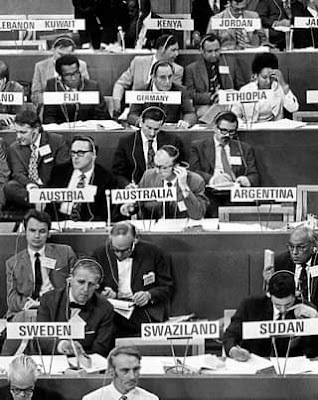
CFP: The 1972 Stockholm Conference, Fifty Years Later

H-Environment posted a call for papers for a special section of the journal The Annals of the Fondazione Luigi Einaudi. An Interdisciplinary Journal of Economics, History and Political Science on "The 1972 Stockholm Conference, Fifty Years Later: What Legacy?". From the call:
The special issue is meant to commemorate the 50 years since the 1972 United Nations Conference on the Human Environment, universally known as the birthplace of global environmentalism. The Stockholm conference hosted 112 national delegations, UN specialized agencies, international NGOs, and a counter-conference organized by environmental activists. It established a range of institutional, political, intellectual, and cultural developments that made the environment a pressing global issue. Participants adopted instruments such as the Stockholm Declaration and Action Plan for the Human Environment and prepared the ground for the United Nations Environment Programme. This special issue wants to explore the conference and its legacy. The Stockholm Conference established international political goals and legal principles that have underpinned environmental discourse and law-making for a half-century. By stressing that environmental issues are inherently political – and not just scientific and technical - it devised systems for data research and monitoring. It also catalysed multilateral cooperation and treaty-making and the setup of national environmental ministries and environmental laws. Moreover, it contributed to the democratization of environmental debate and policy-making, opening to non-governmental organizations previously not included in the UN system.

The deadline for proposals is 30 March 2022. More details at H-Environment.


Tuesday, June 11, 2019

CFP: Race and Resilience Otherwise (for ASEH 2020)

[I'm passing on this call for papers for a panel being organized for the next American Society for Environmental History meeting. Readers should feel free to send me any relevant announcement!]

Race and Resilience Otherwise

What does “resilience” mean for black, brown, and indigenous people living in systemic racism? This guiding question builds from the spirit of the conference theme, “Reparative Environmental History,” and celebrates the discipline’s ongoing engagements with structural racist, classist, and colonial environmental oppression. Though resilience is used to orient us to the future of our environments (i.e. gaining abilities now to respond effectively to future catastrophes), like reparations, the concept actually requires close examination of past processes, active decentering of white settler histories, and embracing narrative frameworks that work with critical race theory. In reality, folks of color have been resilient and forced into holding patterns of “resiliency” within an unequal, unjust system for generations. In this panel, we want to continue thinking resilience otherwise by articulating critical environmental histories of race.  

This panel calls for contributions that center — rather than “include” — black, brown, and indigenous environmental histories to help us unpack this problematic of resilience, and therein reconsider the content and meaning of contemporary environmental restorative justice. We welcome scholarship on, for instance, histories of environmental racism, struggles for environmental justice, food sovereignty, colonial land dispossession, histories of BIPOC* environmental community building and belonging, and ways of knowing nature outside of modern, white supremacist capitalism.

*Black and Indigenous People of Color

Please submit proposed paper title and brief abstract (250 words max), along with your name, institution, and preferred email address to Lisa Avron (lisa.avron@gmail.com) by July 3rd.

Wednesday, February 27, 2019

CFP: Law & Environment in the Indian Ocean World

[Excerpted from H-Announce:]

Ordering the Anthropocene: Law & the Environment in the Indian Ocean World  

A workshop convened by Debjani Bhattacharyya (Drexel University) and Laurie Wood (Florida State University)4-5th October 2019

Hosted by the Department of History,  Drexel University, with the generous sponsorship of the American Society for Legal History & Drexel University

What can historians of law achieve from engaging with their colleagues studying environmental changes over time? How have emerging regulatory regimes (imperial, property-oriented, maritime, medical, etc.) joined the domains of science and law in new ways? And how can legal historians retool their methods to study deep histories of landscape transformations and climate? These questions are especially pertinent for the Indian Ocean region, where these concerns have both past and contemporary relevance: e.g. rising sea levels in the Maldives and Andaman Islands; coastal erosion and disputes over new-land formation along the littorals of Bay of Bengal; island-building in Singapore (with sand from Gulf states); disaster relief following the 2004 tsunami and earthquake, which especially affected Indonesia and Malaysia; food security around the Horn of Africa; and some of the world’s busiest shipping routes.

*****

The workshop will consist of 4 panels, with 2 presenters in each panel. We will pair legal historians with historians of environment to explore how common terminology around evidence, witness, reason, expertise is affected by concepts of time that are distinct in each discipline. We welcome papers exploring the following questions broadly:

  • Where does law/do legal regimes collide with the material world?
  • Where/when/how/why do natural phenomena become entangled in ordering regimes?
  • How do these relationships (re)configure the human as social (e.g. relational, hierarchical, vocal) and material (e.g. embodied, constrained by lifespan, etc.)?

Wednesday, May 23, 2018

CFP: Celebrating Commons Scholarship

An issue of Theoretical Inquiries in Law on "The Tragedy of the Commons at 50" that I am co-editing should be out in a couple of months, at which time I'll post about it. In the meantime I received this call for papers for a conference on a similar theme. Please contact the organizers if you have any questions.

Georgetown University, Washington D.C.
October 5-6, 2018
This year marks the 50th anniversary of Garrett Hardin's The Tragedy of the Commons. In one of the most cited articles of the 20th Century, Hardin provided a stylized and memorable cautionary tale of how self-interested actions can destroy common resources. However, even as Hardin's work gained traction with a broad array of scholars in many fields of study, it also garnered its fair share of criticism. Indeed, while Hardin popularized the notion of the commons, Elinor Ostrom won a Nobel Prize for her rigorous research refuting the core tenets of Hardin's cautionary tale-- namely that open access resources ultimately end in collective failure, or tragedy, and that common resources should either be regulated by central authorities or privatized.  Ostrom’s work successfully demonstrated that common natural resources—e.g.  land, fisheries, forests, irrigation systems—are collectively managed by groups of users all over the world using “rich mixtures of public and private instrumentalities.”
The “commons” is now employed as a framework to understand and rethink the management and governance of many kinds of shared resources. These include natural resources such as those studied by Ostrom, digital resources and the Internet, housing and other urban infrastructure, among others. At the heart of the exploration of these “new” kinds of commons is the recognition that Hardin’s Tragedy is a groundbreaking, though ultimately incomplete, conceptualization of the challenges posed by shared resources and the kind of governance solutions available to address those challenges. In addition to concerns about overconsumption (Hardin’s primary focus), these new human-created commons (e.g., scholarly communities, urban resources, and open-source software) pose questions about robust participation in creating, sustaining, and expanding the commons.
To celebrate this now multifaceted, multidisciplinary field of study, scholars from many disciplines will gather to discuss solutions, lessons, and challenges facing the commons and commons scholarship. This gathering will recognize that commons are as diverse as the scholars who study them--ranging from rainforests to the Internet to the city—and that field is still developing in exciting ways.  In a world as complex as ours, finding such interconnections across disciplines is extremely valuable.   
The conference will be held on October 5-6th at Georgetown University and will be the kickoff and flagship event of “World Commons Week” activities around the world (www.worldcommonsweek.org), promoted and sponsored by the International Association for the Study of the Commons.
We invite proposals for paper presentations, thematic panels or sessions, workshops or interactive sessions, and poster presentations on research topics related to the commons and examined through the lens of a particular field or discipline.   Please submit an abstract of between 500-750 words that makes clear the relevance of the paper to the conference topic and a brief bio by June 15, 2018. Submit all materials to Chrystie Swiney, cfs23@georgetown.edu with a copy to the organizers below. Also, please be aware that there is small $50 fee to attend the conference, even if you are presenting a paper.

Tuesday, March 7, 2017

Putting the Trump environmental transition in perspective

William Ruckelshaus, the first time around
Following today's post by Craig Oren on precedents from the Reagan era for Trump's plans to roll back environmental regulation (on which see also William Ruckelshaus's piece from yesterday's NY Times), I'm also re-posting an interesting call originally posted on H-Environment:
On behalf of a new group of scholars, the Environmental Data and Governance Initiative, I'd like to invite the participation of environmental historians in a a project we're undertaking.   As part of a report we are preparing on the first 100 days of the Trump Administration, we're hoping to offer some historical and comparative perspective on what will have transpired.  I'd welcome your help, first of all, with a review of the relevant historical literature.  Either as "reply" to this post or through email, could you please send citations of insightful articles, book chapters or book--with a summary of contents and argument--on the following topics?
1. Accounts and analysis of the environmental dimensions of the U.S. presidential transition to Ronald Reagan
2. Accounts and analysis of the environmental dimensions of the Canadian transition to Stephen Harper
3. Nominations, with a citation, of any other environmental transitions of a federal government that you think pertinent
All replies and a summary are going to be posted in the new H-Commons list H-Envirohealth.   If you prefer emailing, please send to chrissellersedgi@gmail.com and/or trinberg@gmail.com.   
If you'd also like to get further involved with our group, please let us know.  Plenty of good work to do, and we welcome new energy and ideas.
Chris Sellers for the Environmental Data and Governance Initiative https://envirodatagov.org/

Sunday, May 1, 2016

CFP: Ecological restoration and the law


The Griffith Law Review has put out a call for papers for what promises to be an interesting special issue on "Ecological Restoration and the Law: Recovering Nature’s Past for the Future". Some highlights from the call:
This special issue provides a timely opportunity to critically investigate one of the gravest temporal, philosophical and methodological deficiencies inherent in how environmental law develops – namely its neglect or structural deficiencies in actively engaging with the recovery of ecosystems. Under the aegis of the philosophy of sustainable development, which provides environmental law’s main temporal and ideological ballast, our environmental regulations and policies have become obsessed with the future and emotionally and ideologically disconnect people from actively engaging with the recovery of ecosystems. The legal priority is commonly to avert, mitigate or adapt to new ecological impacts rather than to restore past damage. While further environmental upheaval must be avoided, sustaining what remains may be illusionary if prevailing conditions are too degraded. A focus on sustainability emotionally and mentally disconnects us from actively restoring nature by presuming that nature has the capacity to passively restore itself. To the extent that legal systems recognise the imperative to actively restore nature, they tend to focus narrowly on environmental restoration rather than ecological restoration (ie, the difference between rehabilitation of small, discrete sites, such as a former mine, and ambitious restoration of entire ecosystems and landscapes).
The special issue of the GLR thus serves to critically evaluate the nature and impact of current laws and other governance mechanisms that address ecological restoration, to advance theoretical understandings for a new generation of governance reforms for eco-restoration, and more broadly to generate critical and interdisciplinary insights into environmental law generally. Ecophilosophy and philosophy more generally, through strands such as the ‘new materialists’ have helped us to think differently about the idea of nature and ask ontologically informed questions about human beings in a world of matter. Environmental history, geography, ecopsychology, anthropology and other disciplinary approaches to the human relationship to nature have supported discussions and research that question our understanding of how we come to view and interpret our relationship to the natural world and its significance for us. Environmental law however has not kept pace with the widening of our increasingly more interdisciplinary and critical approaches to how we understand the human and nature relationship.
In this respect, the special issue considers how law and its relationship to themes like recovery, emotions, time, geography, vitalism, vulnerability, justice, and history can provoke how we think more deeply about restoration. Some of the interrelated themes include: 

Thursday, March 3, 2016

CFP: Environment and law in Haiti


LeGrace Benson of the Haitian Studies Association sends the following call for papers:

The Haitian Studies Association announces 

Haiti's Eco-systems: Focus on Environmental Realities and Hopes

This multi-disciplinary conference hopes to to receive proposals for panels centered on issues of environmental law as effecting Haiti and on the environmental history of Haiti. For a full description of the conference and the detailed call for papers see here.


Friday, February 5, 2016

The Tragedy of the Commons at 50: Context, Precedents, and Afterlife


Update: the published papers from this conference are available here

A call for papers for a conference and journal issue I'm organizing, with the help of my distinguished teacher, Carol Rose. Please pass it on!

Conference and Special Issue:
The Tragedy of the Commons at 50: Context, Precedents, and Afterlife

On the occasion of the 50th anniversary of the publication of
Garrett Hardin's "Tragedy of the Commons"

Cegla Center for Interdisciplinary Research of the Law
with the support of
David Berg Foundation Institute for Law and History
GlobalTrust: Sovereigns as Trustees of Humanity
S. Horowitz Institute for Intellectual Property

Buchmann Faculty of Law
Tel Aviv University
June 28-30, 2017


Call for Papers – due 1 March 2016

            Few modern publications—or indeed ideas—have been as influential for the development of law, political science, economics, or environmental studies as Garrett Hardin's "Tragedy of the Commons", his blockbuster 1968 article in Science magazine. The notion of ownerless resources being inexorably and inevitably subject to overuse and degradation, illustrated through a parable of a common pasture consciously grazed to oblivion by herdsmen, proved to be a gripping one. It has seemed to explain or justify problems and solutions from areas such as population control, ownership of and sovereignty over natural resources, pollution, and cultural and technological innovation, and it has remained a dominant trope in many fields in and outside law since its publication. Of course Hardin's idea has not gone unchallenged, and recent decades have seen a wealth of scholarship dedicated to refuting or modifying the "Tragedy" thesis and identifying or advocating countervailing and related effects.

            Like all ideas, the idea of the "Tragedy" has a history and a context, the exploration of which is the object of this conference. Precedents in economic writing of the 1950s have been pointed out, and Hardin's article itself acknowledged his debt to a nineteenth-century "mathematical amateur". The aim of this conference and special issue is to go beyond these immediate and explicit intellectual sources and explore three themes in the history of the idea of the tragedy of the commons (the functioning of actual commons in history remains outside this conference's scope):

  1. The idea of the commons in history: The idea of "the commons", whether communally owned or accessible to all, is one that lawyers, economists, political theorists, and others have written about for centuries. Some, like Hardin, were alarmed by it; other valorized it; yet others saw it in a more complex light. We aim to excavate new layers of the intellectual antecedents of Hardin and his opponents, within the Western tradition as well as outside it, and understand the historical contexts in which these earlier ideas and texts were produced.
  2. Hardin's world: Not only did Hardin not write in an intellectual vacuum; "Tragedy" was written in a specific time and place, and in a certain political, ideological, cultural, and social environment. We seek to illuminate the contexts that might explain the particular circumstances in which "The Tragedy of the Commons" was written, published, and popularized.
  3. The Tragedy's career: Half a century after the publication of Hardin's article, its reception, revision, and rejection already have histories. We wish to understand better the enthusiasm with which the idea of the Tragedy has been embraced, as well as the intellectual, ideological, and political sources and attractions of alternative approaches, most prominently that of Elinor Ostrom's school of commons studies. 
One-page proposals addressing any aspect of the above themes are welcome. Accepted articles will be published, after peer review, in a special issue of Theoretical Inquiries in Law, the TAU Cegla Center's prestigious journal.

Accommodations in Tel Aviv will be provided by TAU, and participants will have their reasonable travel expenses reimbursed.

Timing:
  • One-page abstracts accompanied by a brief c.v. should be sent to cegla@post.tau.ac.il by 1 March 2016.
  • Notices of acceptance will be sent by 1 April 2016.
  • In order to allow pre-circulation and preparation of comments, draft articles will be due by the end of May 2017.
  • The conference will take place in Tel Aviv June 28-30, 2017.
  • Final drafts will be due by the end of August 2017.
  • After peer review and editing, the special issue of Theoretical Inquiries in Law will be published in July 2018.
Nahalal collective village, Israel (c. 1930?)

Tuesday, April 28, 2015

Call for Papers: Environmental Conflicts, Business Strategies and Environmental Management in Mining and Metallurgical Industries


The call for papers for an international symposium on "Environmental Conflicts, Business Strategies and Environmental Management in Mining and Metallurgical Industries, 18th-20th centuries", to be held 21-22 May 2015 in Évora, Portugal, has been extended to May 3. From the call:
At the end of the 19th c, within the context of capitalist firm competition and the dynamics generated by technological advance, the creation of global markets for minerals and metals promoted intensive extractive and industrial large scale operations which had a major impact not only on the quality of the water from springs, rivers and seas, but also on air and soils. New industrial landscapes were created in the process under the enthusiasm fostered by the ideologies of progress, nationalism and militarism. While environmental conflicts are today one of the dominant forms of social contention, they remained almost silenced in the past. This scientific meeting addresses the role of those conflicts in the shaping of strategies in Mining and Metallurgical Industries (MMI) and in the emergent knowledge of environmental management and governance that has become embedded in the European legal and institutional framework. From this standpoint, other issues should be also addressed, such as:
• How MMI responded to emergent environmental issues raised by institutions and the civil society?
• How risk and other environmental related concepts became under consideration in business strategies and, especially, what were the scientific and technological initiatives adopted?
• How environmental conflicts varied across time and cultures (organization, components, social influence, etc)?
The full call and more details are here.

Monday, January 19, 2015

CFP: Disaster, Environment and Property

Readers may be interested in the recent call for papers (courtesy of H-Environment) for an international conference on "Disaster, Environment and Property: historical approaches, 19th-20th centuries", to be held at EHESS in Paris 2-3 December, 2015. The call explains:
Property systems are essential operators in the anthropization of environments. The transformations they cause or enable often contribute to increasing societies’ exposure to natural hazards. Conversely, historical research shows that some forms of ownership and inheritance law can help to avoid the occurrence of disastrous events, such as avalanches in mountainous areas. Central and local authorities have also long sought to constrain property rights in order to prevent the occurrence of disasters and alleviate their effects, for example by compulsory purchase or the restriction of individual property rights.
Taking a historic perspective focusing on the 19th and 20th centuries, the conference will explore the interactions between property systems, resources and environments, and the particular class of socio-ecological processes that is disasters. The concept here is understood broadly to include “natural”, “industrial”, “demographic” and “ecological” disasters. Property systems are taken as the whole range (individual property, public ownership,  common property and commons, servitudes, intellectual property) with particular stress on the actual practices (technical, legal, scientific, enforcement, etc.) that underpin their existence and combine to make them operate as historical institutions.
Disasters, in their short- and long-term effects, reshape the operating conditions for private and public actors, enabling them to affect the distribution of property and its workings, i.e. its rules of acquisition and transmission and the rights it entails.
A disaster is an occasion for the transformation of property in ways that may have many purposes and motivations: economic, political, ideological. It is also likely, by design or chance, to produce, at a relatively small scale of space and time, an “emergency situation” for property as ordinary rules are relaxed or relief must be provided. Disasters are also a motive for action, often as part of public policy, affecting property rights in order to prevent a catastrophe in advance, or mitigate or repair its effects afterwards. These three aspects (opportunity, emergency, management) interact and overlap to produce a complex set of processes of historical co-construction of property and disasters that the conference will address.
More details at H-Environment.

Thursday, December 18, 2014

CFPs: Occupation and Planning

Two announcements recently posted on H-Environment may be of interest to readers:

From the call for the 3rd Summer Institute at Cornell University (May 11-15, 2015), on the topic, “Occupation: Violence and the Long-term Control of Land and People”:
The theme of the Third Annual Summer Institute at Cornell University is military occupation and its civilian society relatives.
*****
The goal of the Institute is to understand emergent meanings of occupation and recognize its paradigmatic potential for land and resource commandeering in episodes of war and peace. Participants will ponder these questions: How does military occupation insinuate itself into civilian governance after war episodes pass? How do models of military occupation inform (or not) non-military efforts to assert control over people and landscapes? How are subaltern occupations by the occupied similar to or divergent from military occupation? Other likely questions: How is military occupation changing in light of the changing nature of war? Does occupation ever improve conditions in subjugated zones (“transformative occupation”), an assumption informing today’s U.N. Peacekeepers and other humanitarian interveners? How do corporations occupy landscapes (patents, debt obligations, take-overs, accumulation by dispossession, land/sea grabs)? How is occupation different from enclosure, annexation, and colonial dominion? 
The application deadline is January 15. More at H-Environment.

from City of Philadelphia Zoning Maps (1933)
(Greater Philadelphia GeoHistory Network)
Also, the 16th national conference on planning history of the Society for American City and Regional Planning History (SACRPH) will take place in Los Angeles, November 5-8, 2015:
SACRPH cordially invites papers on all aspects of the history of urban, regional, and community planning, worldwide. Particularly welcome are papers or complete sessions addressing:
•    planning and the built environment in the U.S. Sunbelt
•    comparative and global studies of planning, especially of the U.S. West/Pacific Rim, or U.S. Southwest/Latin America
•    preservation planning in 20th-century cities
•    disaster and urban resiliency
•    the ethics of planning
•    planning and the law
Proposals are due February 15. More at the Society website.

Sunday, September 21, 2014

Call for Papers: Association of Young Legal Historians

I am proud to be on the organizing committee for the upcoming Annual Forum of the Association of Young Legal Historians, with the theme "Law in Transition", to be held in Tel Aviv on 1-3 March 2015. This is a good opportunity for grad students, pre-tenure faculty and other "young" scholars to present their work to and network with a diverse, international audience. The Call for Papers is here; proposals are due November 1 and steeply discounted registration fees and accommodations will be provided for those needing them.

Thursday, July 24, 2014

The Versailles Conference: upcoming deadlines

The deadline for the American Society for Environmental History 2015 conference in Washington DC (March 2015) has been extended till July 31. The theme, "Turning Protest Into Policy: Environmental Values and Governance in Changing Societies", seems particularly appropriate for legal-themed papers and panels.

The British Legal History Conference 2015 (Reading, July 2015) has a call for papers out; the themes is "Law: Challenges to Authority and the Recognition of Rights". Paper proposals are due September 30.

The European Society for Environmental History's biennial conference will be held in Versailles in June-July 2015. This conference, too, seems particularly welcoming for law-related work, as the call for proposals says, "Through an emphasis on disciplines, methods, and questions, we hope to encourage dialogue with all types of history, other humanities and social sciences, and the natural sciences." Submissions are due by October 1.

Feel free to use the Environment, Law, and History listserve to find potential panelists with similar interests!

Attendees at an earlier conference at Versailles

Sunday, May 25, 2014

CFP: ASEH 2015

The American Society for Environmental History will be having its next annual conference in Washington, DC, on March 18-22, 2015. The conference theme is "Turning Protest Into Policy: Environmental Values and Governance in Changing Societies". The Call for Papers indicates that law-related papers and panels will fit nicely in this theme. Proposals are due July 20.

You may want to use the Environment, Law, and History list to reach potential panel partners whom you might not reach through lists focused on environmental history, legal history, or environmental law alone. If you're not a member, please see "Sign up for the listserve" on the right side of this page.

Hopefully we can also use the conference to have a meeting of the Environment, Law, and History "special interest group" and make some progress on other activities that some of you have proposed over the last year or so.

Saturday, January 11, 2014

ASLH 2014

The American Society for Legal History will be holding its next meeting November 6-8, 2014, in Denver, Colorado (see here for a report on the 2013 meeting). The deadline for submitting proposals is March 1.

Shira Shmuely has put out a notice on the Environment, Law, and History list (see the right side of this page to sign up) looking for anyone interested in joining a panel on plants or animals in legal history--you can contact her at sshmuely [at] mit.edu.

You can post your own message looking for panelists at environment-law-and-history@googlegroups.com.

Sunday, December 8, 2013

50th anniversary of the US Wilderness Act

The website of the 50th Anniversary National Wilderness Planning Team (Wilderness50) is dedicated to celebrating the 50th anniversary of the 1964 Wilderness Act:
In 2014, our nation will celebrate "50 Years of Wilderness" and this website has been created to document this historical commemoration honoring America's "True American Legacy of Wilderness." A national team, called Wilderness50, has been created to plan educational events, projects, programs, and products to raise awareness of wilderness during the 50th anniversary year. This website provides a map and listing of all local, regional, and national 50th anniversary events that are occurring nation-wide, including the National Wilderness Conference. It also provides access to resources for individuals or community groups interested in hosting a 50th anniversary event. 
The deadline for proposals for the conference, to be held in Albuquerque October 15-19, 2014, is January 10, 2014. Scholarships are available.

Contributions are also being solicited for contributions to a Smithsonian Museum of Natural History exhibit entitled, "Wilderness Forever: 50 Years of Protecting America's Wild Places", set to open next September.

Saturday, November 23, 2013

Green Capitalism?

Here's a call for papers by the German Historical Institute in Washington that may be of interest to those working at the intersection of legal and environmental history: "Green Capitalism? Exploring the Crossroads of Environmental and Business History", a conference to be held October 30-31, 2014 at the Hagley Museum and Library in Wilmington, Delaware. From the call:
from Alex Hetherington
Sustainability Blog
We invite papers that consider in specific historical contexts the extent to which the business enterprises that are central to capitalism operated in an environmentally sound or detrimental manner by the way they dealt with their refuse, by managing their use of resources, and mitigating or ignoring any harmful impact on those who handled their products or are affected by their waste. Though business activities have had many deleterious environmental consequences, businesses sometimes have acted to protect the environment, reduce their direct and indirect environmental impact, and promote environmental reform in society. That is true now, but it also was sometimes the case long before the rise of modern environmentalism.
Proposals are due May 14, 2014. More here.