Showing posts with label obituary. Show all posts

Sunday, October 20, 2019

In memoriam: Meir Shamgar

Meir Shamgar as a detainee in Eritrea, 1946
Friday saw the passing of one of the greats of Israeli law, former Justice and President of the Supreme Court Meir Shamgar. Shamgar has been eulogized elsewhere, mainly with regard to his many important contributions to constitutional law and public law in general, but I'd like to shine a light on an important decision of his in an environmental nuisance case, about which I've written (in Hebrew). (I hope the case will be translated into English soon.)

Ata v Schwartz (1976) is an Israeli classic. Briefly put, Schwartz sued a neighboring textile factory, the largest in Israel at the time; asking for an injunction against the noise emitted by its cooling and ventilation systems. Despite the factory's warning that granting the injunction would lead to the layoff of thousands of workers, the trial court as well as the two appeals courts that considered the case upheld Schwartz's right to an injunction, noting that the relevant statute rejected a "balance of the equities" test for permanent injunctions, and emphasizing the importance of every person's right to live free of harsh disturbances.

What makes the case a chestnut for teaching, beyond the stark facts and bold result, is Justice Shamgar's discussion in his decision for the Supreme Court of the then-new economic approach to law. Unbidden by the parties, Shamgar linked the defendants' claim that an injunction should be granted only if the balance of the equities was in the plaintiff's favor (i.e. that the harm eliminated by the injunction would be greater than the cost of complying with it) to classic arguments by Ronald Coase, Richard Posner, and Guido Calabresi (with Douglas Melamed), arguing for wealth- or utility-maximization as the guiding principle of nuisance law. I write "classic arguments", but Shamgar's decision was really the first (in the world) to discuss the works of these authors at any length. Why "the law and economics movement" received its first substantial treatment in an Israeli, and not an American, court is a subject for another time.

Friday, January 20, 2017

In memoriam: Wolfgang Burhenne

January 6 saw the passing of Wolfgang Burhenne, a key figure in post-war German and international environmental law, at age 92.

A review by Tracy Mehan in the Environmental Forum earlier this year tells explained that Burhenne spent much of World War II imprisoned by the Nazis for aiding the resistance. Then, after the war:
through an unpaid engagement with a hunting club, he eventually obtained employment with the hunting administration of the Free State of Bavaria. There he became involved in hunting legislation. And so his passion became the preoccupation of his professional life. Hunting shaped his ideas on sustainability, i.e., “use natural resources in a way that allows full recovery.” “Sustainable use is a principle I have always known from hunting,” maintained Burhenne.
Burhenne and his second wife, Françoise, were “directly involved in nearly all major international conventions concerned with conservation over the past 25 years, and the development of the World Conservation Union (IUCN) Environmental Law Center in Bonn,” as described by the United Nations Environment Program when awarding them the UNEP International Environmental Prize in 1991. “No two people have done more to strengthen the position of international and national environmental law as a fundamental element of environmental management,” according to the citation....
Wolfgang Burhenne was a highly successful policy entrepreneur and the node connecting several nongovernmental organizations and foundations, some of which he basically created from scratch. His wife provided the intellectual ballast while he forged the alliances, negotiated the treaties and raised the money. Together they worked on countless drafts and treaties that are the foundation of much of international environmental law, among them the 1973 Convention on International Trade in Endangered Species of Wild Fauna and Flora (CITES), the 1979 Convention on the Conservation of Migratory Species of Wild Animals, the 1982 UN World Charter of Nature, the 1985 ASEAN Agreement on the Conservation of Nature and Natural Resources, and the 1992 Convention on Biological Diversity.

Monday, June 13, 2016

Scalia's shadow


James May recently posted "Environmental Law Jurisprudence and Associate Justice Antonin Scalia's Legacy". The abstract:
Associate Justice Antonin Scalia left a long and indelible jurisprudential shadow on environmental law. Over his nearly 30 years on the bench, the former professor of administrative law shaped — sometimes single-handedly — a multitude of areas that serve as stock-and-trade of environmental, energy, and natural resources lawyering across the nation. This article focuses on standing, takings, and deference to environmental agency rulemaking.

Thursday, April 9, 2015

More on Joseph Sax

At the recent ASEH conference in Washington, DC I attended an interesting panel commemorating Joseph Sax and examining his influence in several fields. The organizers of the panel have created a website with the panel presentations, as well as other resources on this important figure in the history of environmental law.

Also on the same topic, I recently came across Mark Van Putten's "Making Ideas Matter: Remembering Joe Sax", recently published in the Michigan Journal of Environmental and Administrative Law. The abstract:
Joe Sax made his ideas matter. He had consequential ideas that shaped an entire field—in his case, environmental law—both in theory and in practice. His scholarship was first rate and has enduring significance in academia, as evidenced by the fact that two of his law review articles are among the 100 most frequently cited articles of all time. Others are more competent to review the importance of his scholarship; my experience in environmental advocacy is more pertinent to evaluating his impact on environmental policymaking. Here, his ideas have had a greater impact than any other legal academic. As the New York Times observed in the opening sentence of its obituary for Professor Sax, he “helped shape environmental law in the United States and fueled the environmental movement.” As environmental law historian Richard Lazarus put it, Sax “provided much of the strategic blueprint followed by the environmental public interest groups,” which is still followed more than fifty years after he began his career at the University of Colorado Law School in 1962. How did a self-effacing, erudite, bookish professor come to have such an impact?
If you know of other remembrances or other resources having to do with  Prof. Sax, please send them my way, or offer to write something on him for this blog!

Monday, December 15, 2014

In Memoriam: Gordon Bakken

We note the recent passing of historian Gordon Bakken (1943-2014). A leader in the fields of western American history and women's history, Bakken was also active at the intersection of legal and environmental history. Some publications:

    Man in cowboy hat
  • "American Mining Law and the Environment:  The Western Experience," 1 Western Legal History 211-36 (Summer/Fall, 1988)
  • "A Law for Water in the West: Irwin v. Phillips (1855)," pp. 314-15;  "The Hydraulic Society of the Colorado River: Arizona v. California (1963)," pp. 320-21 in John W. Johnson, ed. Historic U.S. Court Cases, 1690-1990 (Garland Publishing, 1992)
  • “An Inversion Layer in Western Legal History: Air Pollution in Butte, Montana," in Hendirk Hartog and William E. Nelson, eds., Law as Culture and Culture as Law (Madison House Publishers, 2000), pp. 264-91
  • "Water Pollution, Law, and the Collapse of Societies,” 17 Western Legal History (Summer/Fall 2004): 211-234
  • “Montana, Anaconda, and the Price of Pollution,” 69 The Historian (Spring 2007), 36-48
  • The Mining Law of 1872: Past, Politics, and Prospects (University of New Mexico Press, 2008)
  • “Mining and Pollution in the West: The Limits of Law Protecting the Environment". 21 Western Legal History (Summer/Fall 2008), pp. 209- 236
  •  “Colorado’s Impact on American Mining Law,” 49 Journal of the West (Spring 2010): 61-67

Saturday, October 18, 2014

In Memoriam: Frank Grad

Columbia Law School notes the recent passing of Professor Emeritus Frank Grad. Some excerpts from the press release:
Born in Austria in 1924, Grad immigrated to the United States in 1939 to escape Nazism. He and his sister left Austria on the Kindertransport, and Grad lived with a family in England before coming to the U.S. 
*****
In 1959, Grad was given the task of revising the New York City Health Code, including provisions relating to water pollution and its prevention, control of sewage fallouts, and the control of toxic substances and poisons. The code also included numerous provisions relating to the protection of food and water supplies against contamination by pollutants.
*****
In 1969, Grad became director of the Legislative Drafting Research Fund and a full-time faculty member. He chose to take on classes in an emerging area in which his expertise would prove invaluable: environmental law. Grad was the first to teach the subject at Columbia Law School and, when he couldn’t find any materials to teach with, he wrote one of the earliest books on the subject. 
“Frank Grad was one of the true pioneers in the study and teaching of environmental law,” said Michael B. Gerrard, the Andrew Sabin Professor of Professional Practice and director of the Law School’s Sabin Center for Climate Change Law. “The field's seminal year was 1970 (when President Nixon created the EPA and signed the first major laws of the modern era), and Frank was out of the box with one of the first casebooks in 1971, and then one of the first treatises in 1973.  He trained generations of environmental lawyers.”
Grad updated his eight-volume Treatise on Environmental Law twice a year.
According to a December 20, 1969, article in The New York Times, “Environmental Law is Attracting Students,” 69 students applied to be in Grad’s 18-seat first course. “The school, in an unusual relaxation of its rules, will permit 30 students to take the course,” the Times wrote.

Monday, September 1, 2014

Mervyn Susser and the question of causation

George Conk recently blogged on the passing of epidemiologist Mervyn Susser, 92. Susser wrote, among other things, on the problem of causation, which can often be a serious obstacle to obtaining damages for environmental harm (or instituting regulation to prevent it). Conk writes:

The former editor of the American Journal of Public Health, he was a South African-born progressive, who collaborated with his wife Zena Stein.  I had just began to seriously look at the problem of how to prove causation of disease in occupational illness cases where no exact mechanism  of injury could be identified. Susser gave me direction as I represented the Trial Lawyers Association  in the asbestos-related disease case Landrigan v. Celotex, a landmark guide in the use of scientific evidence.
*****
Mervyn Susser, like the great progressive epidemiologists Irving Selikoff  and Sir Austin Bradford Hill, was motivated by the fight against disease and the need to identify causal relationships.  The epidemics of heart and lung disease associated with tobacco and asbestos motivated Selikoff and Hill. Susser, a pioneer of community medicine, worked in a clinic treating Black citizens in Johannesburg. In the progressives view causal inference was to be achieved neither by idolatry of formal tests of statistical significance nor by anecdotal snapshots.  Rather the public health called for a socially aware observational perspective informed by clinical methods, pathology, and biostatistics.  No single factor was decisive.  The health of patients called for effective strategies, not skepticism. 
*****
Dr. Susser explained that scientific skepticism is to be doubted.  “We have to practice believing”.  He wrote:
In the end, a quality which lawyers should understand better than any- judiciousness- matters more than any.  Scientists use both deductive and inductive inference to sustain the momentum of a continuing process of research.  The courts of law, and the courts of application, use inference to reach decisions about what action to take. Those decisions often cannot rest on certitudes, most especially when population risks are converted into individual risks. It is my firm belief, nonetheless, that practical decisions that draw sustenance from scientific inference will be better decisions than those that do not.   

Thursday, March 27, 2014

More foundation stories

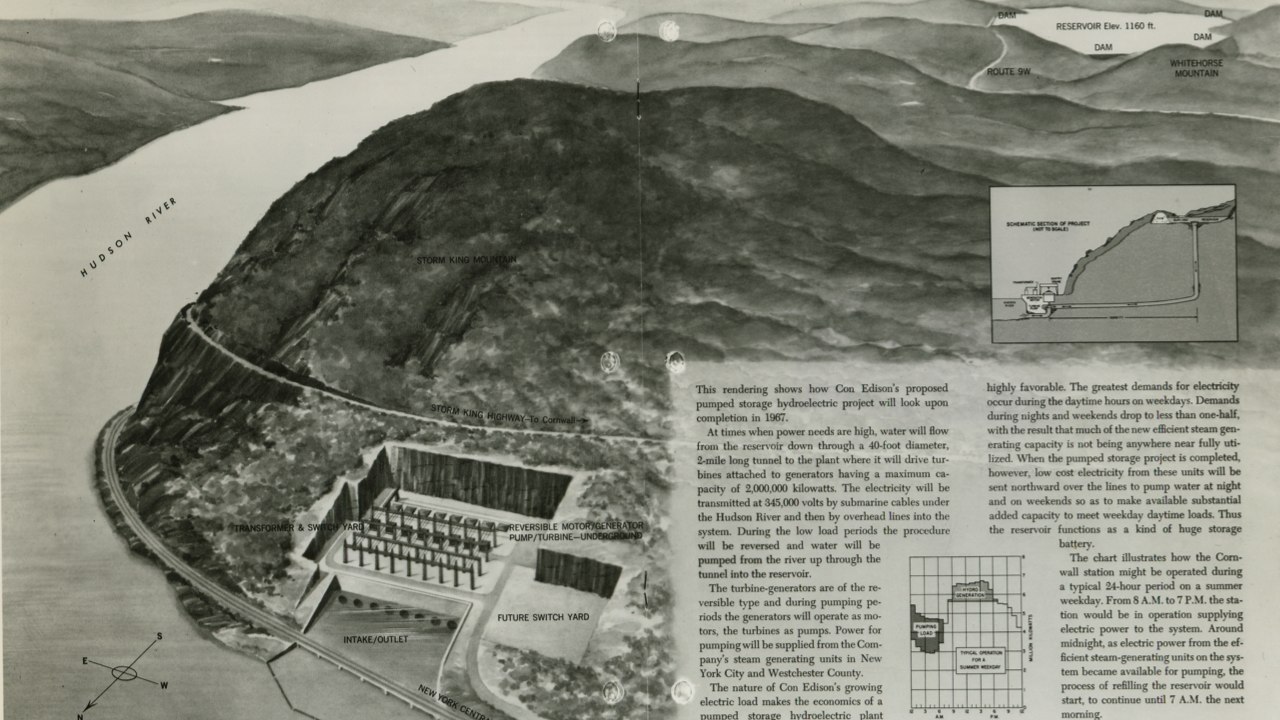
Environmental Law Prof Blog has the text of Nicholas Robinson's recent tribute to Professors Joseph Sax and David Sive at the Pace U. School of Law Garrison Lecture, compellingly describing, among other things, the 1960s environmental litigation over development in the Hudson River Valley and expansion of the Sierra Club to the eastern US. Robinson also mentions Lloyd Garrison's involvement in the Storm King litigation. Robinson writes that "public interest litigation to safeguard the environment was born in these cases".

Robert Rodriguez, Jr., View of Storm King Mountain from Breakneck Ridge
(Scenic Hudson)


Con Ed's Proposal for Storm King Mountain Power Plant
(Scenic Hudson)

Robinson also reflects on the worldwide influence of Sax and Sive:
The ripples from their professional work have spread far and wide. It is fair to observe that the reforms that Sive and Sax engendered in time produced Principle 10 of the Declaration of Rio de Janeiro on Environment and Development, adopted by the UN 1992 Earth Summit. This principle embodies many of the reforms that they urged in the 1970s and beyond: rights of access to environmental information, to pubic participation in environmental decision-making and to access to the courts. These are today recognized as global norms. The combined legacy of their lives is global.

Tuesday, March 11, 2014

In Memoriam: Joseph Sax

Earlier this week the great environmental law scholar Joseph Sax passed away, at age 78. Read the appreciation by Holly Doremus at Legal Planet.

As noted by the New York Times, Professor Sax was perhaps best known for his advancing the concept of "public trust doctrine" as an organizing concept of environmental law. Before Sax "revived and re-invented" (as Carol Rose put it) this now-widespread idea in his seminal article, The Public Trust Doctrine in Natural Resource Law: Effective Judicial Intervention, few had heard of the doctrine. Since then, thousands of articles, briefs, and court decisions in the US and other countries have cited as a matter of course to Justinian and Matthew Hale and argued for the relevance of the doctrine to various environmental issues (Fred Shapiro counts 856 citing legal articles).

As Rose explained in her 1998 symposium article, Sax's 1970 article can be understood as his response to ascendant theories of agency capture of the regulatory process and then-new public choice theory, which provided an explanation of the ability of small but cohesive groups to dominate the policy-making process to the detriment of the wider public interest. The public trust doctrine as advanced by Sax was less about property (as was the original doctrine) than about administrative law: Sax wanted courts to be wary of the regulatory process that often sacrificed public good to private interest.

Sax's passing is an opportunity to reflect on the fact that even ubiquitous and seemingly timeless legal ideas have a history, and that history includes not just formal sources of law, but also scholars and others who mold it and change it to fit changing times. It is also an opportunity to be grateful for the deep and wide body of public-minded scholarship (see Doremus's post) left for us by this giant of the law.

Wednesday, September 11, 2013

RIP Ronald Coase

Nobel Prize-winning economist and law school professor Ronald Coase passed away earlier this month at the age of 102.

Coase's 1960 article, "The Problem of Social Cost", the most-cited law review article of all time, had an immense effect on both the study of environmental law and its design, providing intellectual backing for two prominent trends in environmental law of the last few decades: market-based policies and cost-benefit analysis. As Cass Sunstein explains:
His target was the great British economist Arthur Cecil Pigou, who contended that if a polluter is emitting smoke, and thus causing injury, the best response is to make the factory owner pay for the injury or to impose a corrective tax.
Coase said Pigou failed to see “the reciprocal nature of the problem.” Suppose that a very noisy factory is causing legal injury to a doctor operating next door. Under Pigou’s approach, the factory should be required to pay damages to the doctor. But Coase pointed out that we could also make the doctor bear the cost. His central insight was that if people can bargain with one another, and if it isn’t costly for them to do so, it just doesn’t matter who is required to pay: People will negotiate their way to the efficient solution. This is the Coase theorem in a nutshell.

Sunday, May 26, 2013

RIP Norris Hundley

Over at "Legal Planet" Jonathan Zasloff remembers Norris C. Hundley, Jr. (1935-2013), historian of water law (and other topics) in the American West, and author of over 100 books and essays. His books included The Great Thirst: Californians and Water—A History (1988, rev. ed. California, 2001), which Zasloff calls "a monumental survey of California water history", and Water and the West: The Colorado River Compact and the Politics of Water in the American West (1975, 2nd ed. California, 2009),"the best account of the creation of the Compact, and necessary reading for water policy analysts, lawyers, and really anyone with an interest in the tangled and fraught politics of the Colorado River." Zalsoff's post includes more on Hundley's work and generosity as a scholar.