Showing posts with label book review. Show all posts

Wednesday, January 25, 2023

Efficiency and equality in US environmental regulation

Kunal Parker recently reviewed Elizabeth Popp Berman, Thinking Like an Economist: How Efficiency Replaced Equality in U.S. Public Policy (Princeton UP, 2022). There's a lot here that's relevant to the history of environmental regulation. First, Parker's summary of Popp Berman's argument, with obvious implications for understanding historically some mainstays of environmental policy, such as cost-benefit-analysis and market tools for regulation:


The book explores the rise to prominence of an economic “style of reasoning” in U.S. policymaking in the post-World War II decades. Between 1950 and 1980, Popp Berman shows, this style pervaded realm after realm of policymaking, from social welfare programs to the regulation of markets to the management of the environment.

The chief institutionalizers of the economic style of reasoning were not neoliberals or libertarians (these would become truly prominent in government only after the election of Ronald Reagan in 1980). Instead, they were Democrat-appointed economists and the bureaucrats they worked with and influenced. Albeit not ideologically opposed either to social programs or to market intervention, these economists and bureaucrats insisted that social goals be met as efficiently as possible and that market solutions were generally preferable to interventionist ones. Wherever possible, they pushed cost-benefit analyses and reviews within administrative agencies, urged the dismantling of early-twentieth-century market controls, and sought to achieve ends by creating markets for entitlements rather than by imposing standards by fiat. In all this, they shared much with those further to their right.

By the time Ronald Reagan was elected president, the economic style introduced during the Kennedy and Johnson years had become thoroughly entrenched. Indeed, it had become the hegemonic approach to solving all manner of public problems, its ubiquity and self-evidence continually reinforcing each other. Reagan Republicans would employ the economic style, but the ground had been laid for them decades earlier by Democrats. Indeed, Popp Berman argues, Democrats proved far less strategic in using the economic style than Reaganites. Democrats privileged it as a method in context after context and allowed it to subsume their substantive ends. By contrast, Reaganites were more selective and often successfully subordinated it to their substantive ends.

Parker, though, queries whether equality was actually the guiding principle in the pre-efficiency era:

Sunday, January 15, 2023

Voluntarism and deregulation

Rachel S. Gross recently reviewed Jeffrey K. Stine's Green Persuasion: Advertising, Voluntarism, and America's Public Lands (Smithsonian 2021) for H-Environment. Gross writes:

In the 1980s, Hollywood tough guy Charles Bronson took his vigilante reputation to the world of public service. Bronson was a perfect poster boy for the Ronald Reagan-era PR effort, Take Pride in America. In TV ads, Bronson, along with fellow actors Clint Eastwood and Louis Gossert Jr., decried “bad guys who beat up on trees” and encouraged listeners to take voluntary action to help solve the problem (p. 62). The Take Pride ads were a curious take on the pressing environmental issues of the day. To be sure, vandalism did occur but to name that as a central environmental issue and to use Bronson’s image to convey pride in land as a masculine and patriotic concern were deflections. Just what these ads were a distraction from is the question that Jeffrey K. Stine addresses in Green Persuasion: Advertising, Voluntarism, and America’s Public Lands. Stine argues that the Take Pride in America campaign, which pushed voluntarism as a solution for the issues plaguing public lands, was a reflection of the conservative ideology that government was a problem rather than part of a solution. The Take Pride in America program suggested “that the enlightened self-interest of the private sector offered the ideal approach to public lands stewardship” (p. 53).

*****

Stine faces a challenge in that his book is an analysis of a government program that in the author’s own assessment was ultimately ineffectual and unimportant. In addition to showing the program’s lack of effectiveness, Stine also makes the case for why such an analysis is necessary. For Stine, the office was a failure but a revealing one, in that its longevity reveals a political history of conservative approach to environmental (lack of) action. Namely, Take Pride in America and the agenda of voluntarism it pushed via a succession of Republican administrations reflect a partisan divide on environmental policy, where conservatives aimed to deflect attention away from how they underfunded federal land agencies.

Saturday, September 24, 2022

UNEP at 50

A little while back Environmental Politics carried a review by Katarina Eckerberg of The Untold Story of the World’s Leading Environmental Institution: UNEP at Fifty by Maria Ivanova (MIT Press, 2021). From the review:

UNEP’s mission was to assess the state of the environment and to inform, inspire, empower, and catalyse the UN system in environmental affairs. But why has progress been so slow? There is urgent need to critically assess what UNEP has achieved – and not – in the past 50 years, to investigate why it has yet not become sufficiently powerful in the struggle for a more sustainable world, and what can be done to improve this.

Maria Ivanova’s book helps to understand exactly those issues. It delivers profound knowledge about the functioning of international relations, politics, and administration in practice, by revealing how UNEP’s successes, crises, and turning points have been shaped by both politics, geography, and individuals within and beyond UNEP itself. The book addresses a concern at the core of international environmental politics, focusing on the history and performance of the world’s leading global environmental authority over 50 years.

Its theoretical contribution lies foremost in the thick narratives of the development of our major international environmental conventions – including reversing the depletion of the ozone layer, regional seas pollution, chemicals and waste, climate change, as well as tackling land degradation, and the loss of biodiversity and forests. By applying the concepts of capacity, connectivity, and credibility as elements of performance she guides us through both the empirical analysis and the potential ways forward. Capacity here refers to the people and resources, connectivity to infrastructure and representation, and credibility to authority and legitimacy of the institution.

Sunday, September 18, 2022

Success on the commons

Last year Environmental History published a review by Frederica Bowcutt of Mexico’s Community Forest Enterprises: Success on the Commons and the Seeds of a Good Anthropocene, by David Barton Bray (U. Arizona Press, 2020). Some excerpts:

According to Bray, Garrett Hardin justified enclosure and centralized land management based on an ahistorical understanding; shared-pool commons have always been regulated by rules to prevent overuse. They are not, as Hardin suggested, a free for all. Ownership of land with valuable forest resources incentivizes rural Mexican communities to adopt, develop, and adhere to rules designed to prevent a tragedy of the commons. Results thus far indicate that community-based management of local forest resources “can be as effective as public protected areas in conserving forest cover and biodiversity, while also generating income for local communities” (p. 246).

Friday, May 6, 2022

When Democrats and Republicans united to repair the Earth

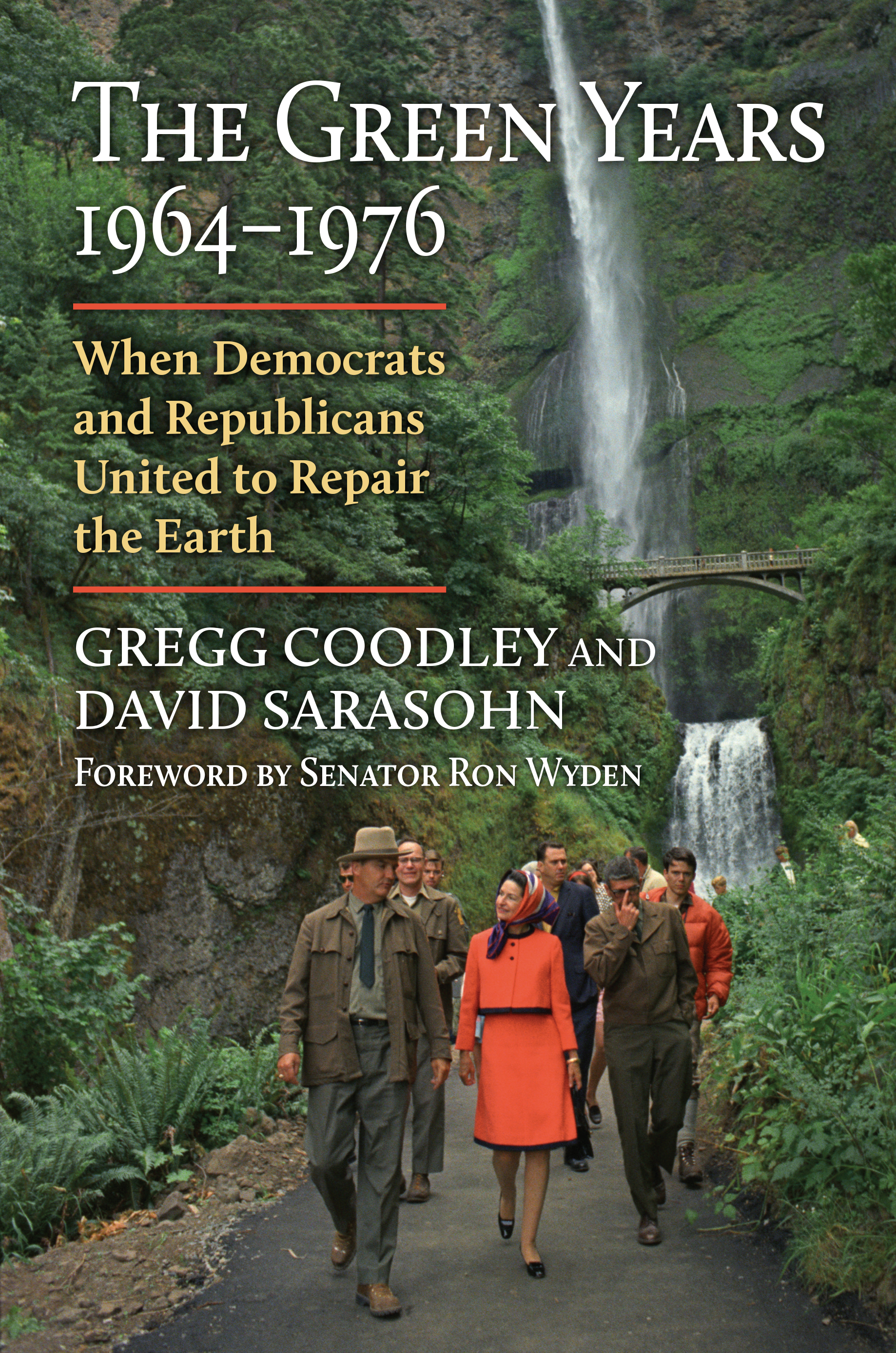
H-FedHist recently published a review by Bart Elmore (recent recipient of the Dan David Prize) of Gregg Coodley and David Sarasohn's The Green Years, 1964-1976: When Democrats and Republicans United to Repair the Earth (U. Press of Kansas, 2021). Elmore writes:

Building on the work of numerous environmental historians—including Robert Gottlieb, Martin V. Melosi, Carolyn Merchant, Roderick Nash, Adam Rome, and Paul Sutter, among many others—Coodley and Sarasohn offer here an exhaustive play-by-play account of the legislative battles between 1964 and 1976 that led to the passage of some of the most important environmental laws in the United States. The central takeaway of this book is that though Democrats controlled Congress throughout these years, “all environmental laws passed from 1964 to 1976 commanded huge bipartisan support” (p. 257). Coodley and Sarasohn explore how political compromises formed to yield environmental laws, like the Clean Water Act of 1972 or the Toxic Substances Control Act of 1976, but also save room for concluding chapters that discuss the factors that led Republican Party members away from supporting environmental legislation in the 1980s and beyond.

*****

An important point of emphasis in the section on the late 1960s and early 1970s is that though Nixon was never personally passionate about environmental issues—he once “walked on the beach in wingtips,” quip Coodley and Sarasohn— key members of Nixon’s staff, especially Pacific Northwesterner John Ehrlichman and Council of Environmental Quality adviser Russell Train, were major proponents of big legislation designed to preserve and protect America’s wildlands, waters, and natural resources (p. 4). The central message here is that Nixon’s impressive environmental legacy—which included the signing of the National Environmental Policy Act in 1970, creating the EPA the same year, and supporting the Clean Air Act and the Endangered Species Act of 1973—was largely a product of Nixon’s calculating desire to maximize political capital by supporting signature legislation that had widening popular support from constituencies on both sides of the political aisle.

But Coodley and Sarasohn are careful to point out that Nixon’s willingness to push for environmental laws did not last forever. The turning point in the book is the winter of 1971 and 1972 where Nixon began to express serious concern that he would soon face major backlash from pro-industry voters if he continued to support stiff environmental regulations. “I have an uneasy feeling that perhaps we are doing too much,” he wrote his chief of staff, H. R. Haldeman, in February 1971. “Just keep me out of trouble on environmental issues,” he told Ehrlichman around the same time (p. 142). Nevertheless, despite Nixon’s waning interest in environmental issues, Republican members of Congress continued to find common ground with Democratic colleagues even as the toxic political bitterness of the Watergate scandal embroiled the nation. 

The review goes on to discuss the book's treatment of the post-Nixon years, as well. 

Friday, February 4, 2022

The usufructuary ethos

H-Environment recently posted a review by Jay David Miller of Erin Drew's The Usufructuary Ethos: Power, Politics, and Environment in the Long Eighteenth Century (U. Virginia Press, 2021). Some excerpts from the review:
Erin Drew summarizes the core principle of the early modern set of ideas she calls “the usufructory ethos” as follows: “What you have is ‘yours’ only in a partial and temporary sense” (p. 47). Nowhere did this principle manifest itself more clearly than in the figure of the landlord, who commanded power over tenants and by extension the land itself, but who was also, theoretically, bound by responsibilities to both subordinates and superiors. The concept of “usufruct”—which originated in Roman law but was heavily mediated through Christian theology—addressed the paradoxical nature of the landlord’s power by stipulating that the rights associated with ownership were circumscribed by far-reaching and interconnected obligations “that linked not only past, present, and future but [also] humans, nonhumans, and God, as well as the social, political, and natural worlds” (p. 2). Drew argues that recovering the history of the usufructory ethos in late seventeenth- and early eighteenth-century Britain changes the way we understand the human relationship to the environment in this era and could inform how we imagine it today.

*****

After tracing various iterations of the usufructory ethos through the writings of John Howe, Richard Allestree, Thomas Adams, Matthew Hale, and Thomas Tryon, Drew concludes chapter 1 with the more familiar John Locke. Locke’s significance to the study lies in the fact that the theory of property articulated in his Second Treatise on Government (1690) both relies on the concept of usufruct and undermines it in ways that foreshadow its gradual recession. While the Second Treatise contains usufructory provisos against waste and spoilage, Locke included these mainly as a way of protecting individual property rights, rather than stewarding resources that properly belong to God for the sake of others. Furthermore, Locke’s monetary theory, in which the fruits of labor are abstracted into capital, rendered concerns about waste and spoilage obsolete, as did his assumption that the European “discovery” of America opened up a limitless supply of land. By identifying these features of Locke’s thought, Drew illustrates how the usufructory ethos would come under increasing pressure as commerce and colonization came to define the seventeenth and eighteenth centuries. 

Wednesday, January 26, 2022

The New England river commons

H-Environment recently published Zachary Bennett's review of Erik Reardon's Managing the River Commons: Fishing and New England's Rural Economy (U Mass Press, 2021). From the review:

After more than two centuries of damming and polluting their rivers, Americans are reversing course. Dams are coming down and the migrating fish that astonished early European explorers are returning.... Although rivers are coming to resemble their pre-industrial state now more than ever, few serious studies of early American waterways exist. Erik Reardon shows that these struggles to preserve riverine ecosystems are much older than river restoration advocates may have considered...

*****

The first two chapters establish the importance of river fisheries in indigenous and early colonial communities, arguing that both created sustainable common-use practices to protect fish. Reardon quotes heavily from other secondary sources and his arguments echo the likes of Jeffrey Bolster who have shown that colonists severely depleted fisheries immediately upon their arrival. Reardon effectively demonstrates that colonists both noticed that decline and realized they needed to enact conservation measures at least a full century before industrialization.

Chapter 3 reads as a composite biography of four river fisherman from Maine to Rhode Island who lived at the turn of the nineteenth century.... Their way of life came under considerable threat when commercial fishing practices entered rivers in the nineteenth century that netted the salmon and shad for sale in distant markets and enriched an emerging merchant class. Reardon shows that this class of farmer-fishermen ultimately turned to the state to punish unsustainable fishing practices and preserve rivers as traditional commons space.

Wednesday, October 27, 2021

Heinzerling on Lazarus

Sorry for the long silence - I hope I'll have some more time now to catch up on the blog.

Last spring Lisa Heinzerling published a review in the Michigan Law Review of Richard Lazarus's The Rule of Five: Making Climate History at the Supreme Court (Harvard UP, 2020). Heinzerling writes:

Let me start by saying that whoever chose the novelist Scott Turow as the lead blurbist for the book jacket nailed it. The book is crowded with ambitious lawyers, wise judges, tangled law, and stately courtrooms. There is a just cause and a triumphant outcome. There are heroes and antiheroes, with these judgments disguised but not hidden by Lazarus’s facially neutral thirdperson narrative. To top it all off, a courtroom scene serves as the dramatic climax. The book is, against all odds, a legal thriller.

All this novelistic drama, however, comes with costs. The costs are a deficit in critical judgment and a surfeit of gender traditionalism. The deficit in critical judgment manifests in Lazarus’s unalloyed reverence for the Supreme Court and apparent resistance to critiquing its work. This reverence is most vividly on display in the book’s descriptions of the Supreme Court building and its contents. The entire building becomes, in Lazarus’s narrative, a kind of reliquary: every object the justices touch, from pewter mugs to leather chairs to spittoons, takes on some larger and quasi-sacred meaning. The politics that otherwise stalk the city in which the Court sits do not, we are made to infer, darken the doors of this special building. And a frank acknowledgement of the gendered character of the men’s-club atmosphere of the Court is lost in Lazarus’s romanticizing.

*****

The book’s deficit in critical judgment, now paired with unspoken gender traditionalism, also surfaces in its treatment of the human dramas of Massachusetts v EPA. Lazarus’s account is blind to the subtle gender dynamics of the case and, most troublingly, to his own reenactment of them. Lazarus selects as his cast of characters “five guys,” as he calls them, and “a gal,” as he calls me. His account of the five guys’ roles in the case uncritically accepts their version of events and then distorts it by fixating on and amplifying the conflicts that arose during this high-stakes litigation. In Lazarus’s rendering, the contributions and sacrifices of the female lawyers, including my own, recede to make room for the men.

There's lots more here - worth reading. 

Tuesday, March 2, 2021

Epidemics in late medieval law

The Journal of Interdisciplinary History of Ideas recently published a review by Lorenzo Coccoli of Mario Ascheri's Rimedi contro le epidemie. I consigli di diritto europeo dei giuristi (secoli XIV-XVI) (Aracne, 2020). Coccoli writes:

In the large and ever-growing body of scholarship on the social history of medieval and early modern epidemics, a tendency exists to favor the second of these three aspects, looking at social life in time of disease outbreaks mostly through the lens of criminal justice and the repressive power deployed by authorities in order to enforce their emergency regulations. There are several good reasons justifying that choice....

Nevertheless, one might still legitimately wonder whether a different set of judicial sources could provide a somehow different picture of the challenges the plague posed at various levels of society. The sudden disappearance of people and properties confronted survivors with a whole series of legal problems that were not reducible to the grammar of crime and punishment. How to establish, for example, the correct line of inheritance when potential heirs die one right after the other, and when, because of the general confusion caused by disorganization and fear, no medical records exist to prove who died first and who died later? Should rent still be paid even though tenants had fled the rented premises to find shelter in a safer place? More generally: should contracts still be honored even though the plague had prevented their full execution? Questions of this sort may lead to a richer historical understanding of social dynamics in times of health crises, by adding to the ‘vertical’ observation of the relationship between authorities and their subjects the ‘horizontal’ auscultation of the connections and exchanges between the subjects themselves. For one thing is sufficiently clear: although narrators, from Boccaccio to Manzoni through Defoe, have conventionally depicted plague-ridden communities as unruly places where people move and act ‘beyond the usual laws’, law itself kept in fact operating throughout the epidemic storm as the fundamental infrastructure of associated life.

*****

The second and third chapters... deal with the solutions envisaged and proposed (with greater or lesser confidence) by late medieval law doctors to the problems raised by epidemic outbreaks for, respectively, the public management of cities and the regulation of private business. Sannazzari, Aldobrandini and Previdelli’s tracts in fact capitalized on a large pool of earlier consilia, quaestiones and commentaria on Roman and Canon law, gathering and organizing sparse hints on the matter that could be gleaned from them. Sixteenth-century jurists seem to agree with their predecessors on the supernatural causes of the plague, which represented the distinctive way in which God chose to wage war against humans because of their sins. The warlike metaphor—which seems to still have some currency in today’s parlance about the present predicament—was not, however, a simple rhetorical device. In the works of ius commune jurists, the notion of bellum Dei was taken literally so as to draw some effective legal consequences from it and solve, by virtue of analogical interpretation, the occasional legal conundrums. Thus, for example, the difficulty over the possibility of imposing an emergency property tax on people who were normally exempted from all sorts of contribution could be dodged by noting that, in times of war, even those who were covered by fiscal immunity were compelled to pay for the sake of the common good. 

Wednesday, February 17, 2021

The conservation constitution

A recent issue of Perspectives on Politics has a review by Richard Andrews of Kimberly K. Smith's The Conservation Constitution: The Conservation Movement and Constitutional Change, 1870–1930 (University Press of Kansas, 2020). Andrews writes that while existing works on the history of US conservation policy "focus on the policies expressed in statutes and regulations and on the actions of the administrative agencies, with only limited mention of the legal and constitutional arguments that were battled out in the courts", Smith's book "provides a valuable new complement to these studies by presenting a far more detailed history of the legal and constitutional arguments presented to and ultimately decided by the courts during the period from 1870 to 1930". Andrews continues:

Smith’s primary aim, well summarized in the final chapter (pp. 254ff.), is “to explain how lawyers and judges reworked constitutional doctrine to accommodate the expansion of state power over the natural environment during the Progressive era; and more specifically, how legal decisionmakers conceptualized the natural environment, its relation to human society, and the public interests at stake to create the constitutional ‘common sense’ that federal and state governments have authority to protect natural resources and the integrity of ecosystems in the interest of future generations.” In the process, she discusses the interweaving of principles such as the public trust doctrine, the police power, public nuisance doctrine, parens patriae standing, the interstate compacts clause, and federal constitutional arguments based on the interstate and foreign commerce, property, war, treaty, spending, and eminent domain powers, as well as the interstate nuisance doctrine. She argues that even though many of these issues continue to be argued in the modern era, the sheer number of these constitutional foundations, once accepted by the courts, has ultimately made governmental environmental management authority strongly resilient to challenges. She also urges greater recognition of the roles of skilled lawyers and judges, along with the better-known politicians and citizen advocates, in achieving this stronger role for the state in environmental conservation. Finally, she notes the continuing need for further evolution of our understanding of the Constitution: the Progressive understanding did not address the distributive imperfections of environmental regulation, nor the implications of administrative processes for procedural justice, nor—perhaps most problematic today—the absence of effective capacity for national economic and environmental planning, particularly in international cooperation to address global environmental challenges such as climate change. 

 After some minor criticisms, Andrews adds: 

Tuesday, January 19, 2021

Some foundations of modern British environmental law


The recent issue of the Journal of Environmental Law has a review by Stephen Tromans of Richard Macrory's Irresolute Clay: Shaping the Foundations of Modern Environmental Law (Hart, 2020). An excerpt:

In a series of Chapters, Macrory looks at the development of the profession of environmental law: the ‘early sparks’ of environmental law as an academic discipline; practising environmental law as a barrister; and the ‘coming of age’ of academic environmental law. Here of course, the author is on strong ground, having been at the heart of the development of environmental law as an academic discipline since its inception. He has also had some, though very limited, experience of advocacy at the environmental Bar.

Chapter 3 deals with ‘the emergence of environmental lawyers’ in the UK, covering forerunners such as Professor Jack Garner, the Lawyers’ Ecology Group founded in 1972, and the inception of the UK Environmental Law Association (UKELA) in 1986. Having been involved in that process, it is always interesting to read about it, though how interesting generally to later practitioners may be questionable. The key point made is the undoubted development of environmental law ‘as a distinct and vibrant field’—the growth of UKELA reflecting that development. Macrory concludes that ‘the notion of both environmental law and environmental lawyers seems now to be fully embedded in our legal system.’ As in other areas, the possible weakness of the analysis maybe derive from the quite narrow focus of the author’s own personal journey, which does not really provide a full account of why and how environmental law came to achieve that position. In particular, a fuller analysis might have revealed quite a complex synergy between different areas of the law and different types of lawyers.

The strength of an organisation like UKELA has always been that it has drawn together lawyers from private practice, both as barristers and solicitors, lawyers working in house with industry, increasingly—and to be welcomed—lawyers working for environmental NGOs, lawyers within central and local government and agencies, as well as academics (and as Macrory points out, also many members from non-legal professions). The teaching and research in environmental law burgeoned in the late 1980s and 1990s, with many noted academics not mentioned in Macrory’s book—for example, Brian Jones and Michael Bowman working with Professor Garner in Nottingham; the engaging David Hughes at Leicester, who wrote one of the first student texts on the topic; the late Simon Ball at Sheffield, who wrote the other, later joined as co-author by Stuart Bell; Lakshman Guruswamy at Durham; Lynda Warren at Aberystwyth; and others. However, a relatively small cadre of academic lawyers would not have sustained the subject. What was also instrumental in the development of environmental law was that it became possible for people who had studied it to go on and get a job in that field and have the opportunity of making it their career. This occurred in the early 1990s because the major solicitors’ firms, and their clients, particularly US companies, began to regard environmental law as a necessary and even desirable practice area. New legislation such as the Environmental Protection Act 1990, and new EU Directives being transposed into UK law, meant that there was a need for advice on compliance. Perhaps even more important, from a commercial perspective, was the recognition of environmental risk—particularly the risk of liability for historically contaminated land—in transactions. These included loans, with very considerable interest and concern by the mainstream banking industry in such risks. The result was rapid growth in environmental departments in established London firms and the appointment of environmental lawyers as partners to head them, in some cases being appointed from an academic background. This provided strong support for the development of environmental law and the incubation of a future community of environmental lawyers and is a strong factor in it becoming an established practice area.

Thursday, January 14, 2021

The origins of American environmentalism

The upcoming issue of Environment and History has an interesting, extended review by Thomas Le Roux (translated from the original French review in Le mouvement social) of Chad Montrie's The Myth of Silent Spring: Rethinking the Origins of American Environmentalism (U Cal Press, 2018). According to the review, the book does not try to downplay the importance of Rachel Carson's Silent Spring, but rather to point out the rich history of environmentalism (and environmental regulation) long predating Carson's work, with sources in labor, public health, social justice, and other movements. An excerpt:

In the second half of the nineteenth century... local municipalities were pressed to provide public health services or access to drinking water. The fight against pollution was one of the main issues of the urbanising nineteenth century, and this is the subject of the second chapter, which exposes different types of action to protect urban environments between 1870 and 1945. In particular, women, industrial workers and racial minorities began to claim environmental justice. As unions organised, and within the context of a wider social movement during this period, the working and lower classes managed to have their voices heard in order to improve their living conditions in an insalubrious urban environment. Often pressured by radicals, socialists and reformers, a number of communities took action to address local injustices. For example, between 1897 and 1904, under the directives of the radical Mayor Jones, Toledo, Ohio inaugurated a municipal service for garbage collection, as did Milwaukee, Wisconsin, which was led by a socialist-leaning mayor after 1898. It is particularly interesting that environmental activists also found themselves fighting for better industrial hygiene to protect the health of factory workers. It is in this milieu that the socialist John R. Commons, who established several health and safety measures in Milwaukee, participated in creating the American Association for Labor Legislation. His work, alongside that of Professor Alice Hamilton, resulted in a more protective regime for industrial hygiene in Chicago and in the whole of the State of Illinois. In this urbanising world, the desire for nature was not only a privilege of the upper classes, but the contemporary push for segregation was such that numerous conflicts emerged regarding the use of forests, beaches or the rural surroundings of cities for a day’s relaxation. In the middle of natural spaces, unions and local communities created educational camps that focused on learning about natural environments for urbanites otherwise confined to their city districts or to their factories. These different actions diffused a renewed sentiment of the need for nature which was well-rooted prior to the second World War, and Montrie highlights that this need was reinforced with the federal program for conservation during the New Deal.

Tuesday, September 29, 2020

The Santa Barbara Oil Spill

H-Environment recently published a review by Samm Newton of Teresa Sabol Spezio's Slick Policy: Environmental and Science Policy in the Aftermath of the Santa Barbara Oil Spill (U. Pittsburgh Press, 2018). The Santa Barbara spill is often pointed to as one of the foundational moments of modern American environmentalism and environmental regulation, but Spezio seems to flesh out the picture.

Newton writes that Spezio

explores the relationships between oil pollution and political changes in the 1970s and asks how the Santa Barbara oil spill became a watershed moment in the history of environmental and science policy in the US, especially in regard to the Clean Water Act of 1972 (CWA). To answer this question, Sabol Spezio analyzes how the oil spill influenced the CWA and the National Environmental Policy Act (NEPA), as well as the formation of the Environmental Protection Agency (EPA) and the National Oceanic and Atmospheric Administration (NOAA). She then turns to the changing science and technology that became essential to understanding marine oil pollution and how that contributed to detecting water pollution in fresh water systems. She argues that the US government’s reactions to the Santa Barbara oil spill improved their ability to address controlling, measuring, and regulating water contamination on a federal level. 

Her argument is broken into three sections. Part 1 describes environmental science and policy before 1969. Before the oil spill, no entity was officially in charge of managing the oceans. Federal waters were regulated by the Bureau of Land Management (BLM) and the United States Geological Service (USGS) under the guidance of the very oil companies exploiting the resources located in those waters. Additionally, scientists used different protocols and technologies to measure oil pollution. Before 1969, water quality was measured by smell, taste, sight, and/or the presence of disease. The oil spill in California challenged that precedent, contending that measurement by the senses was inefficient. A flurry of new research methods and technologies, specifically gas chromatography, followed in an effort to estimate both oil in water and the dispersants used to combat oil pollution.

*****

As Sabol Spezio argues, it took a salient crisis, like the debacle that was the oil spill, to make regulatory change possible. Several events in the 1960s and ’70s, such as the publication of Rachel Carson’s Silent Spring (1962) and the Cuyahoga River fire, contributed to the salience of environmental degradation in the American attention cycle. Sabol Spezio adds to the literature by claiming that the Santa Barbara oil spill was not just one of many environmental crises but was the tipping point event that made the reform of US environmental regulation possible. 

Sunday, August 16, 2020

The Ecocentrists

U.S. Intellectual History Blog just finished a very interesting roundtable, organized by Anthony Chaney, on Keith Makoto Woodhouse's The Ecocentrists: A History of Radical Environmentalism (Columbia UP, 2018), the 2019 winner of the Society for US Intellectual History’s award for best book of intellectual history. The roundtable includes insightful essays by Roy Scranton, Natasha Zaretsky, Paul Murphy, and Daniel Wayne Rinn, as well as a response by Woodhouse.

An excerpt from Zaretsky's piece demonstrates the relevance of the series to legal and environmental historians and practitioners alike:

[The] fantasy of a world emptied of people casts humans as an invasive species and the non-human world as bouncing back once we have exited the scene. In The Ecocentrists, Keith Makoto Woodhouse terms this thinking “holism”—a tendency to portray human civilization as comprised of an undifferentiated mass of people bearing down on a planet with finite resources and capacities. This proclivity toward holism was at the heart of radical environmentalism, where it played a paradoxical role. On the one hand, it gave the movement its teeth and empowered activists to reject the incrementalism of mainstream environmental organizations and engage in direct action, often at personal risk. On the other hand, at its worst, holism could shade into misanthropy, a blindness to social and economic inequality, and even anti-immigrant nativism.

Woodhouse is keenly aware of this paradox, and the portrait of radical environmentalists that emerges are nuanced. This book neither pathologizes nor romanticizes radical environmental activists. Much of the book centers on the story of Earth First!, and at one point, Woodhouse stresses that Earth First!ers saw themselves as part of a movement rather than an organization. It is worth taking a moment to reflect on the depth of that distinction. Earth First! was founded in April 1980 at the start of a decade when the radical energies of many social movements of the 1960s and 1970s would be routed into a dense and well-funded liberal apparatus comprised of non-profit organizations, think tanks, and lobbying groups that sought to reform the system from the inside. Modern environmentalism was particularly vulnerable to this kind of institutional capture because of its reliance on litigation strategies. But Earth First!ers were “movement” people. To be a movement person is to set oneself apart from the dominant society, to feel swept up by the forces of historical change, and to place political commitment at the center of your everyday life in ways that people outside the movement often find baffling and inexplicable. These tendencies arguably ran even deeper for radical environmentalists, who were motivated by a sense of urgency predicated on the prediction that the planet was running out of time. The Earth First! slogan—“no compromise for Mother Earth”—captured the movement’s single-minded drive.

But that single-mindedness also created contradictions that dog radical environmentalism to this day. The portrait of an existential standoff between an imperiled earth and “human civilization” overlooked the histories of global capitalism, colonialism and imperialism, enslavement and coercive labor structures, the appropriation of indigenous lands, concentrations of wealth and resources in the global north, and widening social and economic inequality. When radical environmentalists simplistically argued that “people were the problem,” they failed to grapple with how these histories were entwined with assaults on land, air, and water. This critique of a “universal humanity” will be familiar to anyone who has followed the more recent debate about the Anthropocene, the geoscientific term used to mark the moment when human activity became traceable in the geological record. Scholars such as Jason Moore, Andreas Malm, and Donna Haraway reject the term “Anthropocene” for its universalizing tendencies, introducing instead clumsier but more precise designations such as the Capitalocene, the Chthulucene, and the Plantationocene. Woodhouse’s book reminds us that the current Anthropocene debate has deep historical roots. It has long proven difficult for radical environmentalists to simultaneously combat both the planetary threats posed by humans and the inequalities that exist among humans. (Radical environmentalists are not the only ones who struggle with this. Activists focused on human inequality have also tended to subordinate the non-human world, but that is a different–if not unrelated–story). 

Sunday, August 2, 2020

The Nature State

The latest English Historical Review has a review by Karen Jones of The Nature State: Rethinking the History of Conservation, edited by Wilko Graf von Hardenberg, Matthew Kelly, Claudia Leal and Emily Wakild (Routledge, 2017). Jones writes:
Building on the work of David Blackbourn, James Scott, Adam Rome, Paul Sutter, and Frank Zelko, the present volume asks us to take a fresh look at the mechanics of power and governmental activity in matters of conservationist enquiry, taking in ideas about global networks, modernity, localism and the politics of negotiation. Implicit here are two concepts: firstly, a challenge to the idea of American hegemony in leading the world in conservation thinking and, secondly, a sense that in embarking on various kinds of environmental governance, state organs were able to propagate their influence and reach. Here the book reveals a foundational tension, arguing for the ‘irregular but near-universal character of the nature state’ (p. 9), while also pointing to the way in which different geographies, constituencies and structures created a site-specific patchwork polity marked by formal and informal demonstrations of authority.
*****
... the book is provocatively, but somewhat deceptively titled. In fact, in the story of environmental resources and political capital set out here across diverse geographies, we find not one state but many, sometimes redoubtable, sometimes hamstrung, and always complicated.

Sunday, July 26, 2020

Italian forest commons

As summer bakes Jerusalem and flights are indefinitely suspended, thoughts of Italy's Cadore region, discussed in Giacomo Bonan's The State in the Forest: Contested Commons in the Nineteenth Century Venetian Alps (White Horse Press, 2019), are beguiling. (Bonan wrote an excellent paper, "Confronting Hardin: Trends and Approaches to the Commons in Historiography", for a collection I edited a couple of years ago.) ARO recently published a review by Richard Hölzl of the book; some excerpts:
At the center of Bonan’s book are the Alpine valleys of the Cadore, a region in the Eastern Italian Alps to the North of Venice and bordering on Alto Adige/South Tirol and Austria. The region came under the rule of the Serenissima of Venice in the early fifteenth century and remained so until its fall in 1797. After the brief but very important period of the Napoleonic Kingdom of Italy, it was part of the Habsburg Empire from 1815 to 1866, when the Veneto was annexed to the new Kingdom of Italy. Since the thirteenth century the families of the Cadore, constituted as the Community of the Cadore, organized the local forests and their exploitation as commons under a system known as regole. Regole initially meant regular decision-making at assemblies by the heads of the households of several Cadore villages, who also appointed officers to enforce regulations of communal life. With the increasing success of Venice as a maritime and commercial power, the forests of the Cadore became of importance to the Venetian economy, as they provided timber for shipbuilding and city extension. Timber entrepreneurs of the Cadore cooperated with Venetian merchants and established a vibrant business that also dominated the income and livelihoods of the local households of the Cadore. Timber trade provided decently paid labor for members of every household and subsidized food imports to the mountain valleys, which did not support much agriculture. It also resulted in considerable population growth before and after 1800. Moreover, it furthered the stratification of local society in wealthy timber entrepreneurs, established families who claimed access to and common ownership of forests, and a class of newcomers and landless without such benefits.
The Napoleonic Age brought fundamental changes to this system – changes, which lasted the better part of the nineteenth century and had the established families of the Cadore look back nostalgically on the seemingly good old times, when the regole system was intact and the timber trade supported communities and households well. The advent of modern forestry in the Napoleonic and Austrian period meant that regional and central administrative officers were tasked with supervising the felling process as well as introducing new cutting and conservation measures. The administrative elite in Venice adopted the new scholarship on forests which emerged out of France and Germany and attempted to implement it on Venetian territory.
The Cadore, however, is an interesting exception to the general trend to abolish and privatize the forest commons in the early nineteenth century. Rather than abolishing the commons, the successive administrations tried to modernize their administration by transferring the management from the regole and villages to larger municipalities and regional forest authorities, and by using the profits from the forest commons for road building and schools, rather than supplementing food import. 

Monday, June 15, 2020

The Cigarette: A Political History


The Cigarette: A Political History (Harvard UP, 2019) by Sarah Milov, co-founder of this blog, was recently reviewed by Reuel Schiller for Jotwell. Schiller writes that Milov's "narrative weaves together legal, political, and economic history in a manner that calls for a revaluation of the dimensions of twentieth-century liberalism and the nature of its decline. The book is a compelling exercise in historical synecdoche: its subject is the political history of the cigarette, but its story is that of the twentieth-century American state." Further excerpts:

Frankly, one could teach a course on twentieth-century legal history using this book as a textbook. It speaks to a broad range of subjects central to the interests of legal historians: the role of law in constituting capitalism; the interaction of law, gender, and race in the construction of social movements; the simultaneously emancipatory and constraining potential of framing policy preferences as rights; the profound role of the administrative state in structuring politics and policy; the rise of public interest litigation; the importance of understanding the legal history of agriculture, a field sorely neglected by legal historians. While different readers will find different analytic points particularly compelling, two stand out for me.

First, Milov’s narrative suggests the need to reevaluate the postwar state’s legal and political contours. For readers familiar with early New Deal policies such as the National Industrial Recovery Act and its industry-written “codes of fair competition,” American tobacco policy is familiar. It was “associationalism” — an interweaving of public and private power that obscured the extent to which private institutions acted as vehicles for public policy. In the traditional narrative of the New Deal, associationalism ended with the political and legal demise of the National Recovery Administration in 1935. Joining scholars such as Brian Balogh, Milov shows how, in fact, associationalism outlasted the NRA and became an integral component of postwar state. Far from being replaced by the light touch of Keynesian fiscal policy, Milov shows how producer-oriented associationalism melded with consumer-oriented Keynsianism to give an alliance of corporate and state interests an active role in structuring the post-war economy as it simultaneously created an illusion of statelessness.

Thursday, April 30, 2020

Levelling the Lake

Thank you to everyone who's assisted in putting together the list of sources on the legal history of epidemics; this is an ongoing project so please do send me any ideas for sources.

I'm also going to try catching up on the big backlog of posts I haven't had time to do, beginning with today's notice of Daniel Macfarlane's review for the Canadian Historical Review of Jamie Benidickson's new book, Levelling the Lake: Transboundary Resource Management in the Lake of the Woods Watershed (UBC Press, 2019). Macfarlane writes that the book
is a deep dive into a complex area defined by borders (both hydrological and political). Surveying the last half of the nineteenth century to the present, Benidickson unravels this complicated story of resource management in the Rainy-Lake of the Woods area, which spreads across northwestern Ontario, southeastern Manitoba, and northern Minnesota (including the border jog referred to as the Northwest Angle).
One of Canada's leading environmental law scholars, Benidickson has made a career of writing about Ontario's water. Part of UBC Press's Nature/History/ Society series, this book can be characterized as environmental, legal, policy, and institutional history. The central focus of Levelling the Lake is the history of environmental governance, chiefly on the Canadian, and Ontario, side of this watershed. The narrative moves back and forth between different places and scales: Kenora and Fort Frances, Queen's Park and federal Cabinet meetings, corporate boardrooms, and International Joint Commission (IJC) deliberations. This inquiry required research in multiple archives as well as the use of printed primary sources such as court cases and IJC reports. Benidickson manages to delineate the overlapping jurisdictions and policies while simultaneously weaving together various sectors that are often ignored or compartmentalized by authors attempting research projects at similar scales: hydropower, water levels, pollution, fisheries, mining, recreation, forestry, pulp and paper, and so on.
*****
Levelling the Lake painstakingly peels back the various layers and imprints that make up the palimpsest of overlapping and contested boundaries in this region. Benidickson is an ideal interlocutor, teasing out the strings of intertwined claims and histories in ways that shed light on modern resource disputes. To make the necessary legalese more accessible, the author effectively employs metaphors and analogies, such as using the game of musical chairs to simplify the muddled process of acquiring water-power sites in the region (63). Characterizing jurisdictional and border issues as "polycentric," the author does not get bogged down in theory or concepts. Thus, this book will appeal to an interested general audience as well as to environmental and resource scholars in a variety of academic disciplines spanning the social sciences and humanities; at the same time it is a must-read for historians of northern Ontario. 

Friday, December 20, 2019

The Roman public trust doctrine

I've often expressed impatience with the throwaway references to Justinian (often misconstrued as an adjective!) that are so ubiquitous in discussions of the public trust doctrine. Now comes Bruce Frier's review of Domenico Dursi's Res Communes Omnium. Dalle necessità economiche alla disciplina giuridica (Jovene, 2017) to make some order for those of us for whom Roman law is something of an enigma. Frier writes, explaining his own view (I'm omitting most citations and footnotes):
By the Late [Roman] Republic, the general idea of res communes was already well known in Roman culture. Plautus’ comic play Rudens, thought to date from c.190 B.C., features a fisherman (his occupation is important!) proclaiming that “the sea is unquestionably common to all persons” (mare quidem commune certost omnibus) in a longer speech that emphasizes fish as belonging to their captor.... [T]he concept becomes much more familiar in Latin sources from the Late Republic and Early Empire. Forms of common property are most often the air and the sea, but Cicero adds in the seashore (litus) as well. Although the familiar idea of common property was further elaborated in Early Imperial poetic or Stoic theories on the origin and development of human culture, there is no sign that these theories had any pronounced influence on the law; certainly they lead to no demonstrable legal conclusions.
By the Late Republic, a second cultural element had emerged: a widespread and often expressed disquiet about the startling proliferation of villas along the coast of central Italy and the Bay of Naples.... The architects of these villas, capitalizing on recently-discovered hydraulic concrete, often put down substructures extending beyond the shore and out into the sea — a phenomenon quite commonly referred to in legal texts, and one of particular concern to poets such as Horace who perceived the structures as morally hubristic. More exciting, however, is the discovery that not a few of the maritime villas incorporate fishponds so large that they were plainly intended to produce fresh fish not just for the villa, but for local markets.... [T]hese fishponds may well have brought the villa-owners into direct confrontation with more humble local fishers. 

Friday, October 4, 2019

A plea for more historical awareness in environmental law

The latest issue of Rechtsgeschichte has a generous review by Jan-Henrik Meyer of my chapter in the Oxford Handbook of Legal History, "Historical Analysis in Environmental Law". Meyer writes:
Schorr ascribes the lack of historical awareness to the apparent novelty of the subject area. Environmental law as a field only emerged in the wake of what already some of the contemporaries self-confidently described as the »environmental revolution« of the early 1970s. In a short span of time, roughly between 1969 and 1973, promoted by international organisations such as the OECD, NATO, the United Nations (UN) and pace-setting governments – notably the United States and Sweden – the environment emerged as a new area of policy and legislation. New institutions such as environmental agencies and ministries were established. Ambitious environmental action programmes were drafted, outlining legislative and administrative measures. The nascent environmental movement first gathered internationally around the UN Conference in Stockholm in 1972. Environmentalists critically observed and pushed these new institutions to make and shape the new environmental law. Consequently, environmental law quickly became a new subfield within government administrations, legal practice, the courts and legal scholarship.
The apparent novelty of environmental law tends to induce environmental lawyers to discount the importance of history, Schorr rightly argues. Not only do environmental lawyers frequently ignore the longer-term historical legacy, they also tend to forget that conflicts about and regulations concerning the use and abuse of nature and natural resources are not something altogether new. Schorr deplores that practitioners in particular tend to refrain from using history and historical precedent as an »argument«. This is both counterproductive and counterintuitive in the field of law, where arguing with precedent is standard practice, as many non-lawyers were reminded recently when the House of Commons’ speaker John Bercow’s mobilised 17th-century precedents of parliamentary procedures to fend off a third Brexit vote.
David Schorr is aptly placed to raise such a critique, as he is one of the few specialists of both legal history and environmental law. Schorr’s point of departure is thus a plea for a greater historical awareness in environmental law and among environmental lawyers. He convincingly argues that a longue durée view of environmental law avant la lettre would be extremely insightful. Scholars and practitioners should consider the large body of rules and regulations on nature, property, nuisances, pollution and resources produced long before such norms were actually defined as and subsumed under the new umbrella of »environmental law« in the early 1970s.
Schorr convincingly demonstrates the extent to which legal historical scholarship remains isolated from the burgeoning interdisciplinary field of environmental humanities. He is right in diagnosing a lack of dialogue with environmental history, a growing field in which legal and political aspects of human interaction have always featured prominently. For decades now, environmental historians have analysed legal texts as sources for understanding human use of natural resources, for instance, through forest codes, water laws or human attempts to protect public health through rules for urban sanitation. Such proto-environmental law often dates back to the Middle Ages or the early modern period.
Even environmental history research focusing on more recent decades involves the law: Environmental movements often pressed for legislation or used the courts, for instance, to stop the construction of nuclear power plants. Indeed, the existing legal scholarship on such issues is largely from the 1980s, when activist lawyers or administrative lawyers specialising on such issues followed up on current developments. Thus Schorr’s plea for more mutual awareness and interdisciplinary collaboration between environmental history and legal history – putting together the skills and expertise of both disciplines – is very timely. Such long-overdue cooperation is something also the author of this review is committed to.
*****
There is a sense of both scholarly and political purpose to Schorr’s final plea for a renewed emphasis on legal historical research and to using historical knowledge thus generated as an argument in legal and (thus) political debates. Three issues, he argues, are at stake: First, deepening historical knowledge is necessary and useful to better understand current environmental law. At first sight, his argument about making history relevant seems very convincing. Many political claims, such as the supposed superiority of private (vs. state) regulation, could be put to a test, with the historical record acting as a referee. However, such a view treats history as an ancillary force whose main purpose is to provide empirical evidence to back certain arguments in theoretical and political discussions. Many self-respecting environmental and legal historians would frown upon ascribing history such a role. They would also highlight methodological issues – such as anachronistically applying a clear binary distinction of public vs. private rule-making to pre-modern times, or point to contextual factors that make a comparison across time highly problematic.