Showing posts with label Romanticism. Show all posts

Sunday, December 9, 2018

Savagery, civilization, and property III: The commons theorists

In the last post in this series, we looked at the way early modern "stadial theory" connected between stages of civilization and property regimes. Now let us examine some of the classics of modern commons theory, noting the fondness of theorists for stories reminiscent of various aspects of stadial theory. I wish to highlight here not simply that commons theorists of many stripes tend to connect pressure on resources to property regimes, as unanimity on this point could plausibly be explained by observations of a pervasive phenomenon. It is rather the connection of these two parameters — pressure and property — with the early modern idea of civilizational stages characterized by hunting, pastoralism, agriculture, and sometimes commerce, that I find striking. Whether seeing these stages in terms of the march of Progress or a fall from Edenic bliss, nearly all commons theorists seem to be attracted to the basic narrative of stadial theory.

Garret Hardinʼs “Tragedy of the Commons” illustrated its argument against common property with a parable of a common pasture.  While neither Hardin nor William Forster Lloyd, from whom he borrowed the story, argued that society does or should progress along stages of development, their descriptions of the common pasture echoed some elements of stadial theory: shepherds have no “property” in their pastures, a characterization consistent with stadial thinking (and clearly disproved by historical work on actual common pastures).  Such pastures are subject to overgrazing, as in the story of Abraham and Lot adduced by Dalrymple.  Moreover, Hardinʼs article echoed stadial theory at several points, such as when he writes that “the logic of the commons has been understood for a long time, perhaps since the discovery of agriculture or the invention of private property in real estate,”  or in his argument that increasing pressure on resources drives enclosure of the commons:
Perhaps the simplest summary of this analysis of man’s population problems is this: the commons, if justifiable at all, is justifiable only under conditions of low-population density. As the human population has increased, the commons has had to be abandoned in one aspect after another.
First we abandoned the commons in food gathering, enclosing farm land and restricting pastures and hunting and fishing areas.
Approximately contemporaneously with Hardin’s article, Harold Demsetz published his “Toward a Theory of Property Rights.”  Here the similarities to stadial theory were yet more prominent. Demsetz, relying on the work of anthropologists who had studied native tribes of the Canadian northeast, described societies that had moved from hunting to husbandry of fur-bearing animals (husbandry being either a sort of pastoralism or agriculture). Demsetz argued that this change in subsistence methods was accompanied by a change in property arrangements — lack of private property gave way, as a response to new, commercial demands for pelts, to defined property rights in land:
Herman Moll, inset from Beaver Map (1715)
We may safely surmise that the advent of the fur trade had two immediate consequences. First, the value of furs to the Indians was increased considerably. Second, and as a result, the scale of hunting activity rose sharply. Both consequences must have increased considerably the importance of the externalities associated with free hunting. The property right system began to change, and it changed specifically in the direction required to take account of the economic effects made important by the fur trade.
While not tracking Enlightenment stadial theory precisely, Demsetz’s account overlapped with it in several respects (not at all coincidentally, as we will see): echoes of the progression hunting-pastoralism-agriculture-commerce, an accompanying shift to increasingly defined property rights, and an explanatory mechanism based on increasing pressure on the resource.  Regarding this last point, Demsetz’s consideration of externalities was markedly similar to Adam Smith’s argument that “when flocks and herds come to be reared property then becomes of a very considerable extent; there are many opportunities of injuring one another and such injuries are extremely pernicious to the sufferer.”

Demsetz’s work was extremely influential on property theorists in the legal academy, many of whom continue to make use of the stadial paradigm. James Krier, for instance, recently advanced a modified Demsetzian account of the evolution of property rights from hunter-gatherer societies with communal ownership to agricultural ones with individual ownership.  Demsetz’s model also had major impacts on the economic literature on the commons (e.g. Anderson & Hill's "The Evolution of Property Rights" and the literature it spawned),  as well as on the “common pool resources” literature associated with Elinor Ostrom.

Perhaps less obvious, but in some respects uncannily similar to Adam Smith’s theory, is Carol Rose’s influential classification of management strategies for common resources.

Tuesday, November 27, 2018

Savagery, civilization, and property II: Civilization and its discontents

(Part II of the series, Part I is here.)

The second half of the eighteenth century saw the development, primarily in Scotland (though with significant French and other precedents),  of what would come to be known as “stadial theory” or “four-stages theory.” This group of theories built on an age-old interest in the origins of society and its institutions, sharpened by contact with New World societies that reminded Europeans of societies described in classical Greco-Roman and biblical sources, and raised the issue of what separated “savage” or “barbaric” peoples from “civilized” ones. Stadial thinking offered a theory of progress:
In its most specific form, the theory was that society ‛naturally’ or ‛normally’ progressed over time through four more or less distinct and consecutive stages, each corresponding to a different mode of subsistence, these stages being defined as hunting, pasturage, agriculture, and commerce. To each of these modes of subsistence, it came to be argued, there corresponded different sets of ideas and institutions relating to law, property, and government… (Ronald L. Meek, Social Science and the Ignoble Savage 6 (1976))
From the beginning, property law had a central place in this type of theory — it was, it seems, the motivating factor behind the theory  — and the discussion of property displayed striking similarities to aspects of modern commons theory (to be discussed in Part III below). John Dalrympleʼs three-stage theory, the first published version of stadial theory (1757), connected the progress of society with increasing specification of property rights. Moreover, it attributed the transition between stages to what we might today call increasing pressure on resources:
The first state of society is that of hunters and fishers; among such a people the idea of property will be confined to a few, and but a very few moveables; and subjects which are immoveable, will be esteemed to be common. In accounts given of many American tribes we read, that one or two of the tribe will wander five or six hundred miles from his usual place of abode, plucking the fruit, destroying the game, and catching the fish throughout the fields and rivers adjoining to all the tribes which he passes, without any idea of such a property in the members of them, as makes him guilty of infringing the rights of others.
The next state of society begins, when the inconveniencies and dangers of such a life, lead men to the discovery of pasturage. During this period, as soon as a flock have brouzed [sic] upon one spot of ground, their proprietors will remove them to another; and the place they have quitted will fall to the next who pleases to take possession of it: for this reason such shepherds will have no notion of property in immoveables, nor of right of possession longer than the act of possession lasts. The words of Abraham to Lot are: “Is not the whole land before thee? Separate thyself, I pray thee, from me. If thou wilt take the left hand, then will I go to the right; or if thou depart to the right hand, then will I go to the left.” And we are told that the reason of this separation, was, the quantity of flocks, and herds, and tents, which each of them had, and which the land was unable to support; and therefore lord [sic] Stairs ingeniously observes, that the parts of the earth which the patriarchs enjoyed, are termed in the scripture, no more than the possessions.
A third state of society is produced, when men become so numerous, that the flesh and milk of their cattle is insufficient for their subsistence, and when their more extended intercourse with each other, has made them strike out new arts of life, and particularly the art of agriculture. This art leading men to bestow thought and labour upon land, increases their connection with a single portion of it; this connection long continued, produces an affection; and this affection long continued, together with the other, produces the notion of property. (John Dalrymple, An Essay Towards a General History of Property in Great Britain 86–88 (1757))
Lord Kames
The jurist Henry Home, Lord Kames, also connected the stages of society to property law in his Historical Law Tracts (144–46 (Edinburgh, A. Kincaid & J. Bell, 1758), footnotes omitted and spelling modernized):
In the two first stages of the social life, while men were hunters or shepherds, there scarce could be any notion of land-property. Men being strangers to agriculture, and also to the art of building, if it was not of huts, which could be raised or demolished in a moment, had no fixed habitations, but wandered about in hordes or clans, in order to find pasture for their cattle. In this vagrant life men had scarce any connection with land more than with air or water. A field of grass might be considered as belonging to a horde or clan, while they were in possession; and so might the air in which they breathed, and the water of which they drunk: but the moment they removed to another quarter, there no longer subsisted any connection betwixt them and the field that was deserted. It lay open to new-comers, who had the same right as if it had not been formerly occupied. Hence I conclude, that while men led the life of shepherds, there was no relation formed betwixt them and land, in any manner so distinct as to obtain the name of Property.
Agriculture, which makes the third stage of the social life, produced the relation of land-property. A man who has bestowed labour in preparing a field for the plough, and who has improved this field by artful culture, forms in his mind a very intimate connection with it.
Elsewhere Kames connected the advance between stages with the pressure of growing populations on resources: 

Tuesday, November 20, 2018

Savagery, civilization, and property I: Introduction

To cap the series I've been doing on "The Tragedy of the Commons at 50" (the last post is here), I'm going to post my own contribution to the issue (SSRN, Academia), in installments. I'd be really happy to get feedback.

This series makes a simple claim: that the commons theory of the last half century, in its various forms and schools, has been substantially shaped by early modern ways of thinking about the evolution of civilizations. In particular, it has hewed closely to models that gelled in the Enlightenment-era works known as “stadial theory,” passed down to the twentieth century through the disciplines of anthropology and human ecology, and strongly entrenched in the patterns of thought of property theorists to this day.

I do not wish to argue that recent thinkers deliberately or consciously based their theories on early modern precedents, nor do I claim that their theories simply recast old theories, pouring old wine into new bottles. What I wish to argue, rather, is that modern commons theory is a series of variations on a theme, the theme being the passage of human societies from stages of “barbarism” or “savagery” to “civilization.” This way of thinking, largely elaborated in the eighteenth century, has proved to be so powerful that it continues to shape the discourse around common property and environmental commons into the twenty-first. As Nathaniel Wolloch has argued with respect to similarities between stadial theory and Norbert Elias’s civilizing-process theory, “the similarities between these two perspectives are much clearer than their differences, and point to a continuing tradition in modern historiographical interpretations of the rise of civilization.” For Elias’s theory substitute property theory, and for historiographical interpretations of the rise of civilization substitute theoretical interpretations of the rise of private property, and you have my argument.

The significance of this claim lies not only in its implication that modern commons theory has been somewhat confined by the straits of a discourse of which it is not even always aware. It lies also in that its portrayals of transitions between property regimes largely partake either of Enlightenment assumptions of civilizational progress or of a Romantic reaction to this attitude, with its valorization of the primitive. Thus do deep cultural attitudes, rooted in the speculative thinking of an earlier age, color todayʼs theories — positive and normative — of the commons.

A commons
To set the stage, consider the concrete examples or allegories used by commons theorists of the last half century, to be discussed in the next post. Nearly without exception, they have skipped over such familiar but prosaic commons as cooperatives, condominiums, corporations, and neighborhood associations, in favor of studies of the exotic worlds of hunters, herdsmen, and smallholding farmers. The reason, I suggest, is the continuing influence of early modern theories of civilization.

After describing (in post II of this series) these earlier ways of thinking I will note (in post III) the striking similarities of recent theories of the commons to the earlier models, and then (in post IV) try to trace the channels of influence. I will conclude with why I think this matters.

Sunday, August 30, 2015

Competing heritages of international environmental law

Caspar David Friedrich, The Sea of Ice (1823–24)

It seems a group of scholars based in Britain is doing interesting work on the history of international environmental law. A paper by Stephen Humphreys and Yoriko Otomo, "Theorising International Environmental Law", puts forward a thesis about the historical tensions operating in international environmental law. The abstract:
This paper, part of a larger work on international law theory, sketches some early lines of inquiry towards a theoretical understanding of international environmental law. 
As the body of international law regulating human interaction with the natural world, one might expect this branch of law to be a cornerstone of the international system. Yet in practice, international environmental law’s reach is strikingly circumscribed. Little of the governance of natural resources, for example, is ‘environmental’. Subsisting at the periphery, environmental law focuses on conserving particular (rare, exotic) species and ‘ecosystems’, and curbing certain kinds of pollution. Its principles are vague, peppering the margins of rulings within other judicial fora: it is quintessential soft law.
In this paper, we suggest that international environmental law’s dilemmas are due to two competing heritages. On one hand, this law enshrines the peculiar pantheism of the European romantic period, positing the ‘natural world’ as sacred, inviolable, redemptive. On the other, its main antecedents are found in colonial era practices, which provided the data for the earliest environmental science and a laboratory for prototypical attempts at conservation and sustainable development. Caught between irreconcilable demands, international environmental law struggles today to avoid utopian irrelevance or nugatory paralysis.

Sunday, November 30, 2014

Pontin on environmental law-making in Victorian Britain

We recently had the pleasure of hosting Ben Pontin at the Law and Environment Workshop at TAU. Ben presented some of his fascinating, ongoing research on what he terms "the first green industrial revolution", the wave of environmental law-making (both judicial and legislative) that swept Victorian Britain.

Ben's presentation on his book project on the influence on environmental law of Britain's landowning class and its struggle with capitalist industrialists was fascinating. Hopefully we'll hear more about this work, complementing recent work on middle- and working-class environmentalism, soon.

A recent article of Ben's, "Environmental Law-Making Public Opinion in Victorian Britain: The Cross-Currents of Bentham’s and Coleridge’s Ideas", published in the Oxford Journal of Legal Studies, sets out some of the intellectual and cultural background, as explained in the abstract:
James Northcote, Portrait of Samuel Taylor Coleridge (1804)
It is increasingly clear that law and its enforcement in Victorian Britain were quite effective in tackling formative industrial problems concerning pollution and broader threats to nature. What is unclear is the political philosophy, if any, underlying this historic achievement. A prevalent view is that early ‘environmental’ law lacked any philosophical underpinning (being instead a piecemeal reaction to the various problems of industrialization as and when these presented themselves). The article revisits this issue with reference to Dicey’s analysis of 19th century ‘law-making public opinion’. Dicey identified three broad streams of seminal opinion that, he argued, shaped laws as the century unfolded. The early part of the century was dominated by ‘Old Toryism’, including the romantic conservatism associated with Samuel Taylor Coleridge. This then gave ground to ‘Benthamism’ (or ‘individualism’) which in turn ceded dominance to ‘collectivism’ (also influenced by Bentham’s ideas). Whilst Dicey ignored laws relating to the environment, I argue that this is not because these presented a particular difficulty for his thesis. Indeed, all three seams of ‘law-making opinion’ converged around the legal protection of nature to offer a rich and diverse philosophical foundation for environmental law.

Sunday, November 23, 2014

Competing heritages in international environmental law

I recently came across "Theorising International Environmental Law", by Stephen Humphreys and Yoriko Otomo. The abstract:
This paper, part of a larger work on international law theory, sketches some early lines of inquiry towards a theoretical understanding of international environmental law. 
As the body of international law regulating human interaction with the natural world, one might expect this branch of law to be a cornerstone of the international system. Yet in practice, international environmental law’s reach is strikingly circumscribed. Little of the governance of natural resources, for example, is ‘environmental’. Subsisting at the periphery, environmental law focuses on conserving particular (rare, exotic) species and ‘ecosystems’, and curbing certain kinds of pollution. Its principles are vague, peppering the margins of rulings within other judicial fora: it is quintessential soft law.
Caspar David Friedrich,
The Wanderer above the Mists (1817-18)
In this paper, we suggest that international environmental law’s dilemmas are due to two competing heritages. On one hand, this law enshrines the peculiar pantheism of the European romantic period, positing the ‘natural world’ as sacred, inviolable, redemptive. On the other, its main antecedents are found in colonial era practices, which provided the data for the earliest environmental science and a laboratory for prototypical attempts at conservation and sustainable development. Caught between irreconcilable demands, international environmental law struggles today to avoid utopian irrelevance or nugatory paralysis.

Friday, April 25, 2014

The sea and the law

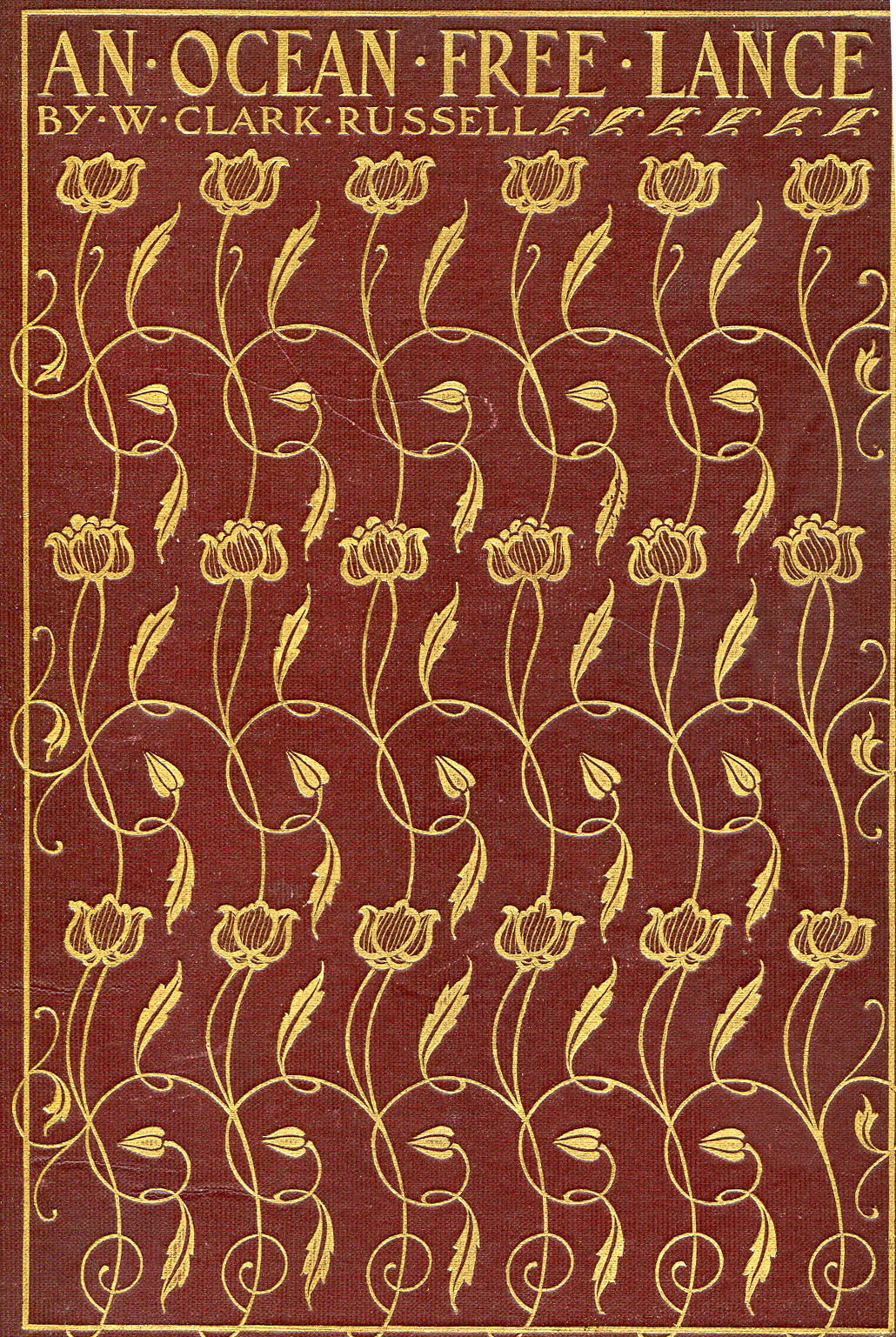
The latest issue of the Journal of Colonialism and Colonial History has an article by Stephanie Jones, "Maritime Space as Law and Light: Retrieving William Clark Russell's An Ocean Free-Lance (1882)". The abstract:
(New York Society Library)
William Clark Russell's An Ocean Free-Lance (1882) most obviously reads as a brittle homage to the nobility of a certain mode of imperial activity: it is, most apparently, a memorialisation of the privateer. But this is not the novel's only register. It also involves a broody engagement with oceanic space that is harder to interpret. This might simply be read within a belated-Romantic genre of novelistic yearning within the age of steam for the age of sail: in such terms, the novel easily reads as a critique of industrialisation. But the clear legal tones of the narrative and the novel's particular maritime aesthetics indicate that the nostalgia is more fully felt for the loss of a righteous order, a universal lex naturalis that is embodied in—that inhabits—the privateer. But even this is brought into question by the obscure poetics of light and water that slow down the plot and over-determine the atmosphere of the narrative. Via an engagement with recent historiographies of empire and of British privateering, against the background of work on the significance of law within nineteenth-century literature, and with the help of W.C.R.’s contemporary Robert Louis Stevenson, this paper reads An Ocean Free-Lance towards some larger speculations on the anxious meanings of the ocean as both an inhabited and abstracted space of empire.