Pretty ironic that the last post here was on Gaza.
Given the current situation here, I'm taking a break from blogging.
Praying for peace,
David
Pretty ironic that the last post here was on Gaza.
Given the current situation here, I'm taking a break from blogging.
Praying for peace,
David
Dotan Halevy recently published "Sand and the City: On Colonial Development and its Evasive Enemies in Twentieth-Century Palestine" in Environment and History. The abstract:
This article traces the colonial origins of a crucial aspect of the environmentalist discourse since the mid-twentieth century - the idea that planetary substances should be stripped of ownership rights and become in and of themselves the subject of rights. The article looks closely at the Gaza region under British mandatory rule to explain how the rehabilitation of Gaza city, devastated during WWI, has failed. Gaza's reconstruction efforts, the article argues, collided with the British initiative to arrest the drift of dunes along the coast of southern Palestine. Throughout this project, the British administration extinguished Arab property and usufruct rights to expand state domains. They backed this policy with an elaborate ecological perception that saw sand and its inhabitants as agents of environmental ruin. The quarrel that has developed thus made the Gaza region an imperial test ground for probing what sand is? Does it have a history? And, therefore, can it be claimed as an object of rights? Divorcing nature from culture, the British administration in Palestine rejected the validity of sandy lands' economic past and constructed them as inhospitable 'wastelands' - a purely natural element. As such, sands could be subjected to governmental 'development' through afforestation and urbanisation while time-honoured agricultural practices and land rights of the local coastal population were neglected.
Map of Gaza dunes, Survey of Palestine (1931)
The latest issue of Western Legal History is dedicated to the topic of "Water", and I plan to post on a number of the pieces in this issue.
.jpg)
One aspect of the article that I particularly liked was its unpacking of the intertwined and often contradictory lines of thought in the common law, which Getzler deftly connects to Romanist and feudal ideas of property.
I highly recommend this article to anyone looking for a broad yet succinct survey of the history of water law.
(For more on water law in the British Empire, see my posts here.)
For decades, legal academics have complained about a conflict between history and the doctrine of Article III standing. First in Spokeo v. Robins (2016) and then notably in TransUnion LLC v. Ramirez (2021), Justice Clarence Thomas presented a halfway resolution. Thomas grounded Article III standing in a historical distinction between private and public rights. Suits for violations of private rights would require no showing of concrete injury-in-fact. Suits for violations of public rights would require the showing of special damage, a term borrowed from the public nuisance tort.
This Article questions this effective retention of injury-in-fact for public rights actions. In Part I, I explain Justice Thomas’s nuanced approach to Article III standing. In Part II, I investigate old English and early American materials on special damage to flesh out the meaning of Thomas’s requirement for public rights standing. I find a lack of historical consensus on the content of the special damage standard. Some materials go this way, others go that way, and still others another way. The materials do not align on a precise standard, making it difficult, either as a matter of 1788 original meaning or later liquidation, to operationalize Thomas’s special damage requirement. In Part III, I argue that there are good reasons to doubt that the requirement of special damage is constitutionally relevant to the original meaning of Article III. The Framers did not discuss special damage in relation to Article III. The traditional rationale for the specific damage requirement does not have constitutional significance. And it seems implausible that the Constitution incorporated a legal doctrine in such flux without textual indication. In conclusion, I critique the current Court’s lack of attention to original meaning for Article III standing.
Justice Thomas (Stetson University)
The literature on the legal transfer of English property law to colonial South Asia has long focused on the agrarian context. Urban property and the built environment remain understudied. This article explores how the common law of nuisance found its way into the workings of a Committee of Buildings in late eighteenth-century Bombay. An analysis of the internal files of the Committee of Buildings shows that the Committee focused on public and private nuisance mitigation. Residents filed private party nuisance complaints, taking up nuisance law in their own disputes with neighbours. The Committee’s attempts to deal with public nuisances highlights the resistance of local residents. The conclusion considers the broader question of how we can conceptualize the actors, vectors and mechanisms involved in legal transfer, and its reception. Alternative explanations such as influences from pre-English colonial regimes, the impact of local custom, and the balance between common law and statute are evaluated. Rather than a seamless legal transfer, nuisance in early colonial Bombay demonstrates dialogue, resistance and appropriation.
Bombay and Western India. A series of stray papers (1893)
a close analysis of over 10 important and highly cited cases from different parts of British India in which judges deliberated on whether flowing water and fish could be treated as private property. Starting with a significant set of cases relating to the planting of stakes in the sea off the coast of Bombay, the article then primarily looks at cases involving rights over rivers in the fluid landscape of the Bengal delta. The article not only highlights the enduring confusion surrounding the status of water in colonial Indian law, but also looks at the different ways in which judges interpreted roman law and precedents from English common law while reaching their judgments. After reaching a variety of conclusions, by the 1880s high courts had begun to simultaneously make room for unprecedented private rights over flowing waters in colonial India while rendering these rights largely redundant by insisting that fish in these waters could not be counted as property until they were caught. The conflicting pull of these judgments however began to create serious problems in Bengal where fishing rights were considered to be especially valuable. It was in order to overcome this impasse that the Bengal government ultimately passed the Bengal Private Fisheries Protection Act in 1889 granting landholders significant rights over fish in rivers across the province. It would do so by significantly strengthening the kinds of private rights that could be claimed over water, and inaugurating a novel category of “private waters” in tidal waters in Bengal and other parts of India. By tracing the arguments and logics that ultimately paved the way for this act, this article highlights the importance of recognizing colonial India, and especially Bengal as an significant site for experimentation with new forms of private property rights over flowing waters.
Charley Brown, Illustrated Guide to the South Indian Railway (1913)
More on property in water and fish in colonial India here.
More on public nuisance: Maureen Brady recently posted "Cottages as Public Nuisances: The Long History of Land Use Regulation of the Poor", forthcoming in Depaul Law Review. The abstract:
In the Fourth Book of his Commentaries on the Law of England, in a chapter entitled “Offenses Against the Public Health, and the Public Police or Oeconomy,” William Blackstone sited his discussion of “common nuisances.” Although many things on this list of what we now call public nuisances are familiar—blockages of public roads, disorderly saloons, trades emitting offensive smells or sounds—one stands out. Blackstone described as a typical nuisance the erection of “cottages,” going on to discuss and even criticize the situation of these dwellings alongside uses like fireworks and the keeping of hogs in close quarters.
Blackstone, Washington DC
The aim of this Essay is to examine Blackstone’s discussion of cottages in context, endeavoring to use it toward two ends. The first is to better understand the concept of public nuisance and its limits. As others have chronicled, there has been a renaissance in interest in the tort in recent years, spurred on by multimillion dollar litigation invoking it in contexts ranging from the opioid epidemic to climate change. Here, I engage in a close reading of Blackstone’s passage and its citations, examining why cottages were regulated as public nuisances in the first instance and how that history connects to broader developments in English (and later American) law and society. As it turns out, cottages bore a closer relationship in many ways to public nuisance “classics,” like road blockages and certain public health risks, than it might at first appear.
For the first 20 years of federal regulation, Congress set the NOx [nitrogen oxides] standards for new cars itself. That’s quite different from the standards for industrial pollution sources, which Congress has always delegated to EPA. The reason may have been the high political stakes in the car industry or the relatively easier task of setting standards for new products in a single industry using a single energy process.
... The initial standard, set in the 1970 Clean Air Act, was 3.1 grams per mile (gpm) for NOx. Achieving that standard was thought to be nearly impossible when Congress created this mandate, but the mandate forced the car companies to make technological breakthroughs with catalytic converters.
East River and Manhattan Skyline in Heavy Smog (Chester Higgins, Jr., EPA, 1973)
Note that the standard is set in terms of pollution per mile rather than pollution per gallon. That means that any increase in fuel efficiency automatically helps a company meet the pollution standards as well. Theoretically, a car could have no pollution control at all but get such phenomenal mileage that it met the pollution standard. Actual mileage has improved but not enough to obviate the need for pollution controls.
Congress adjusted the standards twice. A 1977 amendment reset the limit to 1 gpm in 1981. The 1990 amendments changed the standard to 0.6 gpm, effective in 1994. These are called Tier 1 standards. Apparently Congress did not relish the task of periodically resetting the standards itself The 1990 Amendments authorized EPA to set standards for 2004 and beyond.
*****
This has to be considered a successful regulatory program. The Biden proposed standard [of 2023] allow less than 1% of the pollution levels that Congress mandated in 1970.
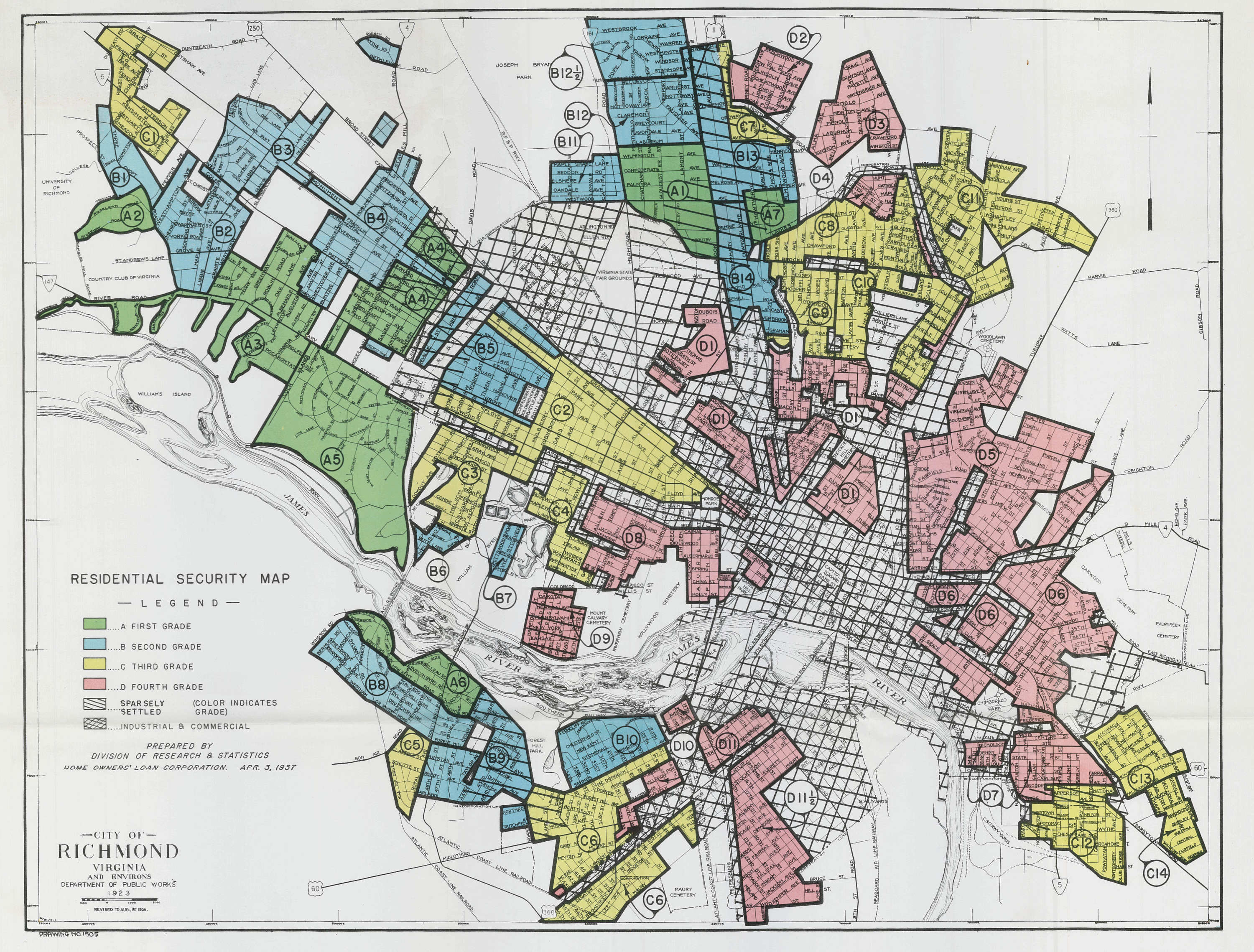
Although challenges in water and sanitation access are often assumed to be issues of low- and middle-income nations, more than 400,000 homes in the United States still lack access to complete indoor plumbing. Previous research has demonstrated that the remaining plumbing challenges are more prevalent in communities with high Black and Brown populations. This study hypothesizes that the 1930s practice of redlining by the Home Owners' Loan Corporation (HOLC), which systematically denied loans to minority populations, is linked to present-day inadequate plumbing access (i.e., defined as incomplete plumbing above the national average). Digitized HOLC maps for 202 urban areas across the country and U.S. Census data from the 2016 to 2020 American Community Survey were combined to interpolate the modern-day plumbing access for historical neighborhoods (n = 8871 communities). Analysis via binomial logistic regression demonstrated that nationally, redlined communities (HOLC Grade “D”) are significantly more likely to have a rate of incomplete plumbing above the national average compared with greenlined communities (HOLC Grade “A”) (0.1352; confidence interval = ±0.036). This finding was also observed for three of the nation's four census subregions (Northeast, Midwest, and West). Slight differences by region in relationships between the proportion of specific racial/ethnic populations on rates of incomplete plumbing demonstrate the need for targeted place-based interdisciplinary examinations of exclusionary practices. The demonstration of the present-day impacts of redlining after nearly 90 years emphasizes the need to intentionally mitigate past injustices to ensure modern-day equity.
 |
| The Grand Charter of the Escartons |
In 1343, Humbert II, the last Dauphin of Viennois (before that title passed to the kings of France and was used for the heir apparents to the royal throne), confirmed the rights of the people of the Briançon region in the "Grand Charter of the Escartons", effectively creating a sort of autonomous republic free of feudal obligations that survived, with its rights confirmed by the Kings of France, until the French Revolution. Two articles caught my eye (my translation from the French translation by Fernand Carlhian-Ribois):
Art. XVII : The people of Briançon now have the right to build canals to water their land, take water from torrents and rivers without having to pay the right of use either to the Dauphin Humbert or to his heirs and successors.
Art. XVIII : It is forbidden for the officers, Dauphins and Nobles to cut timber or firewood in the forests of the Communities of Briançonnais, Queyras, Vallouise, Césane, Oulx, Pinet, Chevalette, Fontenils, or other places in the Baillage, because the cuts are the cause of floods, landslides and avalanches. This prohibition is perpetual.
Article 18, with its early recognition of the connection between deforestation, erosion, and flooding, is interesting for its popular environmentalism, blaming the environmental degradation of the mountain region (a theme that became prominent again in the nineteenth century; see. e.g., George Perkins Marsh's Man and Nature) on the feudal rights of the nobility, and abolishing those rights forever.
And I wonder what the effect of Article 17 was on riparian conflicts. Said Guisane River is full of canals (see photo below) leading off to mills on the riverbanks and then returning the water downstream. While family members were enjoying rafting the stream, I was imagining the conflicts between riparian owners and public users that must have resulted from the many dams and diversions. Local legal records must be full of such riparian conflicts, and I would think that Article 17's right to take water free of charge must have complicated the issue.


As protests continue to erupt in Israel over the government's proposal to oust the power of courts to review decisions of the government and its ministers for reasonableness, I thought it worth taking a look at the historical origins of this doctrine in an area of particular interest to this blog - water law.
Israeli administrative law's reasonableness standard was inherited from the British, who ruled Palestine from 1917 to 1948 and imported much English law and legal culture to the middle eastern jurisdiction. In the 1928 Supreme Court case of AG v Altshuler ([1920-1933] PLR 273), for instance, the court held that a municipal bylaw of Tel Aviv was invalid due to unreasonableness, relying on the English precedent of Kruse v Johnson ([1898] 2 QB 91).
 |
| Sir Edward Coke |
Notwithstanding the words of the commission give authority to the commissioners to do according to their discretions, yet their proceedings ought to be limited and bound with the rule of reason and law [emphasis added - DS]. For discretion is a science or understanding to discern between falsity and truth, between wrong and right, between shadows and substance, between equity and colourable glosses and pretences, and not to do according to their wills and private affections ; for as one saith, talis discretio discretionem confundit [such discretion confuses discretion].
So administrative discretion, explained Coke, must be subject to 'the rule of reason and law'.
One might have legitimate criticisms of the way the reasonableness standard is currently applied in Israeli law, but it is clear that the current government's main motivation in its proposed legislation is simply the desire to be free of the rule of reason and law - which explains why there are hundreds of thousands of us out on the street protesting...
Before 1859, the right of any member of the public to abate a public nuisance existed unchallenged in American law as a judicially recognized form of popular justice. In that year, the decision in Brown v. Perkins, authored by Massachusetts Chief Justice Lemuel Shaw, restricted the right to those who had suffered particular injury. The decision grew out of a suit for damages by the owner of an illegal saloon, which had been sacked by a local mob. Reversing what Shaw himself had said in his charge to the jury in the same suit in the preceding year, it had little grounding in earlier American case law. Shaw's prestige and the apparent demands of public policy, however, helped win courts over to the new doctrine in relatively short order. The change was most enthusiastically promoted by judges and scholars of conservative leanings disturbed by the threat of popular excess and most resisted by those of more radical inclinations. It paralleled American law's broader shift in the same period toward centralized regulation and the constitutionalization of rights and powers.
Lemuel Shaw, 1856
Just out in Environment and History: "Wild Blue: The Post-World War Two Ocean Frontier and its Legacy for Law of the Sea" by Helen Rozwadowski. The abstract:
The post-1945 ocean came to be viewed through the cultural prism of 'frontier', denoting both a bonanza of resources and also lawlessness that impeded secure investment in their exploitation. After Arvid Pardo inserted the cultural representation of ocean frontier into law of the sea discussions with his 1967 proposal of the ocean as the Common Heritage of (Hu)Mankind, the prospect of using hitherto unexploited ocean resources to equalise an unequal world was widely, if not universally, embraced. While many commentators deny the power of the ocean frontier representation, this paper argues that, even as environmental concerns about pollution and declining resources aligned with worries about global overpopulation, the ocean continued, during the protracted negotiations of the third United Nations Conference on the Law of the Sea beginning in 1973, to be viewed as full of resources. The historical context of decolonisation and Garrett Hardin's 1968 Tragedy of the Commons argument reframed the ocean into a site for competition over resources.
Arvid Pardo monument at the University of Malta (Dans)
The German-language legal history journal Zeitschrift für Neuere Rechtsgeschichte last year published Sascha Ohlenforst's article, "Vom Sinn und Nutzen der Umweltrechtsgeschichte. Methodische Überlegungen auf Grundlage der Interessen- und Wertungsjurisprudenz" [On the sense and use of environmental legal history. Methodological considerations based on the jurisprudence of interests and values.]. The abstract:
How to write a history of environmental law that can be integrated into environmental and legal history? What insights can be gained from dealing with past environmental law? The article discusses and problematizes essential questions of modern legal history and, on the basis of the jurisprudence of interests and values – especially with reference to Rudolf von Jhering –, promotes a possible new orientation of the history of environmental law. Such a method considers above all the different interests of historical actors and reference groups as a major factor of dynamization in environmental law. Examining these interests as social factors not only contributes to a deeper understanding of the particular human-environmental relations in the past, but also provides a detailed insight into the development of law. By consulting a case study on mining law, both the dynamizing factors as well as the continuities and disruptions between past and present law are illustrated.


Calabresi himself often insisted (as in the subtitle "One View of the Cathedral") that economics was just one factor to be considered in legal analysis, and his classic works (such as The Cost of Accidents and the Cathedral article) also at least paid lip service to this idea, but I have always thought that the depth of Calabresi's economic analysis, juxtaposed with the cursory treatment he usually gave to distributive considerations, broadcast the message that efficiency was the key factor to be considered.
This way of thinking has obviously had great effects on environmental law, starting from the way environmental issues are typically presented to law students - as negative externalities that need to be internalized or collective-action problems that need the aid of law to overcome, rather than, say, as issues of distributive justice or problems of environmental ethics.
ASOR (Ancient Near East Today) just put up a post by my editorial colleague, Emilia Mataix Ferrándiz: "A Sea of Law: The Romans and Their Maritime World". Mataix Ferrándiz begins:
The sea was key for Rome’s success; it served as the setting of several battles that granted them hegemony over the Mediterranean as well as the main highway for both ideas and commerce. However, human bodies are not naturally suited to the sea; entering or crossing it means challenging one’s own capacities in the face of the power of water. The latter is echoed in literary sources, which often focus on the sea’s enormity and wilderness, thus evoking — and sometimes even exaggerating — its aura of mystery and uncertainty and the effect it has in ancient societies.
Roman legal sources, on the other hand, tend to focus more on the practical challenges and effects of interacting with the sea, presenting a different vantage point from which to study how Romans regarded and dealt with the challenges presented by the sea. So what can we say about how Roman jurists perceived the sea? Although jurists coincide in their understanding of the sea as a dangerous realm not governed by their civil law, the solutions which they provided for similar problems vary from jurist to jurist and from one period to another.
Roman mosaic from Veii (Italy), 3rd-4th century AD, Badisches Landesmuseum Karlsruhe (Carole Raddato)
In the Roman world, spaces were governed by different legal fields. While the land was managed by ius civile (the law of Roman citizens), the sea was a space of ius gentium, or the law of all peoples. It was the jurist Marcian (second–third century CE), who wrote that the sea was the common property to all according to natural law. From his writings the main point to note is that the sea is not subject to an individual’s dominion and, therefore, is also not subject to Roman governance. Despite Roman imperialistic aims and propaganda, it is unlikely that the ideology of rule over land and sea extended to any practical attempts to regulate the use of the sea.
Mataix Ferrándiz goes on to argue that
The Journal of Global History recently published Lena Joos's "‘Only One Earth’: Environmental Perceptions and Policies before the Stockholm Conference, 1968–1972". The article is based on a comparative study of sixty-three preparatory country reports for the UN Conference on the Human Environment 1968–1972 (UNCHE). One of the article's sections, "Environmental policy measures around 1970 in global comparison", has a lot of information on environmental laws in these countries at the time, including a table with dozens of laws from various countries on a variety of environmental issues. Joos writes that legal measures were the most widespread reported approach to solving environmental problems:
In 1972, forty-nine countries (78%) had legal regulations on the environment in place. Three different forms of legal measures can be distinguished at the national level. Firstly, environmentally significant changes to the legal framework, for example, laws, which defined the responsible actors and empowered them with the requisite powers. Other measures of this type were laws that regulate, for example, the granting of licenses and the privatisation or nationalisation of environmentally significant goods. For example, authorities issued licenses for hunting animals (Botswana, Israel), forest areas (Brazil, DRC), and industrial sites (Denmark, Israel, Norway). Privatisation was not mentioned in any report; nationalisation of forests occurred in Nepal (1956) and Iran (1963); nationalisation of the land was introduced in Senegal (1964). Overall, however, measures concerning ownership were rarely reported, even in socialist countries. The second form, legal requirements, can further be divided into precepts and prohibitions. For instance, countries set emission standards for industries (Canada, Japan), motor vehicles (Denmark, Ireland, the USA), or required filters for the production process (Brazil, FRG, Norway, Portugal, Sweden, Ukraine, Yugoslavia). Prohibitions aimed at preventing actions harmful to the environment were widespread and mentioned in 71% of the reports. The most famous example was the prohibition of the pesticide DDT, which was banned by nineteen of the sixty-three countries between 1969 and 1971. Closely linked to the requirements and prohibitions was the third form of legal measures: the sanctioning of environmentally damaging behaviour, e.g. fines for polluting activities.
Not all countries surveyed implemented legal environmental standards. And the mere existence of environmental legislation says little about the level of detail and the design of the laws. Thus, while many countries had environmental laws, in most, these were fragmentary. Around 1972, according to the reports, only Japan, Sweden, the GDR, and Switzerland had comprehensive environmental laws. In all other cases, the laws covered only one specific sector of the environment such as the protection of wildlife, air preservation, soil conservation, nature and landscape protection, water and sea protection, town planning, forest conservation, noise, radiation protection, waste management, and pesticides. In terms of the implementation date, individual environmental laws were in some cases implemented before 1950. However, most of the laws mentioned in the country reports originated in the fifteen years before the UNCHE. The large-scale establishment of environmental legislation was thus a fairly recent development around 1970 and can be connected to some extent to the preparatory process of the UNCHE.
This is an interesting and important argument, though I'd like to see more evidence before being convinced that a law enacted in 1960 should be credited to the preparatory process of the UNCHE.
 |
| 12 June 1972 - Meeting of the Second Committee of the United Nations Conference on the Human Environment, Stockholm, Sweden. At the presiding table during the meeting of the Second Committee (left to right): Mr.Luis Perez Arteta, Programme Director of the Second Committee; Joseph Odero-Jowi (Kenya), Chairman of the Second Committee, and M. Plehn-Mejia, Committee Secretary. (Photo Credit: UN Photo/Yutaka Nagat) |
I haven't posted in the last few weeks, leading my friends at the Legal History Blog to reasonably conclude that my series on Nature versus the Common Law was finished. But now I have some time to post what is in fact the final installment in the series.
The posts in this series, based on my article in Clio@Themis, aimed to illustrate a once-common way of thinking about law and legal claims, in which the natural environment was held not only to provide the physical background on which polities and their legal systems existed, but to demand from these legal systems a measure of accommodation. For some judges, it is true, the demands of nature, however worthy or desirable from a social or economic point of view, had no place in court; a judge's role was to resist such claims in the name of the law. For many others, however, environmental realities might be imbued with normative force powerful enough to outweigh considerations of legal precedent and tradition. Moreover, while environmental differences could sometimes break the chains of black-letter law, environmental similarities might at the same time create new legal bonds, as in the Indian and Canadian cases that looked to the law of the independent United States of America, with is great rivers, for legal guidance. All this is to say that in the context of water law in the British Empire, nature could often be "jurisgenerative", to use Robert Cover's term – creating law.
The environmental rhetoric of these courts may, at first glance, seem but a particular instance of the wider phenomenon of colonial and newly independent courts working to stake out the independence of their legal systems from the law of the old country. Yet this would be a mistake: Most of the judges arguing for nature's normative force were themselves British; and in the cases examined here even judges of the independent United States argued not for a general rejection of the English common law, but for the inapplicability of some of its water law rules due to supposed environmental incompatibility.
In conclusion, though, it should be noted that this study has shown that nature also had a "jurispathic" role, impeding the smooth flow, or "transplant", of legal norms around the empire. Legal norms, in particular the common law, spread around the British Empire through a network of orders, legislation, publications, correspondence, educational institutions, career paths, and more. Yet the spread of norms, never smooth, was hampered by a number of factors, some of them natural : distance, forbidding seas, and monsoon winds, to name a few. These factors impeded the transmission of legal ideas and norms in all areas of law. At the same time, this study has highlighted an additional mechanism through which nature sometimes frustrated the spread of norms: perceived environmental similarity and difference.

Yet if the first set of law-impeding environmental factors, deriving from physical impediments to legal communication, has historically applied with similar force across all areas of law, the efficacy of the latter mechanism, based on perceived environmental factors, presumably has been correlated with the degree to which the area of law directly dealt with environmental issues. With regard to water law, as we have seen, whether environmental conditions in fact dictated or determined the rejection of common law norms, it is clear that judicial perceptions of nature did play a role in impeding the spread of English norms in this field. I have argued elsewhere that forest law, too, was at least in some contexts heavily influenced by perceptions of environmental foreignness and change. Further study might reveal similar patterns with regard to other related areas of law, from sanitation regulation to wildlife protection.
Happy spring holidays!
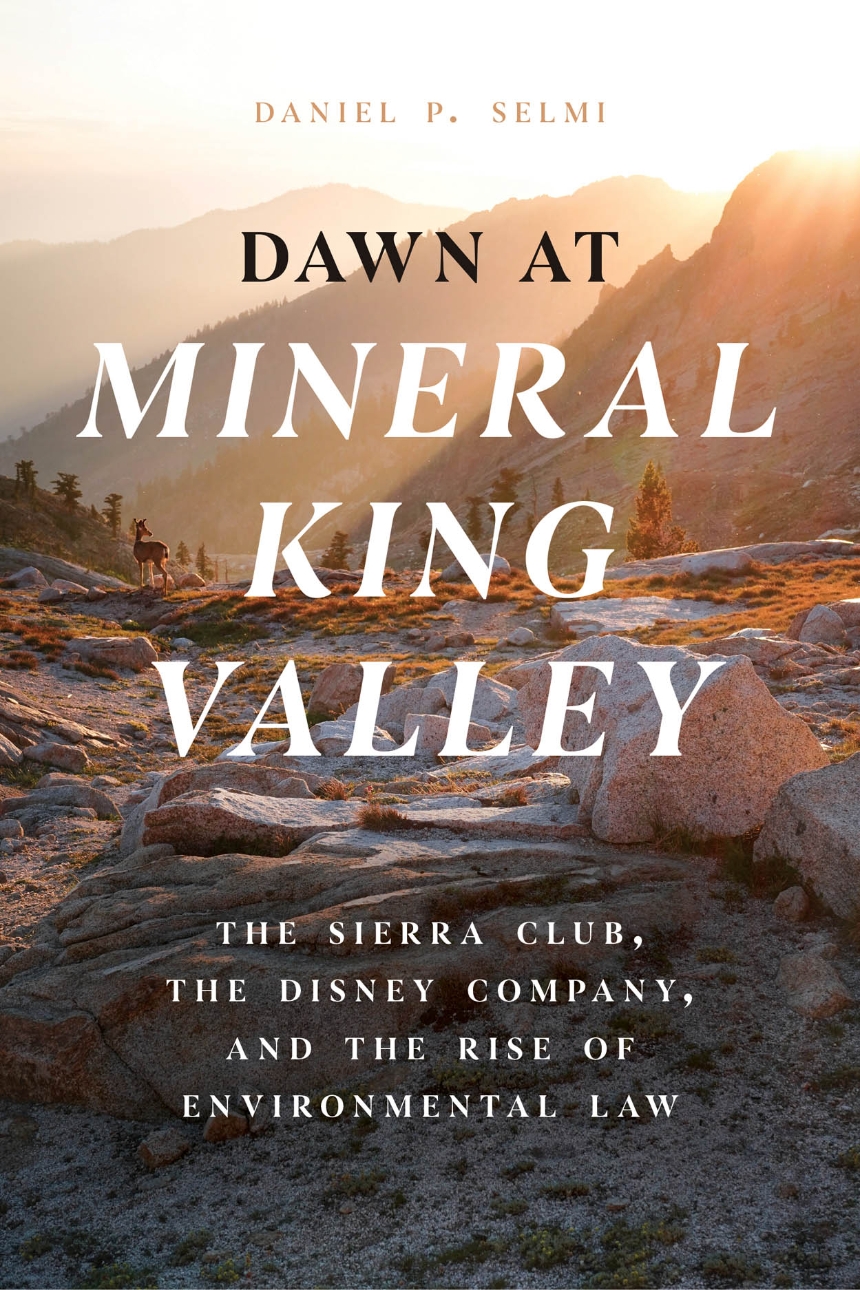
Sierra Club v. Morton [known to some as the "Should Trees Have Standing" case - DS] is a seminal 1972 U.S. Supreme Court case on standing, the essential procedural question of who has a legal right to initiate a lawsuit based on a plaintiff’s alleged injury traceable to a defendant’s unlawful conduct. Daniel Selmi’s new book provides a deep dive into the history and context of this famous case, showing that it was about much more than the majority decision’s denial of the Sierra Club’s standing. And it was not, as some have claimed, launched as a test case to establish standing for environmental groups or the entities themselves, the possibility William O. Douglas went into in his famous dissent dear to the hearts of those interested in the Rights of Nature.
*****
Despite the fact that Selmi seeks to de-center standing in his history of the case, or at least destabilize the understanding that standing was what Sierra Club v. Morton was always meant to be about, he presents an excellent and thorough discussion of the issue. Selmi explains that the Sierra Club insisted on its general interest in a case that would impact the environment of concern to its members rather than Club members’ actual use of the area, which the Supreme Court indicated it would have accepted. As Justice White reportedly put it: “Why didn’t the Sierra Club have one goddamn member walk through the park and then there would have been standing to sue.” (P. 204.)


_-_02.jpeg)