Before 1859, the right of any member of the public to abate a public nuisance existed unchallenged in American law as a judicially recognized form of popular justice. In that year, the decision in Brown v. Perkins, authored by Massachusetts Chief Justice Lemuel Shaw, restricted the right to those who had suffered particular injury. The decision grew out of a suit for damages by the owner of an illegal saloon, which had been sacked by a local mob. Reversing what Shaw himself had said in his charge to the jury in the same suit in the preceding year, it had little grounding in earlier American case law. Shaw's prestige and the apparent demands of public policy, however, helped win courts over to the new doctrine in relatively short order. The change was most enthusiastically promoted by judges and scholars of conservative leanings disturbed by the threat of popular excess and most resisted by those of more radical inclinations. It paralleled American law's broader shift in the same period toward centralized regulation and the constitutionalization of rights and powers.
Lemuel Shaw, 1856
Friday, June 30, 2023
The right to abate a public nuisance
William B. Meyer's "“No Quixotry in Redress of Grievances”: How Community Abatement of Public Nuisances Disappeared from American Law" was recently published in Law and History Review. The abstract:


Wednesday, June 28, 2023
The postwar ocean frontier and its legacy for law of the sea
Just out in Environment and History: "Wild Blue: The Post-World War Two Ocean Frontier and its Legacy for Law of the Sea" by Helen Rozwadowski. The abstract:
The post-1945 ocean came to be viewed through the cultural prism of 'frontier', denoting both a bonanza of resources and also lawlessness that impeded secure investment in their exploitation. After Arvid Pardo inserted the cultural representation of ocean frontier into law of the sea discussions with his 1967 proposal of the ocean as the Common Heritage of (Hu)Mankind, the prospect of using hitherto unexploited ocean resources to equalise an unequal world was widely, if not universally, embraced. While many commentators deny the power of the ocean frontier representation, this paper argues that, even as environmental concerns about pollution and declining resources aligned with worries about global overpopulation, the ocean continued, during the protracted negotiations of the third United Nations Conference on the Law of the Sea beginning in 1973, to be viewed as full of resources. The historical context of decolonisation and Garrett Hardin's 1968 Tragedy of the Commons argument reframed the ocean into a site for competition over resources.
Arvid Pardo monument at the University of Malta (Dans)

Saturday, June 3, 2023
Jhering and environmental legal history
The German-language legal history journal Zeitschrift für Neuere Rechtsgeschichte last year published Sascha Ohlenforst's article, "Vom Sinn und Nutzen der Umweltrechtsgeschichte. Methodische Überlegungen auf Grundlage der Interessen- und Wertungsjurisprudenz" [On the sense and use of environmental legal history. Methodological considerations based on the jurisprudence of interests and values.]. The abstract:
How to write a history of environmental law that can be integrated into environmental and legal history? What insights can be gained from dealing with past environmental law? The article discusses and problematizes essential questions of modern legal history and, on the basis of the jurisprudence of interests and values – especially with reference to Rudolf von Jhering –, promotes a possible new orientation of the history of environmental law. Such a method considers above all the different interests of historical actors and reference groups as a major factor of dynamization in environmental law. Examining these interests as social factors not only contributes to a deeper understanding of the particular human-environmental relations in the past, but also provides a detailed insight into the development of law. By consulting a case study on mining law, both the dynamizing factors as well as the continuities and disruptions between past and present law are illustrated.

Thursday, May 18, 2023
Tani on Calabresi and the "Economic Style"

Calabresi himself often insisted (as in the subtitle "One View of the Cathedral") that economics was just one factor to be considered in legal analysis, and his classic works (such as The Cost of Accidents and the Cathedral article) also at least paid lip service to this idea, but I have always thought that the depth of Calabresi's economic analysis, juxtaposed with the cursory treatment he usually gave to distributive considerations, broadcast the message that efficiency was the key factor to be considered.
This way of thinking has obviously had great effects on environmental law, starting from the way environmental issues are typically presented to law students - as negative externalities that need to be internalized or collective-action problems that need the aid of law to overcome, rather than, say, as issues of distributive justice or problems of environmental ethics.
Friday, May 5, 2023
Rome and the sea of law
ASOR (Ancient Near East Today) just put up a post by my editorial colleague, Emilia Mataix Ferrándiz: "A Sea of Law: The Romans and Their Maritime World". Mataix Ferrándiz begins:
The sea was key for Rome’s success; it served as the setting of several battles that granted them hegemony over the Mediterranean as well as the main highway for both ideas and commerce. However, human bodies are not naturally suited to the sea; entering or crossing it means challenging one’s own capacities in the face of the power of water. The latter is echoed in literary sources, which often focus on the sea’s enormity and wilderness, thus evoking — and sometimes even exaggerating — its aura of mystery and uncertainty and the effect it has in ancient societies.
Roman legal sources, on the other hand, tend to focus more on the practical challenges and effects of interacting with the sea, presenting a different vantage point from which to study how Romans regarded and dealt with the challenges presented by the sea. So what can we say about how Roman jurists perceived the sea? Although jurists coincide in their understanding of the sea as a dangerous realm not governed by their civil law, the solutions which they provided for similar problems vary from jurist to jurist and from one period to another.
Roman mosaic from Veii (Italy), 3rd-4th century AD, Badisches Landesmuseum Karlsruhe (Carole Raddato)

In the Roman world, spaces were governed by different legal fields. While the land was managed by ius civile (the law of Roman citizens), the sea was a space of ius gentium, or the law of all peoples. It was the jurist Marcian (second–third century CE), who wrote that the sea was the common property to all according to natural law. From his writings the main point to note is that the sea is not subject to an individual’s dominion and, therefore, is also not subject to Roman governance. Despite Roman imperialistic aims and propaganda, it is unlikely that the ideology of rule over land and sea extended to any practical attempts to regulate the use of the sea.
Mataix Ferrándiz goes on to argue that
Monday, April 17, 2023
Environmental laws circa 1970
The Journal of Global History recently published Lena Joos's "‘Only One Earth’: Environmental Perceptions and Policies before the Stockholm Conference, 1968–1972". The article is based on a comparative study of sixty-three preparatory country reports for the UN Conference on the Human Environment 1968–1972 (UNCHE). One of the article's sections, "Environmental policy measures around 1970 in global comparison", has a lot of information on environmental laws in these countries at the time, including a table with dozens of laws from various countries on a variety of environmental issues. Joos writes that legal measures were the most widespread reported approach to solving environmental problems:
In 1972, forty-nine countries (78%) had legal regulations on the environment in place. Three different forms of legal measures can be distinguished at the national level. Firstly, environmentally significant changes to the legal framework, for example, laws, which defined the responsible actors and empowered them with the requisite powers. Other measures of this type were laws that regulate, for example, the granting of licenses and the privatisation or nationalisation of environmentally significant goods. For example, authorities issued licenses for hunting animals (Botswana, Israel), forest areas (Brazil, DRC), and industrial sites (Denmark, Israel, Norway). Privatisation was not mentioned in any report; nationalisation of forests occurred in Nepal (1956) and Iran (1963); nationalisation of the land was introduced in Senegal (1964). Overall, however, measures concerning ownership were rarely reported, even in socialist countries. The second form, legal requirements, can further be divided into precepts and prohibitions. For instance, countries set emission standards for industries (Canada, Japan), motor vehicles (Denmark, Ireland, the USA), or required filters for the production process (Brazil, FRG, Norway, Portugal, Sweden, Ukraine, Yugoslavia). Prohibitions aimed at preventing actions harmful to the environment were widespread and mentioned in 71% of the reports. The most famous example was the prohibition of the pesticide DDT, which was banned by nineteen of the sixty-three countries between 1969 and 1971. Closely linked to the requirements and prohibitions was the third form of legal measures: the sanctioning of environmentally damaging behaviour, e.g. fines for polluting activities.
Not all countries surveyed implemented legal environmental standards. And the mere existence of environmental legislation says little about the level of detail and the design of the laws. Thus, while many countries had environmental laws, in most, these were fragmentary. Around 1972, according to the reports, only Japan, Sweden, the GDR, and Switzerland had comprehensive environmental laws. In all other cases, the laws covered only one specific sector of the environment such as the protection of wildlife, air preservation, soil conservation, nature and landscape protection, water and sea protection, town planning, forest conservation, noise, radiation protection, waste management, and pesticides. In terms of the implementation date, individual environmental laws were in some cases implemented before 1950. However, most of the laws mentioned in the country reports originated in the fifteen years before the UNCHE. The large-scale establishment of environmental legislation was thus a fairly recent development around 1970 and can be connected to some extent to the preparatory process of the UNCHE.
This is an interesting and important argument, though I'd like to see more evidence before being convinced that a law enacted in 1960 should be credited to the preparatory process of the UNCHE.
 |
| 12 June 1972 - Meeting of the Second Committee of the United Nations Conference on the Human Environment, Stockholm, Sweden. At the presiding table during the meeting of the Second Committee (left to right): Mr.Luis Perez Arteta, Programme Director of the Second Committee; Joseph Odero-Jowi (Kenya), Chairman of the Second Committee, and M. Plehn-Mejia, Committee Secretary. (Photo Credit: UN Photo/Yutaka Nagat) |
Tuesday, April 4, 2023
Not so fast: Nature versus the Common Law concludes
I haven't posted in the last few weeks, leading my friends at the Legal History Blog to reasonably conclude that my series on Nature versus the Common Law was finished. But now I have some time to post what is in fact the final installment in the series.
The posts in this series, based on my article in Clio@Themis, aimed to illustrate a once-common way of thinking about law and legal claims, in which the natural environment was held not only to provide the physical background on which polities and their legal systems existed, but to demand from these legal systems a measure of accommodation. For some judges, it is true, the demands of nature, however worthy or desirable from a social or economic point of view, had no place in court; a judge's role was to resist such claims in the name of the law. For many others, however, environmental realities might be imbued with normative force powerful enough to outweigh considerations of legal precedent and tradition. Moreover, while environmental differences could sometimes break the chains of black-letter law, environmental similarities might at the same time create new legal bonds, as in the Indian and Canadian cases that looked to the law of the independent United States of America, with is great rivers, for legal guidance. All this is to say that in the context of water law in the British Empire, nature could often be "jurisgenerative", to use Robert Cover's term – creating law.
The environmental rhetoric of these courts may, at first glance, seem but a particular instance of the wider phenomenon of colonial and newly independent courts working to stake out the independence of their legal systems from the law of the old country. Yet this would be a mistake: Most of the judges arguing for nature's normative force were themselves British; and in the cases examined here even judges of the independent United States argued not for a general rejection of the English common law, but for the inapplicability of some of its water law rules due to supposed environmental incompatibility.
In conclusion, though, it should be noted that this study has shown that nature also had a "jurispathic" role, impeding the smooth flow, or "transplant", of legal norms around the empire. Legal norms, in particular the common law, spread around the British Empire through a network of orders, legislation, publications, correspondence, educational institutions, career paths, and more. Yet the spread of norms, never smooth, was hampered by a number of factors, some of them natural : distance, forbidding seas, and monsoon winds, to name a few. These factors impeded the transmission of legal ideas and norms in all areas of law. At the same time, this study has highlighted an additional mechanism through which nature sometimes frustrated the spread of norms: perceived environmental similarity and difference.

Yet if the first set of law-impeding environmental factors, deriving from physical impediments to legal communication, has historically applied with similar force across all areas of law, the efficacy of the latter mechanism, based on perceived environmental factors, presumably has been correlated with the degree to which the area of law directly dealt with environmental issues. With regard to water law, as we have seen, whether environmental conditions in fact dictated or determined the rejection of common law norms, it is clear that judicial perceptions of nature did play a role in impeding the spread of English norms in this field. I have argued elsewhere that forest law, too, was at least in some contexts heavily influenced by perceptions of environmental foreignness and change. Further study might reveal similar patterns with regard to other related areas of law, from sanitation regulation to wildlife protection.
Happy spring holidays!
Tuesday, March 14, 2023
The history of Sierra Club v Morton
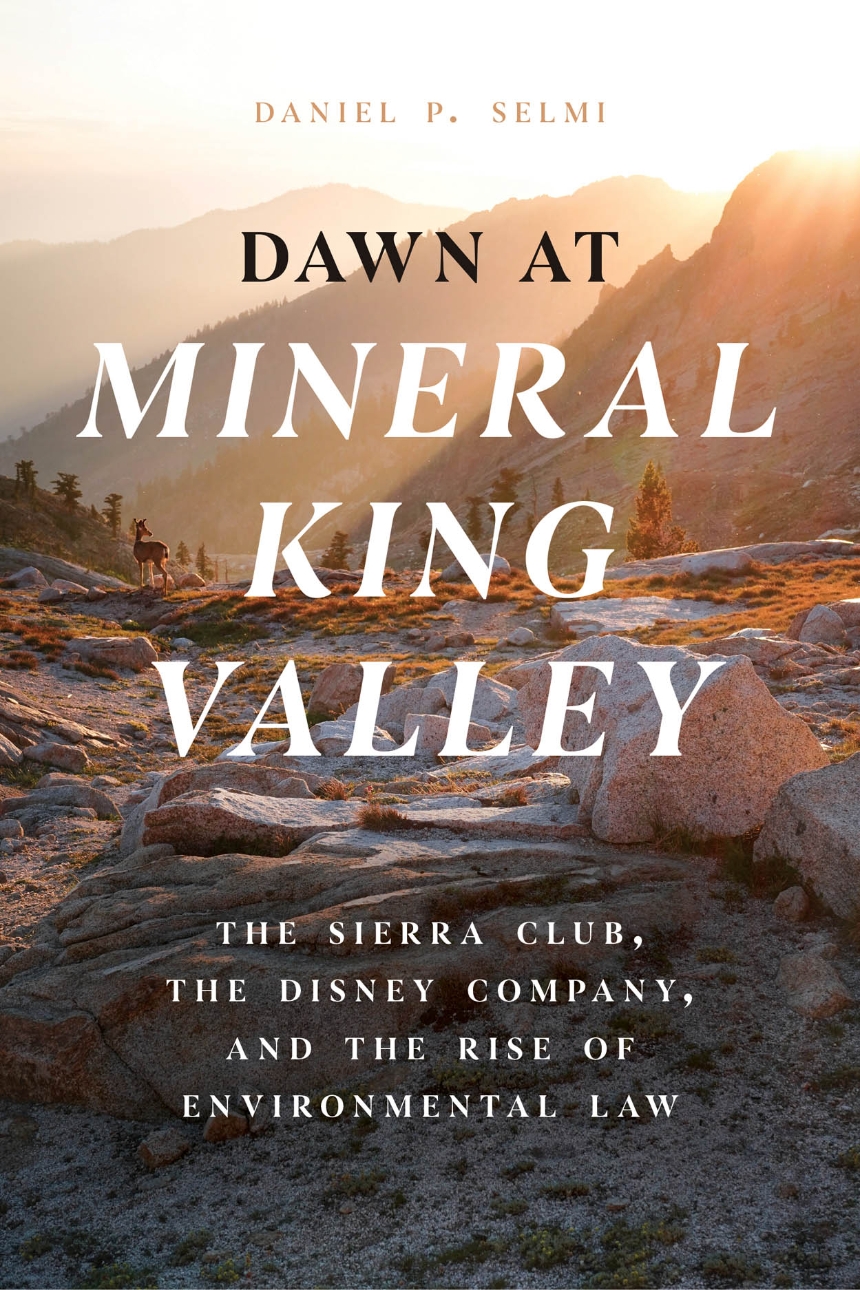
Jotwell recently ran a review by Angela Fernandez of Daniel P. Selmi's Dawn at Mineral King Valley: The Sierra Club, the Disney Company, and the Rise of Environmental Law (U Chicago Press, 2022). Fernandez writes:
Sierra Club v. Morton [known to some as the "Should Trees Have Standing" case - DS] is a seminal 1972 U.S. Supreme Court case on standing, the essential procedural question of who has a legal right to initiate a lawsuit based on a plaintiff’s alleged injury traceable to a defendant’s unlawful conduct. Daniel Selmi’s new book provides a deep dive into the history and context of this famous case, showing that it was about much more than the majority decision’s denial of the Sierra Club’s standing. And it was not, as some have claimed, launched as a test case to establish standing for environmental groups or the entities themselves, the possibility William O. Douglas went into in his famous dissent dear to the hearts of those interested in the Rights of Nature.
*****
Despite the fact that Selmi seeks to de-center standing in his history of the case, or at least destabilize the understanding that standing was what Sierra Club v. Morton was always meant to be about, he presents an excellent and thorough discussion of the issue. Selmi explains that the Sierra Club insisted on its general interest in a case that would impact the environment of concern to its members rather than Club members’ actual use of the area, which the Supreme Court indicated it would have accepted. As Justice White reportedly put it: “Why didn’t the Sierra Club have one goddamn member walk through the park and then there would have been standing to sue.” (P. 204.)
Sunday, March 12, 2023
Nature versus the Common Law VI: Diversion of water
In the last installment in this series we looked at how the English rule on escaping water in Rylands v Fletcher was rejected in British India due to perceived differences in the environments and needs of the two countries. Today we look at a classic issue of water law, complaints by riparian owners of upstream water uses that interfered with their own uses. As with the issue of escaping water, what was considered "natural" could turn, here too, on local natural conditions.
The traditional common law rule of conflicting riparian uses – that an upstream riparian may not divert a stream's water to the (unreasonable) detriment of downstream owners – was explained by the court of King's Bench in 1625 (Shury v Piggot, 81 English Reports 280) in terms of natural law: "a water-course […] doth begin ex jure naturæ, having taken this course naturally, and cannot be averted" and "the nature of this [water-course] is to be current [i.e. to flow]".

The supply of man's artificial wants is not essential to his existence; it is not indispensable; he could live if water was not employed in irrigating lands, or in propelling his machinery. In countries differently situated from ours, with a hot and arid climate, water doubtless is absolutely indispensable to the cultivation of the soil, and in them, water for irrigation would be a natural want. Here [in Illinois] it might increase the products of the soil, but it is by no means essential, and can not, therefore, be considered a natural want of man.
What riparian uses were to be recognized as "natural", and therefore permitted, was thus dependent on the climate and environment. Irrigation would be considered an "artificial" use in the American Old Northwest, as it would be in England, but the court had legitimized changing the law if and when the common law spread to arid lands.
This way of thinking was crucial for the development of water law in the arid western states and territories of the United States, in which the traditional common law of riparian rights was rejected in favor of a new system. The new law, known as "prior appropriation", opened up water resources to appropriation by all, not just riparian owners, and allowed them to take as much of the water as they could put to beneficial use, regardless of the effect on later appropriators. An early case from Colorado discussed whether an appropriator could dig a ditch across another's land without permission, an invasion of property that would clearly not be allowed under the traditional common law. Along the way it advanced a general theory of the adaptation of property law to environmental conditions:
Tuesday, March 7, 2023
Conference: Law and nature in the Middle Ages

Courtesy of ESCLH Blog: An upcoming conference (16-17 March) at Université d’Orléans on law and nature in the Middle Ages. Talks include Marie Bassano on the relationship between man and nature among late-medieval jurists and Dante Fedele on the medieval jurists and the sea.
The full program is here.
Subscribe to:
Posts (Atom)