Tuesday, February 22, 2022

CFP: The 1972 Stockholm Conference, Fifty Years Later

H-Environment posted a call for papers for a special section of the journal The Annals of the Fondazione Luigi Einaudi. An Interdisciplinary Journal of Economics, History and Political Science on "The 1972 Stockholm Conference, Fifty Years Later: What Legacy?". From the call:
The special issue is meant to commemorate the 50 years since the 1972 United Nations Conference on the Human Environment, universally known as the birthplace of global environmentalism. The Stockholm conference hosted 112 national delegations, UN specialized agencies, international NGOs, and a counter-conference organized by environmental activists. It established a range of institutional, political, intellectual, and cultural developments that made the environment a pressing global issue. Participants adopted instruments such as the Stockholm Declaration and Action Plan for the Human Environment and prepared the ground for the United Nations Environment Programme. This special issue wants to explore the conference and its legacy. The Stockholm Conference established international political goals and legal principles that have underpinned environmental discourse and law-making for a half-century. By stressing that environmental issues are inherently political – and not just scientific and technical - it devised systems for data research and monitoring. It also catalysed multilateral cooperation and treaty-making and the setup of national environmental ministries and environmental laws. Moreover, it contributed to the democratization of environmental debate and policy-making, opening to non-governmental organizations previously not included in the UN system.

The deadline for proposals is 30 March 2022. More details at H-Environment.


Wednesday, February 16, 2022

Fossil fuels and Jim Crow

Dan Farber recently posted at Legal Planet on "Jim Crow and the Fossil Fuel Industry":

This being Black History Month, I thought it would be worthwhile looking at the fossil fuel industry’s racial history.  Given the historic concentration of the oil and coal industries in the South, it is no surprise to find that these industries have also been deeply entangled with Jim Crow and its legacy of discrimination.

The conclusion:

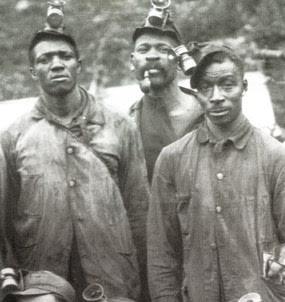
In sum, the racial history of the oil and gas industry seems to have been much worse [than that of the coal industry], associated with more virulent and blatant racism. Blacks were nearly excluded from the industry.  In contrast, blacks found jobs in the coal industry, but only at the bottom of the job ladder. Those bottom rungs were decimated by new technology. In the end, the result in both industries was much the same: a workforce largely empty of Black faces. 

Black miners at New River Gorge (NPS)

Sunday, February 13, 2022

More on water by-laws in Mandate Palestine


I recently posted a piece on H-Empire, based on my article, "Horizontal and vertical influences in colonial legal transplantation: water by-laws in British Palestine" (open access) (see also my recent post on this blog). An excerpt:

Zoltan Kluger, Dizengoff Square Circle in Tel Aviv, 1938 (National Photo Collection)
I ask two questions about the local bylaws enacted in the Mandate period (mainly in the last decade and a half of British rule, which ended in 1948) in the field of water supply and sewage (I'm working on a wider project on this history of water law in Mandate Palestine): Did the initiative for these bylaws, as well as the legal norms and language embodied in them, come from the residents of Palestine and their elected local governments or was it primarily the result pressure applied by the British rulers? And did legal influence cross communal boundaries, between Jewish and Arab local authorities, or did Arab towns tend to copy from other Arab towns, and Jewish from Jewish? The first question I conceptualize as one of "vertical" influence; the second as "horizontal".

Sunday, February 6, 2022

Digital library VIII: Manwood's Treatise of Forest Laws

It's been a while since I updated the "Digital library of historical environmental law", so here's a new addition, connecting environmental law with Magna Carta: John Manwood's Treatise of the Forest Laws (4th edition (1717) here). 

GWU Law's Legal Miscellanea explains that Manwood was a barrister, gamekeeper, and Justice in Eyre of the New Forest under Elizabeth I. His Brefe Collection of the Lawes of the Forest was printed in 1592 for private circulation and the first edition of the Treatise, printed in 1598, was entitled A Treatise and Discovrse of the Lawes of the Forrest. The 4th edition (above) was "corrected and enlarged by William Nelson," a practitioner in the Court of Chancery.

Chris Besant, in his 1991 "From forest to field: A brief history of environmental law" (16 Legal Service Bull. 160 (1991)), explains further:

Forest law operated principally to protect two resources: vert and venison. Vert was the timber of the forest, plus any grasses, ground cover or vegetation necessary to support the venison, including cover or vegetation which provided shade. Venison denoted the wild beasts of the forest (hart and hind, hare, boar and wold), chase (buck, does, fox, matron and the roo), and warren (the hare, pheasant, partridge and the cunnie). All of these beasts were privileged and protected from capture within the forest by the forest law, although outside thereof, they could be taken through capture by anyone.

*****

Magna Carta is a general reaction against the centralisation of government in derogation of the feudal principle. The King in his weakness is forced to concede that he will not 'overreach' his proper bounds as defined by the common and forest laws of the land. Thus the Charter of the Forest is a further delimitation of forest custom in the interests of liberty, and is the beginning of the great destruction of England's natural environment.

Friday, February 4, 2022

The usufructuary ethos

H-Environment recently posted a review by Jay David Miller of Erin Drew's The Usufructuary Ethos: Power, Politics, and Environment in the Long Eighteenth Century (U. Virginia Press, 2021). Some excerpts from the review:
Erin Drew summarizes the core principle of the early modern set of ideas she calls “the usufructory ethos” as follows: “What you have is ‘yours’ only in a partial and temporary sense” (p. 47). Nowhere did this principle manifest itself more clearly than in the figure of the landlord, who commanded power over tenants and by extension the land itself, but who was also, theoretically, bound by responsibilities to both subordinates and superiors. The concept of “usufruct”—which originated in Roman law but was heavily mediated through Christian theology—addressed the paradoxical nature of the landlord’s power by stipulating that the rights associated with ownership were circumscribed by far-reaching and interconnected obligations “that linked not only past, present, and future but [also] humans, nonhumans, and God, as well as the social, political, and natural worlds” (p. 2). Drew argues that recovering the history of the usufructory ethos in late seventeenth- and early eighteenth-century Britain changes the way we understand the human relationship to the environment in this era and could inform how we imagine it today.

*****

After tracing various iterations of the usufructory ethos through the writings of John Howe, Richard Allestree, Thomas Adams, Matthew Hale, and Thomas Tryon, Drew concludes chapter 1 with the more familiar John Locke. Locke’s significance to the study lies in the fact that the theory of property articulated in his Second Treatise on Government (1690) both relies on the concept of usufruct and undermines it in ways that foreshadow its gradual recession. While the Second Treatise contains usufructory provisos against waste and spoilage, Locke included these mainly as a way of protecting individual property rights, rather than stewarding resources that properly belong to God for the sake of others. Furthermore, Locke’s monetary theory, in which the fruits of labor are abstracted into capital, rendered concerns about waste and spoilage obsolete, as did his assumption that the European “discovery” of America opened up a limitless supply of land. By identifying these features of Locke’s thought, Drew illustrates how the usufructory ethos would come under increasing pressure as commerce and colonization came to define the seventeenth and eighteenth centuries. 

Tuesday, February 1, 2022

National security and climate change

The National Security Archive project recently posted "National Security and Climate Change: Behind the U.S. Pursuit of Military Exemptions to the Kyoto Protocol", a collection of internal papers and accompanying detailed commentary. Burkely Hermann writes:

Journalists and commentators have argued lobbying by the United States meant that the Kyoto Protocol gave militaries a large exemption from emissions targets and standards. However, the documents tell a different story, of exemptions which were not as wide as the Pentagon or critics of the agreement would have liked. These provisions exempted emissions from international operations authorized by the United Nations or those described as in accordance with the UN Charter, and bunker fuels from being added to national emissions totals.

*****

On December 11, 1997, the same day the Kyoto Protocol was adopted, the United Nations Framework Convention on Climate Change (UNFCCC) Conference of the Parties released a decision which enshrined the exemptions within the treaty itself. The decision stated that emissions “based upon fuel sold to ships or aircraft engaged in international transport,” i.e., bunker fuels, should not be part of national totals. It was further decided that emissions from multilateral operations following the United Nations Charter would not be included in national emissions totals but would be “reported separately”. 

There's lots more detail, including 27 archival documents and scores of links to other sources. The project's website also has many other documents and essays on other aspects of climate change treaty negotiations.

Confidential State Dept. cable, October 26, 1997

Sunday, January 30, 2022

The Antarctic and Outer Space Treaties

Aurora australis, Milky Way, and flags at the South Pole (Martin Wolf, NSF)
Sophia Guido recently posted "How the Antarctic Treaty of 1959 Influenced the Outer Space Treaty of 1967" at In Custodia Legis. An excerpt:

After successfully reaching a consensus on the Antarctic Treaty in 1959, countries were eager to apply these already agreed-upon terms to outer space. The result: many articles in both treaties are very similar to each other. For example, during the Antarctic Treaty discussions, many countries wanted to claim part of the continent as their own based on whose citizens discovered a particular area first, but there were many overlaps of land claimed by multiple nations. So, it was decided that no country could claim sovereignty over any part of Antarctica. By putting this article within the outer space treaty, no country can claim ownership over any celestial body in outer space. As more countries develop the technology to send people or objects into space, this idea is more relevant than ever.

One of the main principles of the Outer Space Treaty is that the exploration and use of outer space and the celestial bodies within it should be carried out for the benefit of all countries, regardless of whether it is for scientific or economic purposes, and only for peaceful purposes. Outer space can be freely explored by all states. However, no country can make any territorial claim to any part of outer space or any celestial body, and every country is responsible for any national space activities carried out by their government or non-government entities and will be liable for any damage caused by their citizens. No country is allowed to place any nuclear weapons or any weapons of mass destruction in any part of outer space.

Wednesday, January 26, 2022

The New England river commons

H-Environment recently published Zachary Bennett's review of Erik Reardon's Managing the River Commons: Fishing and New England's Rural Economy (U Mass Press, 2021). From the review:

After more than two centuries of damming and polluting their rivers, Americans are reversing course. Dams are coming down and the migrating fish that astonished early European explorers are returning.... Although rivers are coming to resemble their pre-industrial state now more than ever, few serious studies of early American waterways exist. Erik Reardon shows that these struggles to preserve riverine ecosystems are much older than river restoration advocates may have considered...

*****

The first two chapters establish the importance of river fisheries in indigenous and early colonial communities, arguing that both created sustainable common-use practices to protect fish. Reardon quotes heavily from other secondary sources and his arguments echo the likes of Jeffrey Bolster who have shown that colonists severely depleted fisheries immediately upon their arrival. Reardon effectively demonstrates that colonists both noticed that decline and realized they needed to enact conservation measures at least a full century before industrialization.

Chapter 3 reads as a composite biography of four river fisherman from Maine to Rhode Island who lived at the turn of the nineteenth century.... Their way of life came under considerable threat when commercial fishing practices entered rivers in the nineteenth century that netted the salmon and shad for sale in distant markets and enriched an emerging merchant class. Reardon shows that this class of farmer-fishermen ultimately turned to the state to punish unsustainable fishing practices and preserve rivers as traditional commons space.

Wednesday, January 19, 2022

Charging for water in Mandate Palestine

The American Journal of Legal History recently published my article, "Horizontal and vertical influences in colonial legal transplantation: water by-laws in British Palestine". Due to space constraints of the publisher, I was not able to include in the article some sources that I think are interesting from an environmental-legal perspective. Here are two of them, both penned by engineers serving as head of the water department of the of the Jerusalem Municipality in support of the city's policy of requiring water metering (while most Palestine local authorities also allowed charging flat rates). I think they call to mind current debates about water pricing in various places around the world, explicitly raising issues of efficiency, equity, conservation, and public health:

A. In 1927 Jerusalem's Water Engineer, Andrew (Andor) Koch, was hired by the Tel Aviv Municipality to consult on its system of water supply. In his report to the Tel Aviv Municipal Council (Report on the Tel Aviv Municipal Water Supply, 25th Dec. 1927, Tel Aviv Municipal Archives file 835/04-1029B), Koch explained why he supported metering over flat charges:

I wish to mention that throughout the whole world, now the metered system, as the only correct means for charging Consumers is gaining ground.- There used to be a conception before that water is not a saleable good, but a public property, obtained from nature and therefore the selling of same per volume as any other merchandise, is not justified.- A more close study and moreover the practical results of such an assumption have clearly shown however that earlier or later the free use of water is leading to unnecessary, even expensive (especially concerning the disposal of waste water) waste on the one hand, and inevitably, to the undue exhaustion of the  available sources of supply on the other hand.

Water tower in Tel Aviv, built 1924

Sunday, January 16, 2022

The right to rake

Peter Szabó recently published "The Horka Litter Raking Incident: On Foresters and Peasants in Nineteenth-Century Moravia" in Environment and History. The abstract:

Litter raking was a traditional forest use representing an interface between forestry and agriculture. In forest history, it has usually been presented as the harmful removal by peasants of biomass, which was gradually eliminated by foresters, leading to better forest preservation. Based on the example of an exceptionally well-documented case of illegal litter raking in Moravia in 1845, in this paper I argue that juxtaposing foresters and peasants in connection with litter raking masks a much more complicated reality. Neither foresters nor peasants can be interpreted as homogeneous groups because there were significant differences in the opinions and agendas of various representatives within these groups. In addition, opinions were not static on either side but could change in a discursive pattern. In a wider context, the environmental historical analysis of the Horka litter raking incident facilitates the understanding of larger societal processes that influenced past woodland management in Central Europe, and therefore current ecosystems too.