Tuesday, March 29, 2022

Paolo Grossi and the environment

The French-language Revue interdisciplinaire d’études juridiques published two articles last year on the relevance of leading Italian legal historian Paolo Grossi's work to environmental issues. 

Paolo Grossi, 2016 (Quirinale.it)
The abstract of the first, by Alessia Tanas and Serge Gutwirth, "Le pluralisme juridique retrouvé au temps des désordres écologiques. Penser la relation entre le droit et les communs de la terre avec Paolo Grossi" (Legal pluralism at times of ecological disorders: thinking the relationship between landed commons and the law with Paolo Grossi):

In this contribution, the authors introduce a few key aspects of Paolo Grossi’s research path and link them to their work on the legal questions raised by landed-commons and local ecologies.

There follows a contribution by Grossi himself, "Une autre façon de posséder. Réflexions historico/juridiques sur les aménagements fonciers en Italie" (An alternative to private property. Reflections on land set-ups in Italy from a legal history perspective):

In his contribution Paolo Grossi provides his viewpoint as a legal historian on collective land set-ups in Italy and shows how, through constitutional jurisprudence and the adoption of Law n° 168 of 20 November 2017, the Italian legal order not only recognizes their legal autonomy but also recovers its pluralism and complexity. Such recognition benefits to the protection of the environment.

Friday, March 18, 2022

Water, fish and property in colonial India

Last week I enjoyed attending on online event of the Asian Legal History Seminar, at which Devika Shankar presented her article, "Water, Fish and Property in Colonial India, 1860–1890", recently published in Past & Present. I recently covered similar issues in my article, "Nature Versus the Common Law: Nature as a Norm in the Water Law of the British World", published last summer in Clio@Themis, though I totally missed the cases discussed by Shankar, and she comes at the topic from a wholly different angle.

The abstract of Shankar's article:

Almost exactly a hundred years after the Permanent Settlement of 1793 revolutionized property relations in Bengal, a far less studied legislation would subtly extend the rule of property to include the province’s waters. Bengal’s Private Fisheries Protection Act 1889, which is usually regarded as having been motivated by conservationist or economic concerns, was in fact an attempt to resolve intractable legal problems surrounding the status of flowing waters and fish that had confounded judges and colonial officials in India for decades. Could water be owned like land? And could fish swimming in open waters be claimed as property? These questions would give rise to a number of important disputes in colonial India in the late nineteenth century, during a time associated with unprecedented changes in the agrarian economy. Coinciding with other legal manoeuvres that increasingly helped to render water as property in other parts of the world, the Private Fisheries Protection Act and important judgments that preceded it helped to create exceptional private rights over flowing waters in colonial India. Turning to these developments, this article examines the ways in which judges attempted to resolve contradictions generated by water’s very materiality in an economy that rested so heavily on property.

Devika Shankar, A line of fishing stakes on the Malabar coast, July 2018

Friday, March 11, 2022

International environmental law panel for ASLH

Reposting from H-Environment:

Dear all,

I am a doctoral candidate at Rutgers University New Brunswick, and I am currently seeking co-panelists for the American Society of Legal History conference to be held in Chicago, Illinois, November 10-12, 2022. The conference welcomes papers dealing with legal history from any time period or geographical area, but is only accepting panel proposals. I am seeking to put together a panel dealing with international environmental law in the 20th century, in the broadest possible sense. My paper specifically will talk about the interplay between international conservation efforts and French national interests in the creation of a "French Antarctic national park" in the subantarctic Kerguelen Islands in 1924.

Here is a link to the ASLH website For more information: https://aslh.confex.com/aslh/2022/cfp.cgi

Panel submissions are due March 18th. I know this is a short turn around but I hope to find interest through this forum. The ASLH is a great organization that offers a helpful forum for discussing a broad range of legal history topics, and is especially supportive of graduate students and early career scholars.

Please feel free to contact me at kms557@history.rutgers.edu if you are interested in joining this panel.

All best,

Katherine Sinclair

Bruno Navez, Remains of vats and boilers at Port-Couvreux, Kerguelen Islands, used for the making of elephant seal oil at the beginning of the XXth century

Tuesday, March 8, 2022

California's 19th-century water law

 Over at Legal Planet, Holly Doremus complains:

California’s water law was developed in the 19th century. It has not been comprehensively reformed since, despite substantial population growth, changing social values, and the appointment 45 years ago of a blue-ribbon commission to recommend changes. Now the “new normal” of the anthropocene promises reduced water availability coincident with increased demand.

It is past time for comprehensive reconsideration of California’s water law system. Fellow Planeteer Rick Frank and I have been working with a diverse group of water law experts to come up with some initial recommendations for change.

The experts' report, titled "Updating California Water Laws to Address Drought and Climate Change",  is here. 

California water law is indeed antiquated, arcane, and impossibly complex. The odd thing to my mind is how mild the reforms being called for are - things like speeding up stream adjudications, protecting domestic wells, improving monitoring and enforcement, and the like - mostly very nineteenth-century ideas themselves (see my book, The Colorado Doctrine). Nothing questioning the basics of the mixed appropriation and riparian system that California uses, or adopting ideas from the many models of water law in countries around the world. I suspect that the authors think this is all that is politically and constitutionally feasible at this point, but it seems to me that even if all these reforms are adopted, California will remain with a very nineteenth-century water law. 

Perhaps a reminder of how much legal history is never just history.

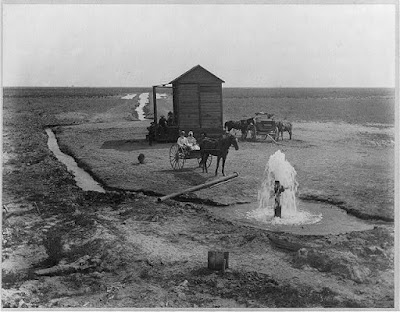
Carleton E. Watkins, Horse-drawn cart beside artesian well, Kern County. c. 1880

Saturday, March 5, 2022

Opportunity for Ukranian grad students and postdocs

Here's a call I just received from my home university, offering scholarships for Ukranian research students. Please pass it on to anyone for whom it might be relevant. More information here.


Thursday, March 3, 2022

Yellowstone at 150

Anna Price of the Library of Congress's In Custodia Legis recently posted on the 150th anniversary of the creation of Yellowstone National Park, the US's first. Price goes through the legislative history of the statute creating the park, as well as some of the legal issues that arose, including American Indian treaty rights and potential conflicts with settlers claiming preemption and homesteading rights. The latter issue, as the blog points out, also arose in the context of Yosemite Park in the 1872 US Supreme Court Case of Hutchings v Low (a.k.a. The Yosemite Valley Case).

poster designed by Don C. Powell (LOC)

Tuesday, February 22, 2022

CFP: The 1972 Stockholm Conference, Fifty Years Later

H-Environment posted a call for papers for a special section of the journal The Annals of the Fondazione Luigi Einaudi. An Interdisciplinary Journal of Economics, History and Political Science on "The 1972 Stockholm Conference, Fifty Years Later: What Legacy?". From the call:
The special issue is meant to commemorate the 50 years since the 1972 United Nations Conference on the Human Environment, universally known as the birthplace of global environmentalism. The Stockholm conference hosted 112 national delegations, UN specialized agencies, international NGOs, and a counter-conference organized by environmental activists. It established a range of institutional, political, intellectual, and cultural developments that made the environment a pressing global issue. Participants adopted instruments such as the Stockholm Declaration and Action Plan for the Human Environment and prepared the ground for the United Nations Environment Programme. This special issue wants to explore the conference and its legacy. The Stockholm Conference established international political goals and legal principles that have underpinned environmental discourse and law-making for a half-century. By stressing that environmental issues are inherently political – and not just scientific and technical - it devised systems for data research and monitoring. It also catalysed multilateral cooperation and treaty-making and the setup of national environmental ministries and environmental laws. Moreover, it contributed to the democratization of environmental debate and policy-making, opening to non-governmental organizations previously not included in the UN system.

The deadline for proposals is 30 March 2022. More details at H-Environment.


Wednesday, February 16, 2022

Fossil fuels and Jim Crow

Dan Farber recently posted at Legal Planet on "Jim Crow and the Fossil Fuel Industry":

This being Black History Month, I thought it would be worthwhile looking at the fossil fuel industry’s racial history.  Given the historic concentration of the oil and coal industries in the South, it is no surprise to find that these industries have also been deeply entangled with Jim Crow and its legacy of discrimination.

The conclusion:

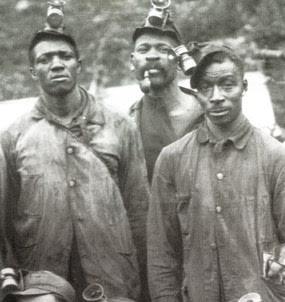
In sum, the racial history of the oil and gas industry seems to have been much worse [than that of the coal industry], associated with more virulent and blatant racism. Blacks were nearly excluded from the industry.  In contrast, blacks found jobs in the coal industry, but only at the bottom of the job ladder. Those bottom rungs were decimated by new technology. In the end, the result in both industries was much the same: a workforce largely empty of Black faces. 

Black miners at New River Gorge (NPS)

Sunday, February 13, 2022

More on water by-laws in Mandate Palestine


I recently posted a piece on H-Empire, based on my article, "Horizontal and vertical influences in colonial legal transplantation: water by-laws in British Palestine" (open access) (see also my recent post on this blog). An excerpt:

Zoltan Kluger, Dizengoff Square Circle in Tel Aviv, 1938 (National Photo Collection)
I ask two questions about the local bylaws enacted in the Mandate period (mainly in the last decade and a half of British rule, which ended in 1948) in the field of water supply and sewage (I'm working on a wider project on this history of water law in Mandate Palestine): Did the initiative for these bylaws, as well as the legal norms and language embodied in them, come from the residents of Palestine and their elected local governments or was it primarily the result pressure applied by the British rulers? And did legal influence cross communal boundaries, between Jewish and Arab local authorities, or did Arab towns tend to copy from other Arab towns, and Jewish from Jewish? The first question I conceptualize as one of "vertical" influence; the second as "horizontal".

Sunday, February 6, 2022

Digital library VIII: Manwood's Treatise of Forest Laws

It's been a while since I updated the "Digital library of historical environmental law", so here's a new addition, connecting environmental law with Magna Carta: John Manwood's Treatise of the Forest Laws (4th edition (1717) here). 

GWU Law's Legal Miscellanea explains that Manwood was a barrister, gamekeeper, and Justice in Eyre of the New Forest under Elizabeth I. His Brefe Collection of the Lawes of the Forest was printed in 1592 for private circulation and the first edition of the Treatise, printed in 1598, was entitled A Treatise and Discovrse of the Lawes of the Forrest. The 4th edition (above) was "corrected and enlarged by William Nelson," a practitioner in the Court of Chancery.

Chris Besant, in his 1991 "From forest to field: A brief history of environmental law" (16 Legal Service Bull. 160 (1991)), explains further:

Forest law operated principally to protect two resources: vert and venison. Vert was the timber of the forest, plus any grasses, ground cover or vegetation necessary to support the venison, including cover or vegetation which provided shade. Venison denoted the wild beasts of the forest (hart and hind, hare, boar and wold), chase (buck, does, fox, matron and the roo), and warren (the hare, pheasant, partridge and the cunnie). All of these beasts were privileged and protected from capture within the forest by the forest law, although outside thereof, they could be taken through capture by anyone.

*****

Magna Carta is a general reaction against the centralisation of government in derogation of the feudal principle. The King in his weakness is forced to concede that he will not 'overreach' his proper bounds as defined by the common and forest laws of the land. Thus the Charter of the Forest is a further delimitation of forest custom in the interests of liberty, and is the beginning of the great destruction of England's natural environment.