Showing posts with label seas. Show all posts

Wednesday, June 28, 2023

The postwar ocean frontier and its legacy for law of the sea

Just out in Environment and History: "Wild Blue: The Post-World War Two Ocean Frontier and its Legacy for Law of the Sea" by Helen Rozwadowski. The abstract:

The post-1945 ocean came to be viewed through the cultural prism of 'frontier', denoting both a bonanza of resources and also lawlessness that impeded secure investment in their exploitation. After Arvid Pardo inserted the cultural representation of ocean frontier into law of the sea discussions with his 1967 proposal of the ocean as the Common Heritage of (Hu)Mankind, the prospect of using hitherto unexploited ocean resources to equalise an unequal world was widely, if not universally, embraced. While many commentators deny the power of the ocean frontier representation, this paper argues that, even as environmental concerns about pollution and declining resources aligned with worries about global overpopulation, the ocean continued, during the protracted negotiations of the third United Nations Conference on the Law of the Sea beginning in 1973, to be viewed as full of resources. The historical context of decolonisation and Garrett Hardin's 1968 Tragedy of the Commons argument reframed the ocean into a site for competition over resources.

Arvid Pardo monument at the University of Malta (Dans)

Friday, May 5, 2023

Rome and the sea of law

ASOR (Ancient Near East Today) just put up a post by my editorial colleague, Emilia Mataix Ferrándiz: "A Sea of Law: The Romans and Their Maritime World". Mataix Ferrándiz begins:

The sea was key for Rome’s success; it served as the setting of several battles that granted them hegemony over the Mediterranean as well as the main highway for both ideas and commerce. However, human bodies are not naturally suited to the sea; entering or crossing it means challenging one’s own capacities in the face of the power of water. The latter is echoed in literary sources, which often focus on the sea’s enormity and wilderness, thus evoking — and sometimes even exaggerating — its aura of mystery and uncertainty and the effect it has in ancient societies.

Roman legal sources, on the other hand, tend to focus more on the practical challenges and effects of interacting with the sea, presenting a different vantage point from which to study how Romans regarded and dealt with the challenges presented by the sea. So what can we say about how Roman jurists perceived the sea? Although jurists coincide in their understanding of the sea as a dangerous realm not governed by their civil law, the solutions which they provided for similar problems vary from jurist to jurist and from one period to another.

Roman mosaic from Veii (Italy), 3rd-4th century AD, Badisches Landesmuseum Karlsruhe (Carole Raddato)

In the Roman world, spaces were governed by different legal fields. While the land was managed by ius civile (the law of Roman citizens), the sea was a space of ius gentium, or the law of all peoples. It was the jurist Marcian (second–third century CE), who wrote that the sea was the common property to all according to natural law. From his writings the main point to note is that the sea is not subject to an individual’s dominion and, therefore, is also not subject to Roman governance. Despite Roman imperialistic aims and propaganda, it is unlikely that the ideology of rule over land and sea extended to any practical attempts to regulate the use of the sea. 

Mataix Ferrándiz goes on to argue that

Tuesday, March 7, 2023

Conference: Law and nature in the Middle Ages

Courtesy of ESCLH Blog: An upcoming conference (16-17 March) at Université d’Orléans on law and nature in the Middle Ages. Talks include Marie Bassano on the relationship between man and nature among late-medieval jurists and Dante Fedele on the medieval jurists and the sea.

The full program is here.

Tuesday, February 7, 2023

Negotiating the maritime commons

Another chapter from the previously-noted book, Greening Europe, is "Negotiating the Maritime Commons: Protecting the Baltic Sea in a European Context", by Simo Laakkonen and Tuomas Räsänen. The abstract:

The environmental history of the seas and oceans has generally remained a relatively unexplored theme. This chapter addresses the environmental history of the Baltic Sea, which is a European sea par excellence and the only sea that is entirely located within the continent. We will examine the links between wider historical currents in Europe and the marine environmental history of the Baltic Sea by focusing on three environmental regimes from the end of the nineteenth century until the 1990s. The first environmental regime was developed on an urban level and prevailed from the late nineteenth century until the Second World War. The second environmental regime was developed from the 1960s until the 1970sonaninternational level in the Baltic Sea region. The third environmental regime, spanning the 1980s and 1990s, consisted of developing wider European cooperation. These three different environmental regimes continue to cooperate in the region even today.

Thursday, April 21, 2022

Environmentalism Then and Now

I just came across a site by the American Bar Association's Division for Public Education with teaching materials on the history of environmental law

It's an eclectic group of resources. For instance the PowerPoint presentation entitled "Environmentalism Then and Now: Is Going Green New? You Be the Judge..." includes slides on a 1681 regulation by William Penn requiring Pennsylvanians to conserve one tree for every five cut down, and a 1739 petition by Benjamin Franklin to the Pennsylvania Assembly to stop waste dumping in Philadelphia harbor.

There's also a unit on the Exxon Valdez spill and ensuing litigation, including Supreme Court briefs.

Exxon Vladez - skimming operation (NOAA)

Tuesday, September 29, 2020

The Santa Barbara Oil Spill

H-Environment recently published a review by Samm Newton of Teresa Sabol Spezio's Slick Policy: Environmental and Science Policy in the Aftermath of the Santa Barbara Oil Spill (U. Pittsburgh Press, 2018). The Santa Barbara spill is often pointed to as one of the foundational moments of modern American environmentalism and environmental regulation, but Spezio seems to flesh out the picture.

Newton writes that Spezio

explores the relationships between oil pollution and political changes in the 1970s and asks how the Santa Barbara oil spill became a watershed moment in the history of environmental and science policy in the US, especially in regard to the Clean Water Act of 1972 (CWA). To answer this question, Sabol Spezio analyzes how the oil spill influenced the CWA and the National Environmental Policy Act (NEPA), as well as the formation of the Environmental Protection Agency (EPA) and the National Oceanic and Atmospheric Administration (NOAA). She then turns to the changing science and technology that became essential to understanding marine oil pollution and how that contributed to detecting water pollution in fresh water systems. She argues that the US government’s reactions to the Santa Barbara oil spill improved their ability to address controlling, measuring, and regulating water contamination on a federal level. 

Her argument is broken into three sections. Part 1 describes environmental science and policy before 1969. Before the oil spill, no entity was officially in charge of managing the oceans. Federal waters were regulated by the Bureau of Land Management (BLM) and the United States Geological Service (USGS) under the guidance of the very oil companies exploiting the resources located in those waters. Additionally, scientists used different protocols and technologies to measure oil pollution. Before 1969, water quality was measured by smell, taste, sight, and/or the presence of disease. The oil spill in California challenged that precedent, contending that measurement by the senses was inefficient. A flurry of new research methods and technologies, specifically gas chromatography, followed in an effort to estimate both oil in water and the dispersants used to combat oil pollution.

*****

As Sabol Spezio argues, it took a salient crisis, like the debacle that was the oil spill, to make regulatory change possible. Several events in the 1960s and ’70s, such as the publication of Rachel Carson’s Silent Spring (1962) and the Cuyahoga River fire, contributed to the salience of environmental degradation in the American attention cycle. Sabol Spezio adds to the literature by claiming that the Santa Barbara oil spill was not just one of many environmental crises but was the tipping point event that made the reform of US environmental regulation possible. 

Monday, January 28, 2019

The Santa Barbara oil spill

Richard Frank posted yesterday at Legal Planet on the 50th anniversary of the Santa Barbara oil spill. Some excerpts:
In many ways, however, the January 1969 Santa Barbara spill remains the most consequential and transformative environmental disaster in American history.  That’s true for several related reasons.  First, it was the inaugural such environmental disaster captured and broadcast into millions of U.S. households on the evening news.  For weeks, the major TV networks provided gripping, daily accounts of the biological damage and adverse economic effects produced by the Platform A blowout.  And that had a profound effect on the national psyche, with televised footage of dead and dying animals, fouled beaches and oil-saturated ocean waters underscoring in the most stark way the myriad costs associated with oil and gas development in coastal waters.
Second, the Santa Barbara oil spill provoked a strong and immediate response from government leaders.  Local officials complained bitterly to the media and public about the lack of adequate environmental controls and oil spill response efforts, noting presciently that the federal government that had issued the oil and gas leases–thereby earning substantial royalties from the oil companies’ offshore development activities–had an inherent conflict of interest when it came to regulatory oversight of those same activities.  Federal officials had a more muted reaction to the spill: President Richard Nixon visited the area to view the spill and cleanup efforts on March 21st, telling the assembled crowd, “…the Santa Barbara incident has frankly touched the conscience of the American people.”  But on April 1st, a hastily-adopted, temporary federal drilling ban was lifted, and oil and gas development in federal waters resumed off the California coast.
Longer term, however, the Santa Barbara spill would have a direct and positive effect on American environmental policy and law.  Later that year, Congress would enact the National Environmental Policy Act (also a half century old this year).  And NEPA was but the first in a torrent of environmental legislation passed by Congress over the next decade–including the Clean Air Act, Clean Water Act and Endangered Species Act–that to this day remains the basic framework of federal environmental law.
*****
The Santa Barbara oil spill also catalyzed a state government response that quickly made California a national and international leader when it comes to environmental policy and law.  In the immediate wake of the disaster, the Republican-dominated California Legislature created an interim Committee on Environmental Quality, directing it to develop recommendations for state environmental legislation.  The most important outgrowth of that initiative was passage in 1970 of the California Environmental Quality Act; modeled on but significantly stronger than NEPA; CEQA remains California’s most important, cross-cutting environmental law, as well as the most powerful “little NEPA” statute in the nation.  And when the California Legislature balked at passing a law specifically designed to prevent ocean and coastal damage exemplified by the Santa Barbara oil spill, state voters responded by enacting an initiative measure in 1972 creating the California Coastal Commission and the most powerful system of coastal regulation and preservation in the nation. 

Friday, September 28, 2018

The marine "commons" discourse

Next in the series of posts (the last one is here) on "The Tragedy at 50" (by the way, if anyone wants a hard copy of the journal issue, please email me), is Harry Scheiber's "The 'Commons' Discourse on Marine Fisheries Resources: Another Antecedent to Hardin’s 'Tragedy'". The abstract:
Throughout the fifty years since its publication, Hardin’s “The Tragedy of the Commons” has been regarded as a seminal paper in the environmental movement, although his emphasis on population control (which actually formed the core concern of the article) has been largely forgotten. Hardin argued that free access by a growing population to common resources would inevitably lead to the depletion of those resources, citing as one example how maritime nations’ belief in the freedom of the seas, combined with their belief in the inexhaustibility of marine resources, had brought whales and many species of fish close to extinction. Hardin failed, however, to take account of the extensive debates throughout much of the twentieth century by scientists and policymakers on the general problem of the ocean commons — what they generally termed the “dilemma of the commons” — as it applied not only to living marine resources but also to mineral resources. By mid-century, as improved fishing technology gave rise to ever greater catches, the notion of the inexhaustibility of fisheries was largely discredited; hence scientists as well as experts in both national and international law became focused on addressing the dilemma of the commons through fisheries management, and specifically by determining the Maximum Sustainable Yield. Some economists, arguing instead for maximum efficiency, urged that open access be abandoned in favor of limited entry. Such measures to resolve the dilemma of the commons were the subject of numerous conferences (including the second UN Conference on the Law of the Sea in 1958) and were widely debated in scholarly publications and, indeed, by the late 1960s had been practically implemented by a number of laws and treaties. By 1966, national control over a twelve-mile fishing zone offshore of coastal nations had been well established. These developments regarding the oceans commons, predating Hardin’s article, were apparently either of no interest to him or (if he knew of them) purposefully subordinated to his main polemical objective, which was his Malthusian analysis of the commons issue and his call for limits on “human breeding.”

Friday, June 15, 2018

The legality and legitimacy of Japanese whaling - Part II

[Second and final part of a guest post by Geoffrey Wandesforde-Smith - Part I is here.]

The second point to take away from Arch’s book is that when organized whaling became established in early modern Japan, under the watchful eye of domainal lords (daimyo), who could decide who had jurisdiction over particular whaling areas, or over bodies of whales either washed up on shore or brought to a particular shore for processing, regulation was a way of dealing with the local problems of particular businesses, and of their interrelationships, and of the ways those businesses could benefit the domain through fee exactions, as a kind of tax-like income for the domain. It was not about ensuring the continued availability of whale meat as a food source. Indeed, when it took hold and expanded during the Tokugawa peace, Japanese whaling was not primarily about food. It was about profit and about ensuring the continued supply of a wide range of whale products. Sutter is eloquent on this point:
Workers using windlasses to pull sheets of blubber off a whale for processing in the sheds behind.
Courtesy of the National Diet Library of Japan.
Whale meat, which today sits at the heart of Japanese claims for the (legality and legitimacy of) … whaling’s deep cultural importance, was the least of it. Arch shows that whale meat, either fresh or salted, simply did not travel well and was thus of minor dietary importance during the early modern period. But whale oil served as a vital illuminant, other whale products helped the Japanese fertilize and work their fields, and, in one of this study’s most surprising insights, we learn how whale oil was also widely used as a pesticide that allowed the Japanese to intensify rice culture [p. xi].
And, again, Arch herself is more pointed:

Thursday, June 7, 2018

The legality and legitimacy of Japanese whaling - Part I

[Sorry for the continued silence, but thanks to Geoffrey Wandesforde-Smith for pitching in with this two-part book review!]

At the end of May, the New York Times along with other major news outlets around the world
reported that a new round of scientific whaling by Japan during the austral summer of 2017-18 yielded a catch of 333 minke whales, but that of this number 122 were pregnant females and 114 were considered immature individuals [1]. The news invited and perhaps stoked outrage, which history shows can be a powerful force shaping environmental law and policy.

Japan took the whales pursuant to a scientific research exemption to the moratorium on commercial whaling enacted by the International Whaling Commission (IWC) and effective in 1986 [2]. The first research program under which Japan continued whaling in the Antarctic despite and perhaps in defiance of the moratorium, a program known as JARPA-II, was found in a 2014 decision of the International Court of Justice not to meet the terms of the scientific research exemption allowed under the International Convention for the Regulation of Whaling [3].

Japan then developed a different scientific rationale for taking whales in the Antarctic, known as NEWREP-A. It’s unclear whether the lethal sampling authorized by the permit issued by the Japanese government to pursue NEWREP-A is necessary for Japan to realize what it claims under international law are its legitimate scientific objectives. But if that is not the case then presumably at some point, if it is appropriately challenged, NEWREP-A could be found to be as illegal as JARPA-II [4].

But underlying the persistent questions about whether Japanese whaling in the Antarctic is legal in some narrow sense, based on a close reading of the relevant international law, is a prior and much larger and much more profound question. It asks whether Japan’s Antarctic whaling is a legitimate continuation of what in 2002 the director-general of the Institute of Cetacean Research (ICR), the entity that is the chief proponent and enabler of continued Japanese whaling, told an international conference was “a tradition of whaling which (Japan) has built up over nine thousand years.” Japan, he said, has believed so firmly and for so long in the sustainable use of whales as a food resource that she could never give up such a deeply rooted and integral cultural tradition [5]. This line of argument did not persuade the IWC to grant Japan an aboriginal (subsistence) whaling exemption to the moratorium.

The theory, then, on which Japan rests its case is that more scientific research, undergirded by the lethal taking of whales, is needed to establish the sustainable level of whale harvest that would justify lifting the 1986 moratorium on commercial whaling. Since the rules for whaling under a scientific research exemption from the 1986 IWC moratorium do not allow lethally sampled whales to be wasted, ICR passes the meat left over, once data are collected from dead whales, to an associated company that then tries to sell the meat [6].

If the validity of a sustainable take were ever to be established beyond a reasonable scientific doubt, the theory further holds that Japan would be able to resume commercial whaling in conformity with the 1946 International Convention for the Regulation of Whaling, which entered into force in 1948. Perhaps other countries that have given up whaling since the 1986 moratorium went into effect would do the same, although most observers of the IWC would consider that very unlikely. If Japan’s theory is ever to translate into practice, then much obviously depends not only on the scientific validity of Japan’s NEWREP-A research program but also on the legitimacy of the claim that eating whale meat has become so integral to Japanese identity that its legal prohibition would constitute an unwarranted act of cultural discrimination and deprivation.

So, against this background, what is the real history of whaling in Japan? Is it first and foremost a story about the continuation of a centuries old cultural tradition?  And how likely is it that the whaling Japan continues to do in the name of scientific research under IWC rules will validate a long-standing dedication to the sustainable use of whales for food?

Monday, May 1, 2017

Property in whales

Angela Fernandez recently published a review of Robert Deal's The Law of the Whale Hunt: Dispute Resolution, Property Law, and American Whalers, 1780-1880 (Cambridge UP, 2016) at JOTWELL. There's a lot here--on the environmental background of law, on efficiency and fairness, on the relation between law on the books and law in action, and more. Some highlights:
Cooperation was also important not just to the survival but also the success of a voyage. Captains were expected to help, or at least not deliberately mislead, one another about issues like weather conditions and where whales were located. When times were good and there were plenty of whales, this fact alone would greatly reduce an incentive for captains to engage in protracted and highly confrontational dispute over any particular whale. In most cases it was better to quickly agree to go halves, or some other proportion that seemed fair in the circumstances given the efforts each had invested, and move on to chasing other whales. When the catch was not going as well, as whale stocks became depleted and whalers had to go deeper into the ocean to pursue them and in more unfamiliar waters, one whale might make the difference between a voyage that was economically viable and one that was not. Deal points out that some of the litigated cases arose during lean times. The problem is that “[m]any – indeed the vast majority – of bad seasons did not send whalemen to the courtroom.” (P. 143.) And the dispute in one of the cases that Deal discusses at length, Taber v. Jenny, happened in 1852, a year that “may well have been the most successful season in the history of the Okhotsk fishery.” (P. 139.)
So what kept whaling disputes out of the courts? Deal insists it was not (contra Melville and legal scholars such as Robert Ellickson) because industry participants had a very firm and settled sense of what the rules or customs were for settling disputes. Deal argues that captains used a jumble of different competing ideas, rules, norms, and customs, including personal ethics, to decide how to negotiate situations of conflict. He concludes that captains must have wanted it that way, “prefer[ing] to operate on the basis of vague standards rather than clear rules.” (P. 162.) And while we are often told by law and economics scholars that flexibility will lead to conflict and more litigation, on the contrary, in this case at least: the “muddy standards” of the whalemen “were remarkably successful at avoiding [both] violent disputes and litigation.” (P. 163....) 

Thursday, September 24, 2015

The Old Man and the Sea

I recently came across an unusual blend of environment, law, history--and literature--in Enrique Guerra-Pujol's article, "Misappropriation and The Old Man and the Sea". The abstract:
We consider whether the great writer Ernest Hemingway may have committed the tort of misappropriation when he published his masterpiece “The Old Man and the Sea.” In summary, Hemingway either borrowed or stole (depending on one’s perspective) the following elements of his timeless novella: (i) the actual story itself, (ii) the “back-story” and other biographical details of the main character of the story, Santiago, as well as (iii) Santiago’s ascetic persona and physical characteristics. Although we concede that Hemingway combined these ingredients into a new and original artistic work, the question we are considering in this paper is whether Hemingway’s creative combination of such elements is enough to negate a claim of misappropriation under current U.S. or Cuban law. (We must consider Cuban law in addition to U.S. law since Hemingway lived in Havana, Cuba when he wrote and published “The Old Man and the Sea.”) That is, if Hemingway were writing “The Old Man the Sea” today, could he be liable under the common law doctrine of misappropriation or even under Cuban law?

Friday, June 5, 2015

Economics of Legal History

Daniel Klerman recently published an edited collection, Economics of Legal History (Elgar, 2015), which includes influential pieces on the history of natural resources law, including Harold Demsetz's "Toward a Theory of Property Rights", Robert Ellickson's "A Hypothesis of Wealth-Maximizing Norms: Evidence from the Whaling Industry".

The publisher's description:
Generations of law and economics scholars have been fascinated by history, seeing in its institutions and laws a vast database for illustrating their theories. Equally, historians have seen economic analysis as a helpful tool with which to analyze legal institutions. As a result a vibrant field has emerged in which people trained in law, economics, history and political science have all made significant contributions. This volume brings together the most important works examining legal history from an economic perspective. An original introduction by the editor provides a useful roadmap to the field.

Friday, May 22, 2015

Maximum Sustained Yield

H-Environment recently posted a Roundtable Review of Carmel Finley's All the Fish in the Sea: Maximum Sustainable Yield and the Failure of Fisheries Management (U Chicago Press, 2011). Particularly interesting are the comments by Sayuri Guthrie-Shimizu. Some excerpts:
In her discussion of the surprising flimsiness of MSY as a scientific concept, Finlay points to the “scientific racism” beneath the attitudes of the American public officials and scientists concerned with fisheries regulation at mid-century. They long held the notion, or even truism as it were, that Japanese fish science was at best woefully lacking by Western standards of scientific rigor, and at worst nonexistent. In fact, Finley argues, Japan, because of its dependence on marine living resources, had a long and venerable history of studying fish stocks and their husbandry going back to the industrialization of the nation’s inshore and coastal fisheries in the nineteenth century. Japan was also a respected source of knowledge in the inchoate fish science sought by other nations from the 1930s on, including the United States…. Works by historians of Japanese fisheries such as Yoshitaka Takahashi attest that Finley is right: Japan had indeed developed a sophisticated administrative system of fisheries management based on systematic accumulation of data even before Japan was “forced open” by Commodore Matthew Perry and famously exposed to the benefits of Western science and technology. Another interesting point Finley makes about various iterations of American racism or ethnocentrism tainting the views of American scientists and practitioners is that the United States vilified the efforts by Central American coastal nations such as Ecuador and Peru to curb American bait fishing off their shores as an attempt to extract a “tribute” from US fishermen, and they refused to regard such control as a legitimate administrative prerogative exercised by sovereign states on a par with the United States.

Sunday, October 12, 2014

Environmental-policy-relevant history

I suspect we'll be hearing a lot in the coming months about The History Manifesto by David Armitage and Jo Guldi (Cambridge UP, forthcoming, available already for free on line). In the meantime Armitage gives us a preview in The Guardian, including this on history and current environmental policy (links added):
Debates on climate change also reflect the advantages and the limitations of historical perspective. On the one hand, Barack Obama’s former undersecretary for science in the US energy department, Steven Koonin, has recently argued for humility about future policy because we lack long-run data about the role of the oceans in climate change: “Precise, comprehensive observations of the oceans are available only for the past few decades.” On the other, historical economist Anil Markandya has shown that environmental regulation in 19th-century Britain did not have “any serious impact on GDP per capita”, overturning the orthodoxy that there is a necessary trade-off between growth and environmental protection. Meanwhile, French historians Sabine Barles and Gilles Billen have examined Paris’s “nitrogen footprint” to show how urban managers there invented sustainable practices for recycling waste in large cities: these are precedents relevant to practice and policy today.

UK sulfur emissions/capita, real GDP/capita, selected air pollution regulations
(Markandya et al, Envtl & Resource Econ (2006) 35: 221-257)

Monday, September 15, 2014

Old maps, natural resources, and international law in the South China Sea

(By way of Imperial & Global Forum:) Quartz recently published "The Philippines hopes a trove of ancient maps will prove its territorial claims against China", by Lily Kuo. Kuo writes that last week:
the Philippines opened an exhibit featuring dozens of maps spanning over 1,000 years of history—a collection that the Philippines says disproves China’s claim of sovereignty over a rocky shoal in the South China Sea, which has provoked increasing tensions between the two countries.
The exhibit held by the Institute of Maritime and Ocean Affairs includes maps from as far back as 1136 A.D. that purportedly show China’s southernmost territory has always been the province of Hainan—which would undercut China’s claims to much of the South China Sea, including territory that is claimed by the Philippines and Vietnam, among other countries. Ancient maps of the East Indies, of which the Philippines was a part, are shown to include what is today known as the Scarborough Shoal, a small piece of land about the size of three rugby pitches to the west of the Philippines, home to valuable fisheries and potential fossil fuel reserves.
The article includes some gorgeous old maps, including these:

World map published by Jesuit priest Matteo Ricci (1602 )

Published by Jesuit Pedro Murillo (1734)
(US Library of Congress)

Tian Ditu, or “the Atlas of Heaven and Earth” (1601)
(US Library of Congress)

The exhibit catalog is available on line.

Wednesday, July 16, 2014

Planning for public lands

Robin Kundis Craig has posted "An Historical Look at Planning for the Federal Public Lands: Adding Marine Spatial Planning Offshore". Though the article's focus is on marine spatial planning (the marine equivalent of land-use planning) in the present, it opens with a historical survey of US law dealing with planning on federal lands: the Classification and Multiple Use Act (1964) and Federal Land Policy and Management Act of 1976 for Bureau of Land Management lands; and the Multiple Use Sustained Yield Act of 1960, the Forest and Rangeland Renewable Resources Planning Act of 1974, and the National Forest Management Act of 1976 for National Forests.

Triggering planned avalanches, Gallatin National Forest, 1970.
(Ross McPherson, Forest Service Photo Collection, National Agricultural Library.
Courtesy Forest History Society)

Friday, April 25, 2014

The sea and the law

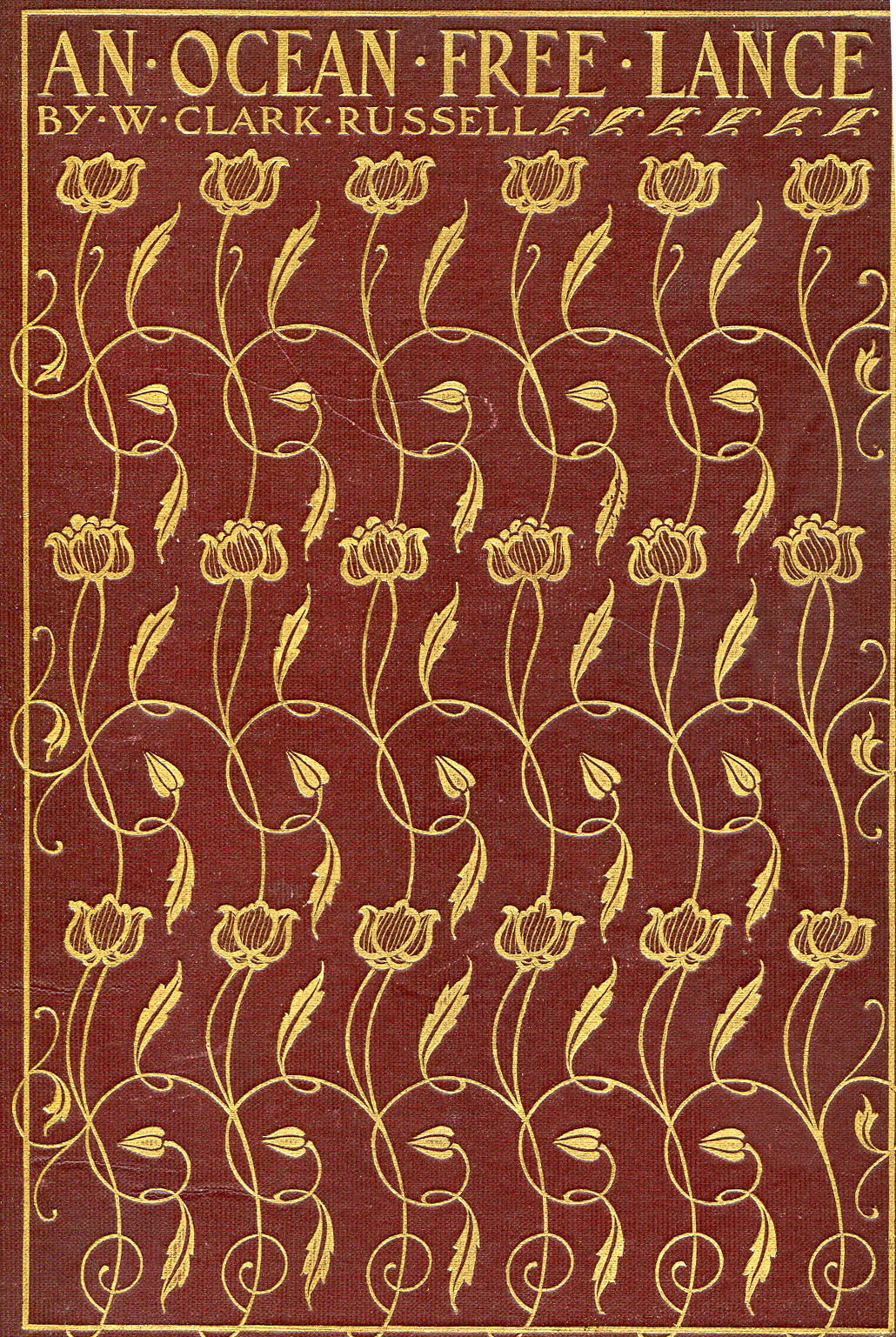
The latest issue of the Journal of Colonialism and Colonial History has an article by Stephanie Jones, "Maritime Space as Law and Light: Retrieving William Clark Russell's An Ocean Free-Lance (1882)". The abstract:
(New York Society Library)
William Clark Russell's An Ocean Free-Lance (1882) most obviously reads as a brittle homage to the nobility of a certain mode of imperial activity: it is, most apparently, a memorialisation of the privateer. But this is not the novel's only register. It also involves a broody engagement with oceanic space that is harder to interpret. This might simply be read within a belated-Romantic genre of novelistic yearning within the age of steam for the age of sail: in such terms, the novel easily reads as a critique of industrialisation. But the clear legal tones of the narrative and the novel's particular maritime aesthetics indicate that the nostalgia is more fully felt for the loss of a righteous order, a universal lex naturalis that is embodied in—that inhabits—the privateer. But even this is brought into question by the obscure poetics of light and water that slow down the plot and over-determine the atmosphere of the narrative. Via an engagement with recent historiographies of empire and of British privateering, against the background of work on the significance of law within nineteenth-century literature, and with the help of W.C.R.’s contemporary Robert Louis Stevenson, this paper reads An Ocean Free-Lance towards some larger speculations on the anxious meanings of the ocean as both an inhabited and abstracted space of empire.

Tuesday, April 1, 2014

The environment and the African slave trade

We've noted before (here and here) that the history of slavery, obviously a topic of legal history, has important environmental dimensions, as well. Now, by way of Imperial & Global Forum, we have news of  Emory University’s very impressive Trans-Atlantic Slave Trade Database. At Not Even Past, Henry Wiencek writes that the site
reminds readers that the process of moving enslaved Africans across the ocean was as much an environmental process as an economic one. The map, Wind and ocean currents of the Atlantic basins [below] reveals how oceanic forces played a role in determining the travel routes for slave ships. Red and blue lines respectively denote winds and currents swirling between Africa and the Americas, facilitating particular geographic courses better suited for crossing the ocean. These natural forces effectively created two separate “slave-trading systems,” as the site identifies them: one originating in Europe and North America and the other originating in Brazil. Historians have certainly detailed the racism and greed motivating the slave trade, but comparatively little time examining the environmental processes that made it possible. Particular centers of trade emerged along the coasts of Brazil, the Caribbean and West Africa to meet an economic need, but also to harness the currents and winds essential to moving so many men and women such vast distances.  And here too, the visual character of the map makes it easy to see how natural forces worked to shape the historical events.


Thursday, March 20, 2014

Canadian environmentalism and liberal internationalism

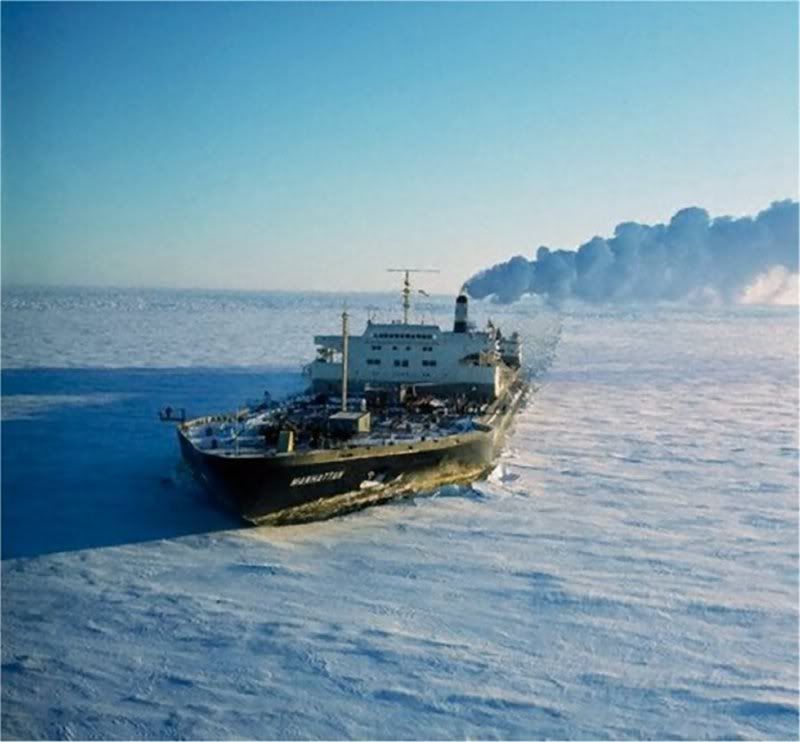
By way of Canadian Legal History, we learned of "Rights of Passage: The Intersecting of Environmentalism, Arctic Sovereignty, and the Law of the Sea, 1968–82", by David Meren and Bora Plumptre. The abstract (for the French version, go to the blog or the journal site):
Photobucket
The Manhattan
(Auke Visser's International Esso Tankers site)
This essay brings environmental and diplomatic history into conversation in order to examine the Trudeau government’s response to the 1969–70 voyages of the oil tanker Manhattan through the Northwest Passage. By passing the Arctic Waters Pollution Prevention Act and extending Canada’s territorial sea to 12 miles, Ottawa successfully instrumentalized the heightened environmental concern of the period in order to press Canadian claims to sovereignty in the Arctic. The essay demonstrates that this custodial approach was consistent with the functionalist tradition in Canadian liberal internationalism. More broadly, it reveals the promise of re-examining Canadian international history through the prism of environmental history.