Showing posts with label pollution. Show all posts

Sunday, August 27, 2023

The evolution of US NOx standards for cars

Dan Farber at Legal Planet recently posted on "Cars, Smog, and EPA". An excerpt:
For the first 20 years of federal regulation, Congress set the NOx [nitrogen oxides] standards for new cars itself. That’s quite different from the standards for industrial pollution sources, which Congress has always delegated to EPA. The reason may have been the high political stakes in the car industry or the relatively easier task of setting standards for new products in a single industry using a single energy process.
East River and Manhattan Skyline in Heavy Smog (Chester Higgins, Jr., EPA, 1973)
... The initial standard, set in the 1970 Clean Air Act, was 3.1 grams per mile (gpm) for NOx. Achieving that standard was thought to be nearly impossible when Congress created this mandate, but the mandate forced the car companies to make technological breakthroughs with catalytic converters.

Note that the standard is set in terms of pollution per mile rather than pollution per gallon. That means that any increase in fuel efficiency automatically helps a company meet the pollution standards as well. Theoretically, a car could have no pollution control at all but get such phenomenal mileage that it met the pollution standard. Actual mileage has improved but not enough to obviate the need for pollution controls.

Congress adjusted the standards twice. A 1977 amendment reset the limit to 1 gpm in 1981. The 1990 amendments changed the standard to 0.6 gpm, effective in 1994. These are called Tier 1 standards. Apparently Congress did not relish the task of periodically resetting the standards itself  The 1990 Amendments authorized EPA to set standards for 2004 and beyond.

*****

This has to be considered a successful regulatory program. The Biden proposed standard  [of 2023] allow less than 1% of the pollution levels that Congress mandated in 1970.

Tuesday, February 14, 2023

Sic utere versus salus populi

In a series of publications, most importantly her 2009 book, Chasing the WindNoga Morag-Levine has argued forcefully for distinguishing between continental European-style "police" regulation and common-law-style environmental regulation based on a nuisance conception. The recent issue of Law and History Review has an interesting article by Morag-Levine, "The Case of Proclamations (1610), Aldred's Case (1610), and the Origins of the Sic Utere/Salus Populi Antithesis", in which she finds the roots of this distinction in English law much earlier than she has previously argued. The abstract:

At least since the middle of the eighteenth-century, salus populi (the people’s welfare) and sic utere (use your own without injuring others) have encapsulated alternative conceptions of regulatory power, with the former associated with continental police regimes and the latter with Anglo-American conceptions of limited government. This article finds the origins of this antithesis in the intersection of two landmark cases addressed by Coke in the fall of 1610: Aldred’s Case, sic utere’s foundational text, and the Case of Proclamations, where Coke disputed the legality of building and starch proclamations. The Crown had provided common-good justifications for these proclamations, but their beneficiaries had included the individual neighbors of smelly starch makers and obstructive new buildings who had been left unprotected by previously existing local law. Rather than acquiescing to centralized legislation enacted via proclamation or parliament, Coke hinted in Aldred’s Case towards common law nuisance adjudication based on the sic utere principle as the desired mechanism for overriding local law that had privileged injurious land uses. Like salus populi, sic utere served a centralizing function. But whereas the former invited expansive regulatory agendas, the latter conditioned interventions on a judicial finding of a nuisance. In this, Coke’s invocation of sic utere in Aldred’s Case presaged the maxim’s eventual role as a substantive limit on the police power.

from John Speed's 'The Theatre of the Empire of Great Britaine' (1611-1612) (British Museum)

Sunday, January 15, 2023

Voluntarism and deregulation

Rachel S. Gross recently reviewed Jeffrey K. Stine's Green Persuasion: Advertising, Voluntarism, and America's Public Lands (Smithsonian 2021) for H-Environment. Gross writes:

In the 1980s, Hollywood tough guy Charles Bronson took his vigilante reputation to the world of public service. Bronson was a perfect poster boy for the Ronald Reagan-era PR effort, Take Pride in America. In TV ads, Bronson, along with fellow actors Clint Eastwood and Louis Gossert Jr., decried “bad guys who beat up on trees” and encouraged listeners to take voluntary action to help solve the problem (p. 62). The Take Pride ads were a curious take on the pressing environmental issues of the day. To be sure, vandalism did occur but to name that as a central environmental issue and to use Bronson’s image to convey pride in land as a masculine and patriotic concern were deflections. Just what these ads were a distraction from is the question that Jeffrey K. Stine addresses in Green Persuasion: Advertising, Voluntarism, and America’s Public Lands. Stine argues that the Take Pride in America campaign, which pushed voluntarism as a solution for the issues plaguing public lands, was a reflection of the conservative ideology that government was a problem rather than part of a solution. The Take Pride in America program suggested “that the enlightened self-interest of the private sector offered the ideal approach to public lands stewardship” (p. 53).

*****

Stine faces a challenge in that his book is an analysis of a government program that in the author’s own assessment was ultimately ineffectual and unimportant. In addition to showing the program’s lack of effectiveness, Stine also makes the case for why such an analysis is necessary. For Stine, the office was a failure but a revealing one, in that its longevity reveals a political history of conservative approach to environmental (lack of) action. Namely, Take Pride in America and the agenda of voluntarism it pushed via a succession of Republican administrations reflect a partisan divide on environmental policy, where conservatives aimed to deflect attention away from how they underfunded federal land agencies.

Thursday, January 12, 2023

"Environmental law" - a response to Farber

I have some objections to a recent post by Dan Farber at Legal Planet, "Learning to Name Environmental Problems"

Farber raises the interesting issue of when various issues seen today as "environmental problems" became thought of as such by the law, both in terms of seeing various issues – air pollution, water pollution, wilderness protection, and so on – as parts of a larger problem, and with regard to use of modern terms like "environment" and "pollution". But I think his answers are problematic.

Farber focuses on US Supreme Court decisions, finding its earliest uses of "air pollution" and "water pollution" and references to wilderness as something worthy of preservation in decisions from the 1960s. He also goes on to state that "The 1960s were also Congress’s first forays into issues like air and water pollution, wilderness protection, and the endangered species.  These developments set the stage for the blossoming of federal environmental law with the passages of NEPA, the Clean Air Act, the Clean Water Act, and other major legislation in the decade that followed."

Even allowing for methodological nationalism and the focus on the unrepresentative Supreme Court, this is all rather strange.

Paul E. Wolfe, Los Angeles County Air Pollution Control District vehicle, Burbank, 1947-1950?

Monday, November 7, 2022

The US Supreme Court’s earliest pollution cases

Over at Legal Planet, Dan Farber recently posted on "The Supreme Court’s Earliest Pollution Cases". Farber writes:

Well over a century ago, the Supreme Court ruled that it had that power to remedy interstate water pollution. That was in 1901. Six years later, the Court decided its first air pollution case.  Notably, these cases came during the conservative Lochner era when the Court was hardly known for its liberalism.  Quite the contrary. Yet the Court didn’t hesitate to address pollution issues.

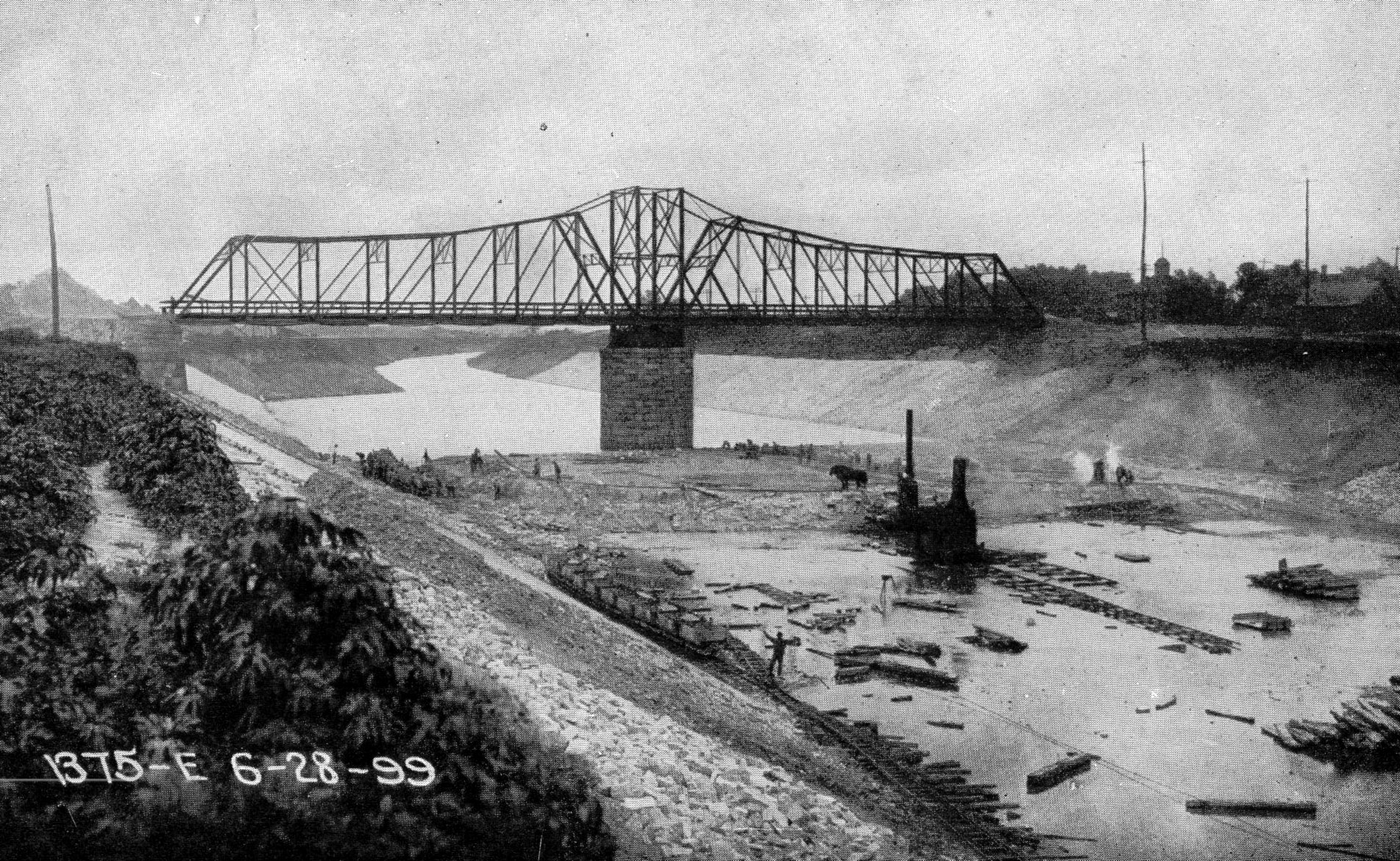
The water pollution case was Missouri v. Illinois.  In a feat of engineering prowess or incredible hubris, depending on how you look at it, Illinois had built a canal to reverse the flow of a river from Lake Michigan to the Mississippi. The canal then became a dumping place for the city’s raw sewage. Missouri claimed that the sewage was befouling the water as far away as St. Louis. The Court had long heard other law suits between states, but this was apparently the first one to involve pollution.

Chicago Drainage Canal being built (from The New Student's Reference Work (1914))

I'm not sure this was really the US Supreme Court's first pollution case - how about the Slaughterhouse Cases? In any case, Farber goes on to also discuss Georgia v. Tennessee Copper Co., an interstate air pollution case. He comments:

These two cases are little known today, but they have cast long shadows.  Very briefly, here were some of their longterm impacts:

  1. International law. This line of precedent got the attention of an international tribunal in the Trail Smelter case, which involving a Canadian smelter polluting across the U.S. border. The tribunal held that a country has a duty to prevent its inhabitants from inflicting serious harm within another country. Thus, Canada had to take responsibility for the pollution. This principle is now famous in international law as the Smelter Trail rule. In turn, that principle of international law was taken up in international concords such as the 1992 Rio Declaration on Environment and Development.

  2. Water pollution. Use of federal common law to pursue water pollution cases enjoyed a big revival in the 1960s and early 1970s. It was ended by the Supreme Court, which held that the then-new Clean Water Act took over the field of interstate water pollution in lieu of court-made rules.

  3. Climate change.  In a groundbreaking climate decision, Massachusetts v. EPA, Justice Stevens invoked this line of cases to emphasize the special interest that states have in access to the Court to protect their interests as sovereigns.  The upshot was to give states standing to sue EPA for failing to take action against carbon emissions. Also, this line of cases was repurposed  early in this century in order to bring lawsuits against major carbon emitters in federal court. The Supreme Court ultimately said that since the Clean Air Act covered climate change, lawsuits based on judge-made federal rules were no longer needed. It left open the possibility of lawsuits based on state law, and state lawsuits against oil companies are now underway.
More on the US Supreme Court and the history of environmental law here.

Tuesday, October 18, 2022

More on the Clean Water Act at 50


Legal Planet's Richard Frank posted today on the US Clean Water Act's 50th birthday. An excerpt:

The CWA as enacted a half-century ago was enormously ambitious and, with the benefit of hindsight, quite naive: in the law’s legislative findings, Congress declared that “it is the national goal that the discharge of pollutants into the navigable waters be eliminated by 1985.”  That obviously did not, and will not, happen.

Nevertheless, and with the possible exception of the Clean Air Act, no law enacted as part of the outpouring of federal environmental legislation in the 1970’s has proven more successful and transformational than the CWA.  The nation’s rivers, streams, lakes and ocean waters are dramatically cleaner and healthier than they were a half-century ago.

That’s primarily due to two key features of the CWA: first, a nationwide permit system designed to mandate aggressive application of pollution control technology to limit pollution from “point sources” such as factories and power plants.  The second feature is a massive infusion of federal funding to state and local governments to upgrade sewage treatment plants across America.

Another key element of the CWA is its incorporation of “environmental federalism” principles.  Subject to federal review and approval (and incentivized by generous federal funding), willing states were allowed to assume responsibility for administering and enforcing the CWA’s federal permit systems.  California was the first state to seek and obtain this delegation of federal CWA authority in 1972, and most–but not all–states have since done so as well.

Yet another important element of the CWA has been its incorporation of the principle of private enforcement.  In virtually all other nations, enforcement of water pollution control and other environmental laws is the sole responsibility of government regulators.  But the CWA authorizes and incentivizes private citizens and organizations to enforce the statute as well.  Today, the private enforcement model is replicated in many of the nation’s environmental laws.  But far more private enforcement actions are brought under the CWA than any other federal environmental statute.  And the number of private CWA enforcement lawsuits far exceeds those brought by federal and state regulators.

More on the history of the Clean Water Act here and here

Wednesday, September 28, 2022

The US Clean Water Act at 50

Another 50th anniversary: Legal Planet reports that the California Environmental Law & Policy Center at U.C. Davis School of Law will convene a conference to commemorate the 50th anniversary of the federal Clean Water Act on Friday, October 7th. Highlights include "a stimulating conversation between two water quality experts who were instrumental in drafting the Clean Water Act in 1972 and California’s landmark Porter-Cologne Act, the state’s comprehensive water pollution control statute that both predated and influenced the CWA."

The free, in-person conference will be held at the U.C. Davis School of Law.  Advance registration is required.


Wednesday, August 31, 2022

A model treaty for transboundary pollution

The Scandinavian Journal of History recently published an article by Melina Antonia Buns, "Making a model: the 1974 Nordic Environmental Protection Convention and Nordic attempts to form international environmental law". The abstract:

This article investigates the 1974 Nordic Environmental Protection Convention. It shows that the ulterior motives for such a convention were Nordic ambitions to regulate and reduce transboundary pollution originating outside of the Nordic region. Emphasizing the inter-organizational dynamics between institutionalized Nordic cooperation and international organizations, it examines how the Nordics drew on developments within international organizations and how they pursued their agenda of shaping international environmental law within the OECD. Ultimately, the article argues that the Nordic countries tried to create a model convention to be exported to and implemented at the international level with the aim of reducing transboundary pollution and establishing transnational responsibilities and accountabilities. By setting out this argument and shedding light on the first legally binding international convention to address transboundary pollution with procedural principles, the article breaks new ground on the history of Nordic environmental cooperation as well as on the development of international environmental law.

Black snow, Tryvann, Oslo in 1974 (NILU - Norwegian institute for Air Research, nordics.info)

Wednesday, August 3, 2022

Carbon dioxide as an air pollutant

More on the co-production of environmental science and law: Just out in Environment and History is an article by Ashton Macfarlane, "The Many Pollutant Identities of Carbon Dioxide: Global Climate Monitoring and Air Pollution Research in New Zealand, 1968–1975", that discusses the way carbon dioxide was framed as an air pollutant due to the modern air pollution statutes of the 1960s and '70s. The abstract:

In the late 1960s, New Zealand and the United States collaborated to establish a southern hemispheric carbon dioxide (CO2) monitoring station on New Zealand’s coastal cliffs. The New Zealand CO2 Project, as it came to be known, is an underappreciated landmark in the history of environmental monitoring. The archival record of its early years reveals the extent to which efforts to measure atmospheric carbon dioxide concentrations interacted closely with one of the most hotly debated political issues of the mid-twentieth century: urban air pollution. The designation of CO2 as air pollution on a planetary scale had profound legal implications in an era in which clean air legislation increasingly brought air pollution within the scope of governmental regulation, and administrative agencies began to jostle for control of the monitoring enterprise. The precise nature of CO2 as an air pollutant, however, was difficult to pin down. In these initial years of concerted carbon dioxide monitoring, when the lines between climate science and air pollution research were still blurred, CO2 developed its many pollutant identities. The nature of these identities – and the ways in which scientists and science administrators negotiated their boundaries – retain their relevance today, as nations continue to link air pollution and climate legislation in the twenty-first century.

NIWA's Baring Head monitoring station (Dave Allen)

Friday, July 15, 2022

Negotiating regulatory science

More on the law-science nexus: The latest issue of Comtemporanea has an article by David Stradling, "Negotiating Regulatory Science. Dredging the Great Lakes in the Age of Ecology". The abstract:

In the mid-1960s residents around North America’s lower Great Lakes expressed growing concern about the dumping of dredge spoils in open waters, which they suspected of harming water quality. The act of dumping spoils, particularly from industrial harbors, became a target for government regulators eager to show progress in solving the environmental crisis. Scientific studies of dredging’s ecological impact and the regulation of dredging increased in Canada and the United States. The multiplicity of bureaucracies involved ensured that the International Joint Commission (IJC), established to resolve policy conflicts along the international border, would address the issue of dredging. The IJC response to the dredging conundrum provides a case study of how bureaucracies negotiated scientific knowledge in the age of ecology. Scientists turned data into knowledge and knowledge into policy guidance inside bureaucracies with conflicting missions that reflected divisions in the broader public. The public’s vague but powerful fear about sediment tainted by the industrial cities in which it accumulated forced the creation of a remarkable body of scientific knowledge related to how pollutants move through and accumulate in lake ecosystems. Activists forced governments to define pollution, to determine which of the many effluents of industrial cities affected human and ecological health, and at what concentrations they became a threat. In the age of ecology, regulation often outpaced science, and scientific research raced to meet public demands.

Friday, April 29, 2022

Acid rain and Nordic-Russian cooperation

The recently published book, Greening Europe: Environmental Protection in the Long Twentieth Century – A Handbook, edited by Anna-Katharina Wöbse and Patrick Kupper (De Gruyter Oldenbourg, 2021), has a number of law-related chapters. One is Arne Kaijser's "Combatting 'Acid Rain': Protecting the Common European Sky",  which has an observation on Soviet-Scandinavian relations that takes on additional interest given the news of the day regarding Sweden, Finland, and NATO. The abstract:

In the late 1960s, Scandinavian scientists asserted that the long-range air pollution was causing serious acidification and that emissions all over Europe would have to be diminished. The prevailing view at the time was that air pollution was a local phenomenon best handled by building high smoke-stacks, and the major polluting countries were opposed to spending money on protecting areas far away in other countries. This chapter analyses how the discovery of “acid rain” triggered the first international research projects to confirm long-range air pollution and how, in a second phase, international negotiations involving scientists, policymakers, and diplomats resulted in the Convention on Long-Range Transboundary Air Pollution in 1979. Later on, special protocols were adopted, and the signing nations promised to decrease their emissions in accordance with specific goals. Cold War politics played an interesting role in the negotiations and led to an unexpected alliance between Nordic countries and the Soviet Union.

Effects of acid rain, woods, Jizera Mountains, Czech Republic

Thursday, April 21, 2022

Environmentalism Then and Now

I just came across a site by the American Bar Association's Division for Public Education with teaching materials on the history of environmental law

It's an eclectic group of resources. For instance the PowerPoint presentation entitled "Environmentalism Then and Now: Is Going Green New? You Be the Judge..." includes slides on a 1681 regulation by William Penn requiring Pennsylvanians to conserve one tree for every five cut down, and a 1739 petition by Benjamin Franklin to the Pennsylvania Assembly to stop waste dumping in Philadelphia harbor.

There's also a unit on the Exxon Valdez spill and ensuing litigation, including Supreme Court briefs.

Exxon Vladez - skimming operation (NOAA)

Friday, March 5, 2021

The polluter pays principle and policy transfer

I missed this one a while back: The European Review of History published Jan-Henrik Meyer's "Who should pay for pollution? The OECD, the European Communities and the emergence of environmental policy in the early 1970s". The abstract:

Environmental policy emerged as a new European and global policy field within a very brief period of time during the early 1970s. Notably in Europe, international organizations played a central role in defining core principles for this new policy domain. This article argues that inter-organizational connections were crucial in this context: the exchange and transfer of policy ideas facilitated the rise of environmental policy across different international organizations. Focusing on the co-evolution of the polluter-pays principle enshrined almost simultaneously both at the OECD and the European Communities, the article assesses the multiple routes along which policy ideas travelled, the role inter-organizational competition played and the selective nature of transfers. While expertise played a key role in determining which policy concepts were selected, institutional conditions and the politics of the recipient institution determined how they were adapted to the respective new context.

Thursday, December 31, 2020

Clean Air Act turns 50

Dan Farber recently posted on the subject at Legal Planet. Here's part of what he had to say:

No doubt we could design a more effective and efficient regulatory scheme if we were start over. But the Clean Air Act has nonetheless had a major impact.  Here’s what EPA has to say on the subject  — and remember, this is from the Trump EPA, which is no fan of regulation:

  • Experience with the Clean Air Act since 1970 has shown that protecting public health and building the economy can go hand in hand.

  • Clean Air Act programs have lowered levels of six common pollutants — particles, ozone, lead, carbon monoxide, nitrogen dioxide and sulfur dioxide — as well as numerous toxic pollutants.

  • From 1970 to 2017, aggregate national emissions of the six common pollutants alone dropped an average of 73 percent while gross domestic product grew by 324 percent. This progress reflects efforts by state, local and tribal governments; EPA; private sector companies; environmental groups and others.

  • The emissions reductions have led to dramatic improvements in the quality of the air that we breathe. Between 1990 and 2017, national concentrations of air pollutants improved over 75% for lead, carbon monoxide, and sulfur dioxide; 56% for nitrogen dioxide (annual); and 22% for ozone. Particulate concentrations improved more than a third between 2000, when trends data begins for ultra-fine particles, and 2015.

For more on the history of the Act, see here


Monday, December 28, 2020

Tension between public health and environmental protection

The latest issue of the Journal of Environmental Law has an interesting piece by Ben Pontin, "The Constitutive Tension Between Public Health and Environmental Protection—An Historical Perspective". Pontin writes (footnotes omitted):

According to David Hughes, the author of an early formative textbook, environmental law has ‘public health origins’. That is to say, many current regulatory bodies and laws are rooted in the sanitary boards created and statutes drafted during industrialisation to address cholera, typhus and other diseases then associated with urban life. Hughes makes the important point that environmental regulation has borrowed from public health regulation above all in the form of the use of criminal law as a tool of prevention of harm, rather than sanctioning of individual wrongdoing.

It is true that the laws and institutions of public health burgeoned during industrialisation, and that they defined progress at this time. Thus one of the most ‘progressive’ Victorian-era administrations—that of Benjamin Disraeli between 1874 and 1880—was elected on a manifesto echoing Cicero’s maxim salus populi sumprema lex esto (the health of the people is the highest law). This administration put on the statute book the Public Health Act 1875, which heralded a significant shift ‘towards a more modern, collectivist approach to public health’. Under the umbrella of Cicero’s maxim was also enacted legislation controlling air and river pollution.

Yet environmental legislation in and around this period has an autonomy in relation to public health that is not fully captured by Professor Hughes’ characterisation. For instance, whereas public health campaigners seeking the creation of a robust nationwide legal response to disease encountered obstacles in an age of ‘laissez faire’, those defending ‘nature’ found legislation easier to secure. An example is the protection of rural vegetation from chemical factories under the Alkali Act 1863, by means of a centralised, criminal administrative regulatory regime. Public health campaigners in respect of urban peoples were less easily heard within the law-making institutions than the elite proprietors of country estates, safeguarding trees, hedges and meadows. 

Charles Tennant's St. Rollox Chemical Works in 1831

Tuesday, September 29, 2020

The Santa Barbara Oil Spill

H-Environment recently published a review by Samm Newton of Teresa Sabol Spezio's Slick Policy: Environmental and Science Policy in the Aftermath of the Santa Barbara Oil Spill (U. Pittsburgh Press, 2018). The Santa Barbara spill is often pointed to as one of the foundational moments of modern American environmentalism and environmental regulation, but Spezio seems to flesh out the picture.

Newton writes that Spezio

explores the relationships between oil pollution and political changes in the 1970s and asks how the Santa Barbara oil spill became a watershed moment in the history of environmental and science policy in the US, especially in regard to the Clean Water Act of 1972 (CWA). To answer this question, Sabol Spezio analyzes how the oil spill influenced the CWA and the National Environmental Policy Act (NEPA), as well as the formation of the Environmental Protection Agency (EPA) and the National Oceanic and Atmospheric Administration (NOAA). She then turns to the changing science and technology that became essential to understanding marine oil pollution and how that contributed to detecting water pollution in fresh water systems. She argues that the US government’s reactions to the Santa Barbara oil spill improved their ability to address controlling, measuring, and regulating water contamination on a federal level. 

Her argument is broken into three sections. Part 1 describes environmental science and policy before 1969. Before the oil spill, no entity was officially in charge of managing the oceans. Federal waters were regulated by the Bureau of Land Management (BLM) and the United States Geological Service (USGS) under the guidance of the very oil companies exploiting the resources located in those waters. Additionally, scientists used different protocols and technologies to measure oil pollution. Before 1969, water quality was measured by smell, taste, sight, and/or the presence of disease. The oil spill in California challenged that precedent, contending that measurement by the senses was inefficient. A flurry of new research methods and technologies, specifically gas chromatography, followed in an effort to estimate both oil in water and the dispersants used to combat oil pollution.

*****

As Sabol Spezio argues, it took a salient crisis, like the debacle that was the oil spill, to make regulatory change possible. Several events in the 1960s and ’70s, such as the publication of Rachel Carson’s Silent Spring (1962) and the Cuyahoga River fire, contributed to the salience of environmental degradation in the American attention cycle. Sabol Spezio adds to the literature by claiming that the Santa Barbara oil spill was not just one of many environmental crises but was the tipping point event that made the reform of US environmental regulation possible. 

Tuesday, September 22, 2020

Water pollution regulation: an economic analysis

Last year the Journal of Economic Perspectives published "US Water Pollution Regulation over the Past Half Century: Burning Waters to Crystal Springs?" by David A. Keiser and Joseph S. Shapiro. The abstract:

In the half century since the founding of the US Environmental Protection Agency, public and private US sources have spent nearly $5 trillion ($2017) to provide clean rivers, lakes, and drinking water (annual spending of 0.8 percent of US GDP in most years). Yet over half of rivers and substantial shares of drinking water systems violate standards, and polls for decades have listed water pollution as Americans' number one environmental concern. We assess the history, effectiveness, and efficiency of the Clean Water Act and Safe Drinking Water Act and obtain four main conclusions. First, water pollution has fallen since these laws were passed, in part due to their interventions. Second, investments made under these laws could be more cost effective. Third, most recent studies estimate benefits of cleaning up pollution in rivers and lakes that are less than the costs, though these studies may undercount several potentially important types of benefits. Analysis finds more positive net benefits of drinking water quality investments. Fourth, economic research and teaching on water pollution are relatively uncommon, as measured by samples of publications, conference presentations, and textbooks.


Thursday, June 11, 2020

Chinese environmental regulation in the 1970s and '80s

Pollution in China (credit: Anjali aisha)
Just appearing online in Environment and History is an artcile by Yun Liu, "Voices of Protest Against Industrial Pollution in Hubei, China, During the 1970s and 1980s". The abstract:
This article examines local official records to find voices of protest against industrial pollution in Hubei, China, during its early reform era from the 1970s to the 1980s. Archival evidence from unpublished official documents indicates that to some extent local officers responded to citizens’ petitions against two main forms of industrial pollution: air pollution and soil pollution. Air pollution mostly affected urban residents but elicited more contention. Soil pollution got comparatively less exposure but caused more direct damage to impacted peasants. Both rural and urban victims of industrial pollution projected their own voices of protest typically by submitting group-authored and signed or anonymous whistle-blowing letters. Protests against pollution emerged with inter-group conflict negotiation in public or semi-public venues as well as in local investigation reports. The findings discussed here help to explain how local environmental governance evolved through increasing public awareness at subnational levels in China’s early reform years.

Monday, January 28, 2019

The Santa Barbara oil spill

Richard Frank posted yesterday at Legal Planet on the 50th anniversary of the Santa Barbara oil spill. Some excerpts:
In many ways, however, the January 1969 Santa Barbara spill remains the most consequential and transformative environmental disaster in American history.  That’s true for several related reasons.  First, it was the inaugural such environmental disaster captured and broadcast into millions of U.S. households on the evening news.  For weeks, the major TV networks provided gripping, daily accounts of the biological damage and adverse economic effects produced by the Platform A blowout.  And that had a profound effect on the national psyche, with televised footage of dead and dying animals, fouled beaches and oil-saturated ocean waters underscoring in the most stark way the myriad costs associated with oil and gas development in coastal waters.
Second, the Santa Barbara oil spill provoked a strong and immediate response from government leaders.  Local officials complained bitterly to the media and public about the lack of adequate environmental controls and oil spill response efforts, noting presciently that the federal government that had issued the oil and gas leases–thereby earning substantial royalties from the oil companies’ offshore development activities–had an inherent conflict of interest when it came to regulatory oversight of those same activities.  Federal officials had a more muted reaction to the spill: President Richard Nixon visited the area to view the spill and cleanup efforts on March 21st, telling the assembled crowd, “…the Santa Barbara incident has frankly touched the conscience of the American people.”  But on April 1st, a hastily-adopted, temporary federal drilling ban was lifted, and oil and gas development in federal waters resumed off the California coast.
Longer term, however, the Santa Barbara spill would have a direct and positive effect on American environmental policy and law.  Later that year, Congress would enact the National Environmental Policy Act (also a half century old this year).  And NEPA was but the first in a torrent of environmental legislation passed by Congress over the next decade–including the Clean Air Act, Clean Water Act and Endangered Species Act–that to this day remains the basic framework of federal environmental law.
*****
The Santa Barbara oil spill also catalyzed a state government response that quickly made California a national and international leader when it comes to environmental policy and law.  In the immediate wake of the disaster, the Republican-dominated California Legislature created an interim Committee on Environmental Quality, directing it to develop recommendations for state environmental legislation.  The most important outgrowth of that initiative was passage in 1970 of the California Environmental Quality Act; modeled on but significantly stronger than NEPA; CEQA remains California’s most important, cross-cutting environmental law, as well as the most powerful “little NEPA” statute in the nation.  And when the California Legislature balked at passing a law specifically designed to prevent ocean and coastal damage exemplified by the Santa Barbara oil spill, state voters responded by enacting an initiative measure in 1972 creating the California Coastal Commission and the most powerful system of coastal regulation and preservation in the nation. 

Wednesday, January 2, 2019

Climate science, history, and the law

Bill Kovarik recently posted at "Environmental history timeline" on a lawsuit against Exxon-Mobil, raising some interesting questions. Some highlights:
The lawsuit is based in part on an investigation by the Center for International Environmental Law which accused Exxon-Mobil Oil Corp. of working to dismiss climate change science and political action despite having had a scientific understanding of climate change “as early as” three or four decades ago, (or sometimes 1977, or 1968). The research grew into an “Exxon Knew” campaign. It was greeted with enthusiasm by environmentalists like Al Gore and Bill McKibben and with skepticism by Independent Petroleum Association of America and by Exxon-Mobil itself.
The key issue seems to be when Exxon knew climate change involved C02 from fossil fuels. Many of the Exxon Knew stories start along these lines: “In the 1960s, the American Petroleum Institute (and / or Exxon) made a troubling discovery.”
From an historical standpoint, the question ought to involve the broader context of scientific research. If API and Exxon researchers knew about climate change, what about the rest of the engineering and scientific community?
The fact is that the topic was a constant source of concern and research across the related scientific communities for a century and a half. Scientists concerned with climatology and glaciology and many associated geophysical sciences have studied climate change for generations. 
As seen here, the Washington Post carried an article May 4, 1953 on a Gilbert Plass paper at American Geophysical Union, quoting him specifically pointing to fossil fuel use as increasing climate warming.  Plass and other climatologists regularly published on these and related topics, with much of that generation’s research converged in the International Geophysical Year (1957-58).
Kovarik goes on to discuss many other scientists and others who warned about greenhouse gas induced climate change beginning in 1856.
So, clearly, Exxon knew, but so did everyone else.
In confining the discussion to Exxon’s own knowledge and actions, for example in a series of Inside Climate News articles, we have a legal strategy rather than an appreciation for the history of science. When we say “Exxon knew” as early as the 1970s or 80s, we ignore the long trail of scientific discovery beforehand, and we leave the field open to highly selective interpretations of trends.