Showing posts with label tort. Show all posts

Sunday, March 5, 2023

Nature versus the common law V: Rylands in India


In previous posts in this series we looked at how courts dealt with the question of whether the common law rules of water law needed to give way to the felt necessities of different environmental conditions in two doctrinal contexts - public rights in non-tidal rivers and shifting watercourses. Next up is an examination of how "the rule in Rylands v Fletcher" fared in India.

The 1868 decision of the House of Lords in Rylands, affirming an 1866 decision of the Court of Exchequer Chamber, is one of the best-known cases in English tort law. The defendant in the case had built a water reservoir on his land to store water for powering a mill, taking all due care, but the water in the reservoir escaped through some old mineshafts and flooded the mines of his neighbor. The court ruled that if a defendant brings something dangerous on to his land and that thing escapes and causes damage to a neighbor, he is liable in tort even if he acted without fault.

Of particular relevance for this study, Lord Chancellor Cairns's ruling turned to a large extent on the issue of whether the use made by the defendant landowner was natural or not. Lord Cairns wrote that if the defendant's land had accumulated water by "natural user" of the land, and then "by the operation of the laws of nature" flowed onto his neighbor's land, there would be no liability. If, however, the defendant used his land for "a non-natural use, for the purpose of introducing into the close that which in its natural condition was not in or upon it", liability would ensue were the water to escape and cause damage, as it did in this case.

Even before the House of Lords had issued its opinion in Rylands's appeal, the Madras Railway Company decided to try and have the rule in the case established by the Court of Exchequer Chamber imported to India. A couple of tanks (reservoirs) located near the rail line in the District of North Arcot had burst several times in 1865 and 1866, and the resulting floods had damaged embankments, bridges, and culverts belonging to the railway company. The company brought suit against the landowner for the damages (Madras Rwy Co v Salvah Makaraju, 5 Madras High Court Reports 139 (1870)), at the same time refusing to allege negligence on the part of the defendant, choosing instead to rely on the new rule of Fletcher v Rylands. It seems that the railway company was hoping from the start to appeal the case up to the Privy Council in London, hoping, as the Madras High Court put it, to take the final decision out of the hands of "Judges conversant with the necessities of the country", instead having "a rule […] imposed elsewhere by Judges not so conversant" (Madras Rwy Co v Zamnida'r of Ka'vatinaggur, 6 Madras High Court Reports 180 (1871)).

Sunday, July 1, 2018

Protection for polluters

“Roast Yard no. 2” in Copper Cliff (c. 1903),
providing a good idea of the damage the heap roasting inflicted on the local environment
(City of Greater Sudbury Heritage Images, Copper Cliff Museum Collection, CC0115)
Mark Kuhlberg and Scott Miller recently published "'Protection to the Sulphur-Smoke Tort-feasors': The Tragedy of Pollution in Sudbury, Ontario, the World’s Nickel Capital, 1884–1927" in the Canadian Historical Review. First, the abstract:
While there are many tales of mining companies polluting the Canadian communities in which they have operated, Sudbury’s early history stands out. It is arguably the most extreme example of an industry dictating to government how the latter dealt with the local pollution problem–in this case, sulphur dioxide emissions. The capstone achievement was the creation of an extrajudicial solution to the problem that permanently suspended the legal rights of residents seeking redress for their grievances. Moreover, the Ontario government was duplicitous in this affair–namely, by zealously luring settlers to the region in an effort to develop farming there even though it was acutely aware of the local pollution problem. Finally, this story is truly tragic because the pollution need never have happened to the extent that it did. The provincial politicians knew full well that the means existed–within a short jaunt of Sudbury no less–to mitigate the problem, but the politicians refused to force the mining firms to adopt them. Retelling Sudbury’s story thus highlights how the Ontario government’s decision to grant the mining firms practical impunity to pollute the local environment–both human and non-human–was a matter of political choice.
The article details the many legal tactics taken by the mining companies to avoid an injunction that might shut down their operations, the most extreme of which was the "extrajudicial solution" mentioned above. Said solution was one which has also reared its head in recent times - compulsory arbitration. The article explains the Ontario Act to Provide Compensation for Damage caused by Sulphur Fumes of 1921 (citations omitted):

Tuesday, February 6, 2018

Tort law, regulation and river pollution

One of the prices those of us who publish chapters in edited collections pay is that our writing often does not get the exposure it would were it published in a journal. So I'd like to bring special notice to a piece by Michael Lobban, "Tort Law, Regulation and River Pollution: The Rivers Pollution Prevention Act and its Implementation, 1876-1951", published in Tort Law and the Legislature: Common Law, Statute and the Dynamics of Legal Change, edited by TT Arvind and Jenny Steele (Hart, 2013). From the introduction:
By 1850, the massive urbanisation and industrialisation which Britain experienced over the previous century had generated unprecedented problems of pol­lution. The mid-century laissez-faire state, with its small central government and fragmented local regulatory bodies, was largely unprepared for these problems, and environmental pro­tection was left in the hands of private litigants - usually wealthy landowners - invoking the common law. However, reform at both local and central level led to new regulatory systems being put in place from the 1870s, which promised to play a larger role in reducing pollution. The Rivers Pollution Prevention Act 1876... was part of this reform. It was a pioneer­ing piece of legislation, the first general statute to deal with river pollution. Yet it has often been seen as a weak measure, which did little to improve river quality. Indeed, some historians have taken the view that it was drafted in such a way as to allow public authorities to hinder the more effective remedies against polluters which were available at common law.
How effective the common law could be in controlling pollution has long been debated among historians. According to JF Brenner, common law judges had no interest in using the law of nuisance to restrict industry, but rather sought to remould it - and emasculate it - to permit industry to develop. Brenner's view has been challenged by John McLaren. In his view, judges were far more divided on issues of policy than Brenner acknowledges. The predominant approach was one which recognised that the common law protected the right to clean water, but which also applied injunctions flexibly, given the practical difficulties of dealing with urban pollution. McLaren acknowledges the relative rarity of common law actions, but he attributes this to social and cultural factors, as well as the technical and financial difficulties faced by those who went to court, rather than to any doctrinal impedi­ments imposed by the judiciary. McLaren's own view that the common law was not par­ticularly effective has in turn been challenged by Ben Pontin, who argues that injunctions obtained by private law litigants could play a crucial role in forcing recalcitrant local authorities to spend money to improve sewage facilities. Leslie Rosenthal also argues that the common law could produce efficient outcomes, by inducing parties to enter into post­litigation negotiations.

Friday, January 26, 2018

Law in the Anthropocene? Maybe not

Eric Biber recently posted a series at Legal Planet based on his recent Georgetown Law Journal article, "Law in the Anthropocene Epoch" (abstract below). The Anthropocene, for those who have somehow missed this buzzword, is (according to its proponents--it has yet to be officially adopted) a new epoch, in which the signs of human changes to the planet are visible in the geologic record. The article and blog posts contain a useful catalog of ways in which current legal doctrines and institutions do a poor job of dealing with environmental challenges, and essentially argue for the desirability of major changes in liberal conceptions of individual rights and private property. That sounds right, but I'd like to quibble over three historical elements of the argument.

First, Biber's confidence in the direction of future political and legal change ("Humans will inevitably respond to the Anthropocene", "These responses will ineluctably lead to greater government involvement", etc.) seems to me problematic, reflecting an environmental-determinist and functionalist view of legal development that I find unconvincing. Many of the challenges identified by Biber have been with us for some time, and the law has apparently not adapted to them. It is not clear that it must or will do so in the future. I think a more tentative or even a normative tone would have made for a more convincing argument.

Second, Biber's use of "the Anthropocene" is idiosyncratic. Many proponents of the idea of an Anthropocene epoch seem to have settled on a start date in the mid-twentieth century, though others (including the originators of the idea) argue for an 1800 start, and others would push it back even further. In any case, if there is an Anthropocene, we are already in it, the challenges identified by Biber are already upon us (with many of them hundreds of years old), and so if, as he argues, the law will change in response to them, it should have already done so. If the Industrial Revolution took place during the Anthropocene, it is hard to make sense of his argument that "These changes will parallel similar revolutionary legal changes associated with industrialization and the development of a national economy in the United States in the nineteenth and twentieth centuries."

Wednesday, May 10, 2017

Lessons from tobacco for the future of climate change liability

The law surrounding the health effects of tobacco are an important precedent for many environmental law issues (see here and here). Now Martin Olszynski, Sharon Mascher, and Meinhard Doelle recently posted "From Smokes to Smokestacks: Lessons from Tobacco for the Future of Climate Change Liability". The abstract:
In this article, we imagine a future Canada (circa 2030) wherein the world has managed to avoid the worst climate change but nevertheless has begun to experience considerable warming. Governments of all levels, but especially provincial ones, are incurring unprecedented costs to mitigate the effects of climate change and to adapt to new and uncertain climatic regimes. We then consider how legislatures might respond to these challenges. In our view, the answer may lie in the unprecedented story of tobacco liability, and especially the promulgation in the late 1990s of provincial legislation specifically designed to enable provinces to recover the public healthcare costs of tobacco-related disease. Although comparisons between the tobacco industry and the fossil-fuel industry are increasingly common, this article is the first to consider the legally-relevant differences and similarities between these two contexts in detail. It also sets out the main elements of a potential Climate Change Damages and Adaptation Costs Recovery Act. As will be seen, the design of such legislation engages several complex legal issues, implicating not only tort doctrine but also questions of legislative competence and private international law. Nevertheless, our initial assessment is that such legislation is both likely and feasible. Our analysis focuses primarily on Canadian law but should also be relevant to other jurisdictions that are increasingly grappling with the costs of climate change mitigation and adaptation. 

Sunday, April 9, 2017

Water pollution lawsuits

This Day in Water History recently reproduced a 1916 article from the Municipal Journal:
Three Sue City for Typhoid Deaths. Milwaukee, Wis.-Three suits brought against the city of Milwaukee as a result of the recent typhoid epidemic, have been filed in circuit court, by two men for the deaths of their sons, and by a woman for the death of her husband. They are for $10,000 each. The complainants claim that the victims contracted the disease from the use of lake water, alleged to be unfit to drink because of the sewage which is being constantly emptied into the lake. The suits charge negligence in allowing the water to become polluted and at the same time supplying it to drink. It is claimed that at various times during the last ten years the city officials have been notified of the condition of the water, but that no attention has been paid to the warnings.
Michael McGuire comments:
The typhoid fever epidemic in Milwaukee was caused by a city employee turning off the chlorine disinfection system for about 10 hours. The epidemic resulted in 513 cases and 59 deaths from typhoid fever. As filtration and chlorination became more widely installed to protect water supplies, it became harder for cities to claim that contaminated water supplies were not responsible for typhoid fever deaths. The combination of engineers wanting to do the right thing and lawsuits resulted in an accelerated introduction of the new technologies.

Sunday, November 20, 2016

Bhopal Digital Archive

Mitra Sharafi recently posted on the digital archive created by her and others at the University of Wisconsin on the 1984 Bhopal disaster in which lethal gas leaked from the local Union Carbide plant and killed 15,000 to 25,000 people. The archive is centered on documents collected by legal scholar Marc Galanter, who was involved in civil litigation against the company. The archive explains the basic legal chronology:
Bhopal is frequently referred to as the world’s worst industrial disaster. The leak followed a period of reduced maintenance and neglect of safety systems at the plant.
The arrival in Bhopal of American lawyers led to the filing of hundreds of lawsuits against the American parent company, Union Carbide Corporation (UCC), in the United States. The Indian Parliament passed the Bhopal Act, designating the Government of India (GOI) as the exclusive representative of the victims. The GOI brought filed suit in US federal court on April 8, 1985. The many American cases were consolidated for pre-trial proceedings in the federal district court for the Southern District of New York. The case was assigned (by lot) to Judge John F. Keenan, at the time a relatively junior judge. Union Carbide moved to dismiss on grounds of forum non conveniens—i.e., that the case could more appropriately be tried in India.
The Court allowed discovery on matters limited to the question of where the case should proceed. The parties submitted briefs and supporting material and presented oral arguments. Judge Keenan granted the defendant’s motion to dismiss subject to some conditions, which Union Carbide accepted after modification by the Court of Appeals.
The case was re-filed in India in the District Court in Bhopal on Sep. 5, 1986. On Dec. 17, 1987, that court ordered preliminary compensation of Rs. 350 crores (then equal to about 25 million dollars). Union Carbide appealed to the High Court of Madhya Pradesh, which affirmed the order for preliminary relief, with modifications, reducing the amount of Rs. 250 crores. UCC then appealed to the Supreme Court of India. In February 1987, while the appeal was pending in the Supreme Court, UCC and the GOI reached a settlement, under which UCC paid the Government of India $480 million in dollars.
The GOI set up tribunals to determine the compensation to be paid to claimants. The tribunal process extended over more than 15 years. Because the value of the Indian rupee fell from roughly 13 to the dollar in 1987 to 45 to the dollar in 2004, the GOI ended up having a considerable residue (over $300 million) after paying the victims. In 2004 the Supreme Court ordered the remaining funds to be paid out pro rata to all those who had been compensated.
Many in India remain convinced that the culprits were let off too easily in light of the comparatively low damages payment and the absence of UCC’s chairman, Warren Anderson, from the trial that convicted his Indian subordinates.

Monday, October 24, 2016

All the elements of tragedy were there

(courtesy Old Merthyr Tydfil)
Friday marked the 50th anniversary of the horrific Aberfan disaster, in which a mountain of coal waste buried part of the Welsh town, killing 28 adults and 116 children. (The title of this post is a variation on the refrain from Keidrych Rhys's poem, "Aberfan: Under the Arc Lights", quoted by Prince Charles at the commemoration ceremony.) As the New York Times reports:
At the inquest, when a child’s cause of death was listed as asphyxia and multiple injuries, one father famously said: “No, sir. Buried alive by the National Coal Board. That is what I want to see on the record.”
Iain McLean has done some interesting work on the policy lessons of the disaster, including some legal ones:
The legal framework for corporate manslaughter already existed in 1966. The managing director of a local firm had been prosecuted in 1965 for allegedly instructing a welder to cut up a disused river bridge starting in the middle. The welder had done so and was drowned when the bridge collapsed. The prosecution failed because it could not prove that it was the managing director who had given the order. But two of the counsel who subsequently appeared before the Aberfan Tribunal had also appeared in that case, with reversed roles. The prosecuting counsel in 1965 was counsel for the National Coal Board at the tribunal. The defence counsel in 1965 was counsel for the teachers' unions (who had lost five of their members) at the tribunal. Why then did they not consider the possibility of prosecution of the NCB? Partly because the idea was too mind-stretching; partly because it is always difficult, in a large organisation, to prove that a directing mind (mens rea) was behind a piece of criminal negligence. The Law Commission recommended in 1996 that a specific offence of corporate killing should be introduced. The Labour Party accepted this proposal and put it into its 1997 General Election manifesto. It still has not been implemented. This may be ascribed to corporate lobbying....

Sunday, September 25, 2016

Economics and property rights in the Gold Rush

I just came across a review that I wrote and submitted a while ago for the Business History Review on Mark Kanazawa's Golden Rules: The Origins of California Water Law in the Gold Rush (U. Chicago Press, 2015). I had thought the editors would inform me when it was published... Anyway, here's what I wrote:
There's still gold in them thar hills. A century and a half after the torrent of gold-seekers to the California Sierras dried up, the flow of historical studies of the development of property rights on the gold frontier continues unabated. This work of detailed scholarship by Mark Kanazawa, an economic historian who has published extensively on water law in the western United States, is the latest entry into the auriferous regions.
Romance and adventure aside, economic and legal historians, along with property theorists, have been drawn to the California gold rush for two main reasons. First, the development of “codes” in the mining camps of the forty-niners provides a colorful case study of the institution of a system of law from scratch. Because government presence and state law were thin on the ground in gold-rush California, the ability of the miners to institute working systems of norms seems to serve as a historical example of successful private ordering. Beyond this, scholars of water law have taken a particular interest in the laws of the diggings, as the system of private rights in water that applies to this day in much of the western United States, known as the appropriation doctrine, is thought to have originated in the gold fields. So miners’ laws have received quite a lot of attention in studies hoping to explain how legal order spontaneously emerged out of chaos and why the miners abrogated the common-law regime of “riparian rights” in water (in which all landholders adjacent to the water source shared it) in favor of appropriation, based on the principle of “first in time, first in right.”
Golden Rules takes an economic approach to understanding the origin and evolution of water law in the California mining region in the decade or so following the discovery of gold at Sutter's Mill. After several substantial introductory chapters laying out the history of California gold mining and the ditch industry that developed to provide the water used in increasingly large and sophisticated mining operations—as well as the economic theories of property and tort he believes explain the historical development of the law—Kanazawa gets down to his analysis in detail. Chapter 5 examines the water rules adopted in the mining camps, arguing that they generally did a good job of promoting mining at an efficient scale. Chapter 6 discusses how economic forces gradually pushed disputes over water from the informal mining camp system to the official courts of the state. Chapter 7 argues that the appropriation doctrine as it developed in the California gold fields was economically efficient. Chapters 8 and 9 turn to legal issues often ignored in both gold rush histories and the legal history of water—the regulation of water quality and damage caused by bursting dams—arguing that with regard to these, too, California law provided efficient solutions.

Thursday, April 7, 2016

1916 environmental lawsuits

Yesterday's This Day in Water History brings reports of two environmental lawsuits from the Municipal Journal of a century ago:

Three Sue City for Typhoid Deaths. Milwaukee, Wis.-Three suits brought against the city of Milwaukee as a result of the recent typhoid epidemic, have been filed in circuit court, by two men for the deaths of their sons, and by a woman for the death of her husband. They are for $10,000 each. The complainants claim that the victims contracted the disease from the use of lake water, alleged to be unfit to drink because of the sewage which is being constantly emptied into the lake. The suits charge negligence in allowing the water to become polluted and at the same time supplying it to drink. It is claimed that at various times during the last ten years the city officials have been notified of the condition of the water, but that no attention has been paid to the warnings.
City Wins Reservoir Damage Suit. Fort Worth, Tex.-The second court of civil appeals has reversed and remanded the reservoir damage case against the city of Fort Worth, in which a jury in the sixty-seventh district court had awarded the plaintiff $39,867.88 for damage to her land flooded by the backwaters of Lake Worth and alleged damage to adjoining uplands. This is the first of four big reservoir damage suits that have gone against the city under the present administration to be submitted to the higher court. It was appealed on the grounds that the court erred in admitting certain testimony and of misconduct of the jury in considering matter that was not in evidence. The jury awarded $75 an acre for 361 acres of lowlands and $9 an acre for 839 acres of uplands. City witnesses appraised the lowlands at from $35 to $50 an acre and testified the uplands were not damaged. By the reversal the city also saves the interest on $39,867.88 from April 28, 1915.

Sunday, March 20, 2016

Toxic injustice

The recent Environmental History has a review by David Stradling of Susan Rankin Bohme's Toxic Injustice: A Transnational History of Exposure and Struggle (UC Press, 2014). Stradling writes:
Environmental historians will be especially interested in the first two chapters, in which Bohme describes the development of the nematode problem and the chemical companies’ marketing of DBCP. Bohme describes, in great detail, how Dow and Shell manipulated the regulatory process that developed warning labels and guidelines for use but ultimately “projected a false image of DBCP’s safety”. What’s worse, most of the science came from laboratory tests on animals, which clearly indicated problems regarding sterility, but Shell decided to make health claims based on incomplete worker health data instead. The early chapters also describe well the transnational banana and chemical markets, and the limits of US regulation, which sought to protect American consumers but failed to protect foreign workers, even from threats that came from inside the United States.
These workers, the afectados who suffered health consequences and sought justice in court, are at the heart of the book. Bohme has employed the rich detail of legal documents generated by workers who sued in Texas courts for compensation for sterility caused by DBCP exposure on banana plantations in Costa Rica and Nicaragua. Exploited in the fields, these workers were not well served by the courts, suffering from translation problems, in which workers were doubly disadvantaged, as English was translated to Spanish and legalese was translated into layperson’s terms. The workers also suffered from location problems, as they sought justice in American courts, largely because they (and their lawyers) could expect a larger settlement in the United States.
While this is a truly transnational story, involving major corporations and court systems from several nations, as well as the international movement of goods and money, Bohme concludes that the outcome confirms the continuing importance of the state in our neoliberal age. The state remains the essential site of regulation and the arbitration of justice. The other arguments of the book are well anticipated: inequalities of power and knowledge left workers exposed. They were clearly exploited by their employers and by the companies that produced and sold chemicals that they knew to be health hazards. And later, after the lawsuits began to accumulate, the US judicial system seemed more concerned with protecting American corporations than in finding justice for those who were harmed. After a very long process many workers won modest settlements, but Bohme concludes, “The same deep and broad inequalities that shaped the contours of DBCP exposure also limited afectados’ success in holding corporations accountable”.

Monday, January 18, 2016

Oliver Wendell Holmes and water pollution

Yesterday's edition of This Day in Water History notes the anniversary of a historic interstate lawsuit over water pollution, Missouri v Illinois (1906). See my own take after the jump.
January 17, 1900: Fifteen days after Chicago opened the Sanitary and Ship Canal and reversed the course of the Chicago River to discharge sewage into the Mississippi River, Missouri sued Illinois, “…praying for an injunction against the defendants from draining into Mississippi River the sewage and drainage of said sanitary district by way of the Chicago drainage canal and the channels of Desplaines and Illinois river.”
The Bill of Complaint alleged in part:
“That if such plan is carried out it will cause such sewage matter to flow into Mississippi River past the homes and waterworks systems of the inhabitants of the complainant…
That the amount of such undefecated [huh?] sewage matter would be about 1,500 tons daily, and that it will poison the waters of the Mississippi and render them unfit for domestic use, amounting to a direct and continuing nuisance that will endanger the health and lives and irreparably injure the business interests of inhabitants of the complainant…
That the water of the canal had destroyed the value of the water of the Mississippi for drinking and domestic purposes, and had caused much sickness to persons living along the banks of said river in the State of Missouri.”
The opinion in the case was written by Supreme Court Justice, Oliver Wendell Holmes and read in part:
“The data upon which an increase in the deaths from typhoid fever in St. Louis is alleged are disputed. The elimination of other causes is denied. The experts differ as to the time and distance within which a stream would purify itself. No case of an epidemic caused by infection at so remote a source is brought forward and the cases which are produced are controverted. The plaintiff obviously must be cautious upon this point, for if this suit should succeed many others would follow, and it not improbably would find itself a defendant to a bill by one or more of the States lower down upon the Mississippi. The distance which the sewage has to travel (357 miles) is not open to debate, but the time of transit to he inferred from experiments with floats is estimated at varying from eight to eighteen and a half days, with forty-eight hours more from intake to distribution, and when corrected by observations of bacteria is greatly prolonged by the defendants. The experiments of the defendants’ experts lead them to the opinion that a typhoid bacillus could not survive the journey, while those on the other side maintain that it might live and keep its power for twenty-five days or more, and arrive at St. Louis. Upon the question at issue, whether the new discharge from Chicago hurts St. Louis, there is a categorical contradiction between the experts on the two sides.”
Commentary: In effect, Justice Holmes ruled in favor of Chicago. The experts for St. Louis had failed to prove their case.
Reference: Leighton, Marshall O. 1907. “Pollution of Illinois and Mississippi Rivers by Chicago Sewage: A Digest of the Testimony Taken in the Case of the State of Missouri v. the State of Illinois and the Sanitary District of Chicago.” U.S. Geological Survey, Water Supply and Irrigation Paper No. 194, Series L, Quality of Water, 20, Department of the Interior, Washington, D.C.: U.S. Government Printing Office.

Tuesday, August 25, 2015

Evergreen nuisance


Nuisance seems to be enjoying something of an academic renaissance. Lynda Margaret Collins recently posted "Evergreen? The Environmental Law of Torts", published in the Tort Law Review. The abstract:
The law of toxic torts – those arising from toxic pollution and products – has often been viewed as an application of old doctrine to new problems. While it is true that tort law existed long before the widespread dissemination of toxic chemicals, the common law of nuisance has, since its inception, protected a range of environmental rights and interests. This article will argue that the law of nuisance is a species of environmental law, has always functioned as a form of environmental regulation, and ought to be applied and interpreted as such in the modern era.

Wednesday, October 8, 2014

Carbon debt

Thanks to Environmental History Resources we learned of a new contribution to the fraught topic of responsibility for historic carbon emissions. "Counting carbon: historic emissions from fossil fuels, long-run measures of sustainable development and carbon debt", by Jan Kunnasa, Eoin McLaughlin, Nick Hanley, David Greasley, Les Oxley & Paul Warde, was published in the Scandinavian Economic History Review. The abstract:
This article examines how to account for the welfare effects of carbon dioxide emissions, using the historical experiences of Britain and the USA from the onset of the industrial revolution to the present. While a single country might isolate itself from the detrimental effects of global warming in the short run, in the long all countries are unable to free ride. Thus, we support the use of a single global price for carbon dioxide emissions. The calculated price should decrease as we move back in time to take into account that carbon dioxide is a stock pollutant, and that one unit added to the present large stock is likely to cause more damage than a unit emitted under the lower concentration levels in the past. We incorporate the annual costs of British and US carbon emissions into genuine savings, and calculate the accumulated costs of their carbon dioxide emissions. Enlarging the scope and calculating the cumulative cost of carbon dioxide from the four largest emitters gives new insights into the question of who is responsible for climate change.
Sir James Dyer in his lawyer's cap
(Encyclopædia Britannica)
This is an ambitious effort, combining the skills of economists and historians. But putting on my lawyer's cap, I wonder if the assumption that "the calculated price should decrease as we move back in time to take into account that carbon dioxide is a stock pollutant, and that one unit added to the present large stock is likely to cause more damage than a unit emitted under the lower concentration levels in the past" is a valid one. In varied contexts from mass torts to common property, the law tends to apportion costs according to the proportional contribution to the problem or benefit from the activity, regardless of whose contribution caused more marginal damage due to timing.

That seems right to me from a distributive justice perspective, as well as from one focused on fault: The final unit of pollution, causing the most damage, would not have caused that much damage were it not for the first unit contributing to the stock of pollution. Think of the following example: Poisoner 1 slips half a dose of poison, in this amount completely harmless, into a victim's drink. Then Poisoner 2 slips another half dose. Would we say that only Poisoner 2 is responsible because only his action resulted in any marginal social cost?

Sunday, October 5, 2014

The Most Ambitious Environmental Lawsuit Ever


That's the title of a piece by Nathaniel Rich in the New York Times Magazine. Rich writes:
As the Mississippi shifted its course over the millenniums, spraying like a loose garden hose, it deposited sand and silt in a wide arc. This sediment first settled into marsh and later thickened into solid land. But what took 7,000 years to create has been nearly destroyed in the last 85. Dams built on the tributaries of the Mississippi, as far north as Montana, have reduced the sediment load by half. Levees penned the river in place, preventing the floods that are necessary to disperse sediment across the delta. The dredging of two major shipping routes, the Mississippi River Gulf Outlet and the Gulf Intracoastal Waterway, invited saltwater into the wetlands’ atrophied heart.
Beneath the surface, the oil and gas industry has carved more than 50,000 wells since the 1920s, creating pockets of air in the marsh that accelerate the land’s subsidence. The industry has also incised 10,000 linear miles of pipelines, which connect the wells to processing facilities; and canals, which allow ships to enter the marsh from the sea. Over time, as seawater eats away at the roots of the adjacent marsh, the canals expand. By its own estimate, the oil and gas industry concedes that it has caused 36 percent of all wetlands loss in southeastern Louisiana. (The Interior Department has placed the industry’s liability as low as 15 percent and as high as 59 percent....)
The oil and gas industry has extracted about $470 billion in natural resources from the state in the last two decades, with the tacit blessing of the federal and state governments and without significant opposition from environmental groups. Oil and gas is, after all, Louisiana’s leading industry, responsible for around a billion dollars in annual tax revenue. Last year, industry executives had reason to be surprised, then, when they were asked to pay damages. The request came in the form of the most ambitious, wide-ranging environmental lawsuit in the history of the United States. And it was served by the most unlikely of antagonists, a former college-football coach, competitive weight lifter and author of dense, intellectually robust 500-page books of American history: John M. Barry.
The article goes on to detail the dramatic background to the lawsuit, constitutionally questionable political efforts to kill it in the Louisiana legislature, and Barry's place in all this. Worth a read.

Monday, September 1, 2014

Mervyn Susser and the question of causation

George Conk recently blogged on the passing of epidemiologist Mervyn Susser, 92. Susser wrote, among other things, on the problem of causation, which can often be a serious obstacle to obtaining damages for environmental harm (or instituting regulation to prevent it). Conk writes:

The former editor of the American Journal of Public Health, he was a South African-born progressive, who collaborated with his wife Zena Stein.  I had just began to seriously look at the problem of how to prove causation of disease in occupational illness cases where no exact mechanism  of injury could be identified. Susser gave me direction as I represented the Trial Lawyers Association  in the asbestos-related disease case Landrigan v. Celotex, a landmark guide in the use of scientific evidence.
*****
Mervyn Susser, like the great progressive epidemiologists Irving Selikoff  and Sir Austin Bradford Hill, was motivated by the fight against disease and the need to identify causal relationships.  The epidemics of heart and lung disease associated with tobacco and asbestos motivated Selikoff and Hill. Susser, a pioneer of community medicine, worked in a clinic treating Black citizens in Johannesburg. In the progressives view causal inference was to be achieved neither by idolatry of formal tests of statistical significance nor by anecdotal snapshots.  Rather the public health called for a socially aware observational perspective informed by clinical methods, pathology, and biostatistics.  No single factor was decisive.  The health of patients called for effective strategies, not skepticism. 
*****
Dr. Susser explained that scientific skepticism is to be doubted.  “We have to practice believing”.  He wrote:
In the end, a quality which lawyers should understand better than any- judiciousness- matters more than any.  Scientists use both deductive and inductive inference to sustain the momentum of a continuing process of research.  The courts of law, and the courts of application, use inference to reach decisions about what action to take. Those decisions often cannot rest on certitudes, most especially when population risks are converted into individual risks. It is my firm belief, nonetheless, that practical decisions that draw sustenance from scientific inference will be better decisions than those that do not.   

Tuesday, June 3, 2014

Climate justice

Today's post is on the relevance of history for current environmental law. Dan Farber recently posted "Responsibility for Historic Carbon Emissions: Lessons from Tort and Statutory Compensation Schemes". The abstract:
Existing legal regimes dealing with analogous issues provide useful guideposts in considering the degree to which emitters bear responsibility for past carbon emissions. With regard to liability for environmental damage, the European Union but not the United States recognizes an exemption from liability if the harm was not understood at the time of the conduct. States have also been reluctant to accept strict liability for environmental damage under international law. Similarly, in European law, a defendant is usually not responsible if the state of scientific knowledge at the time did not enable the discovery of a product defect at the time the product was made. In the United States, many state governments recognize a similar limitation on products liability, although some do not. 
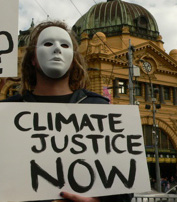
climate justiceThe problem of climate change is unique in some ways, and the legal system is not always the best gauge of ethical judgments. Nevertheless, understanding how societies have handled other cases of historical responsibility can illuminate the problem of climate justice. These analogous legal regimes suggest strongly that the right answer is somewhere between full responsibility for all historic carbon emissions and complete exoneration for those emitters.

Sunday, March 30, 2014

A transnational history of asbestos

Perhaps the most litigated environmental issue in US history is harm from asbestos. In the latest issue of Environmental Justice James Rice's "Asbestos and the Globalization of an Occupational and Environmental Hazard, 1960–2011" takes a global view of the subject. The abstract:
Anthophyllite asbestos, Georgia (USGS)
Asbestos is a natural mineral with observable, repeatable effects that have long been observed and repeated. Despite experiential and scientific evidence illustrating its deleterious impact on human health the worldwide production and consumption of asbestos remains substantial. The objective of the present study is to highlight the global decline and resurgence of asbestos over the period 1960–2011. This history is characterized by the predominance of asbestos in the industrialized countries until 1970, decline thereafter, but the precipitous increase of asbestos consumption in the developing countries, particularly the industrializing middle-income nations. In turn, global asbestos consumption in 2011 approximates that observed in 1960; notwithstanding voluminous evidence illustrating it is associated with asbestosis, lung cancer, and mesothelioma. Further, I highlight the rhetoric of denial consistently employed by the industry to generate uncertainty and sustain the demand for asbestos. The conclusion reiterates the need for environmental justice scholars and activists to consider the transnational movement, or risk transference, of recognized occupational and environmental hazards.
I would add that there is room for comparative legal research here, as well: Why has tort law put asbestos companies out of business in the US, but apparently allowed them to flourish in other countries?

Friday, January 31, 2014

Product liability law

Jay Feinman and Caitlin Edwards have posted an article on the history of manufacturers' liability, and area of law related to environmental law: "Henningsen v. Bloomfield Motors, Inc. (1960): Promoting Product Safety by Protecting Consumers of Defective Goods". The abstract:
New Jersey Law Reports
Safety recalls, child-safe toys, and other consumer safety protections are taken for granted today, but there was a time not so long ago when everyday products were dangerous and consumers who were injured by cars, toys, or other products faced a difficult road to recover compensation from manufacturers. About fifty years ago all of this changed, drastically and in a short period of time. The catalyst for this dramatic change was an unlikely source — a woman from Keansburg, New Jersey, who was injured when her new Plymouth sedan suddenly veered into a brick wall. When she initially sued the dealer who had sold her the car and Chrysler, the manufacturer, the state of the law posed roadblocks to her recovery. The New Jersey Supreme Court recognized that change was needed and issued an opinion — Henningsen v. Bloomfield Motors, Inc. — that quickly would change the world of products liability and consumer protection.