Showing posts with label endangered species. Show all posts

Wednesday, March 14, 2018

Environmentalism and racism

Michael Wise reviewed Miles Powell's Vanishing America: Species Extinction, Racial Peril, and the Origins of Conservation (Harvard UP, 2016) in October's Environmental History. From the review:
As environmental historians, our frequent assertion that “humans are a part of nature” often comes with little recognition of the fact that slave owners, eugenicists, and a variety of other white supremacists insisted on the very same thing for generations before we first noticed a trouble with wilderness. Miles A. Powell’s Vanishing America directly assesses the converging project of American race-making and American environmentalism over the last two centuries, and it does so with sophistication and uncompromising clarity. The troubling stories that Powell uncovers implicate many of the founding figures of American environmental thought within a tradition of white nationalism that positioned the problem of species extinction as a symptom and symbol of America’s racial degeneration.
Far from existing at the fringes of national discussions over the historical relationships between humans, nature, and extinction, Powell reveals how ideas about race rested at their very center. George Perkins Marsh, for instance, in the decade after the Civil War, claimed that the Anglo-Saxon race reached its zenith in America as a result of “pioneer experiences” that wrought civilization from the wilderness, and he feared that this white racial stock would fall victim to its own successes as it continued to consume nature through the nation’s industrial metabolisms. Marsh’s connection between the destruction of animal species and the loss of white racial virility anticipated the more familiar anxieties of “race suicide” penned by Madison Grant, William Temple Hornaday, and Theodore Roosevelt by more than a generation. Likewise, in the wake of the frontier’s passing, Frederick Jackson Turner summoned evolutionary theory in tirades against immigrants to the United States, fearing that the naturally selected adaptations of Jews, in particular, to endure “the unsanitary and indecent conditions of a dangerously crowded population,” equipped Jewish immigrants as a sort of invasive species, able to outcompete and exterminate native-born Americans, despite being “a people of exceptionally stunted and deficient lung capacity” (p. 53). Even Aldo Leopold’s classic statements on carrying capacity and predatory–prey relationships come under Powell’s insistent scrutiny, as a final chapter demonstrates the centrality of Leopold’s scholarship to the neo-Malthusian human ecologies of extinction proposed by his friends, William Vogt and Paul Ehrlich. These and other stories provide ample evidence of the significant ways that ideas about race informed ideas about the environment, and, in particular, how white anxieties about species extinction aligned with fears of what the eugenicist, Klansman, and Harvard-educated historian Lothrop Stoddard termed, in 1920, “the rising tide of color.” By the middle of the twentieth century, these white supremacist concerns over race and nature carved, according to Powell, “an enduring divide between America’s environmental movement and the nation’s non-white citizenry” (p. 163).
For more on this topic, see here and here.

Friday, January 19, 2018

The Knights of St. John and endangered species protection

"Fungus coccineus Melitensis Typhoides",
from Paolo Boccone, Icones & Descriptiones rariarum plantarum Siciliae, Melitae, Galliae, & Italiae (1674)
A recent trip to Malta took me to the Dwejra on the beautiful island of Gozo, off the coast of which lies the small islet of Fungus Rock. The island is named after the rare "Malta Fungus" (actually a flowering plant) that grows on the top of this rock and was once thought to possess medicinal properties. The Knights Hospitallers exhibit at the former Sacra Infermeria in Valletta explains that the Knights (also known as the Knights of St. John), who ruled Malta from 1530 to 1798, so prized the plant that they often gave gifts of it to kings, noblemen, and distinguished visitors.
Collection was only allowed 15 days after the feast of St. John in May, this allowed the plant to flower and propagate. The increasing demand on this restricted plant led to concern on its possible extinction. Grand Master Pinto decreed the Rock out of bounds in 1746; trespassers risked a three-year spell as oarsmen on the Knights' galleys. He posted a permanent guard there and even built a precarious cable-car basket from the rock to the mainland and also ordered the sides smoothed to remove handholds. Nowadays, Fungus Rock is a nature reserve and the rare plant is still protected by Maltese law.
Fungus Rock at Dwejra, Gozo (G. Mannaerts)

Wednesday, April 26, 2017

The law and species classification

The journal Isis recently published an article by Peter Alagona, "Species Complex: Classification and Conservation in American Environmental History". I heard Peter give a fascinating talk on this at a conference a while back, in which he explained that while scientists don't really have a good definition for what a species is, the law (e.g. the US Endangered Species Act) requires organisms to be classified into species, thus driving this seemingly "scientific" endeavor. The article abstract:
How does the classification of biological organisms shape efforts to conserve them? This essay addresses this key question through the scientific, administrative, and legal histories of steelhead and rainbow trout. Members of the diverse salmon family, these two fish have different life histories and physical appearances, but since the 1930s scientists have considered them the same species. Over the past 150 years, however, their histories diverged. Today, rainbow trout are bred by the millions in hatcheries and are among the world’s most common and widespread fish, while steelhead are listed as threatened or endangered all along the West Coast of the United States. Their remarkable story shows that conservation is not merely a political struggle over things that exist in nature; it is a perennial competition to prove the existence and define the very nature of those things that are the focus of such struggles. Biological taxonomy and classification are central to these debates, as they are to environmental history and the history of science more generally.
And some of the legal history in the article:

Friday, August 12, 2016

Environmental views on the US Supreme Court

A year ago we noted Jed Purdy's review of Jonathan Cannon's Environment in the Balance: The Green Movement and the Supreme Court (Harvard UP, 2014). Now we have Anthony Penna's review of the same in Environmental History. An excerpt:
Jonathan Z. Cannon’s Environment in the Balance argues that the majority of the Supreme Court’s decisions regarding environmental legislation reflected a struggle between competing and conflicting beliefs and values. Environmental laws embraced “an ecological model of the world” (p. 1) that posits interconnections among humans and the natural world and seeks to protect it from potentially harmful human activities across place and time. In contrast, the Supreme Court’s conservative majority during the last forty years (highlighted by the appointment of Associate Justice Scalia in 1986) represented a different set of values and beliefs, stressing individualism, property rights, economic growth, and limited government.
*****
It is difficult to imagine a more complete analysis of the Supreme Court’s conservative direction when interpreting environmental legislation. Chapter 2, “Environmental Law, the Court, and Interpretation,” provides the background for thirty selected cases from a group of 150 significant environmental cases decided between 1970 and 2014 and an interpretive guide for categorizing majority and minority positions. Chapter 3, “Environmental Urgency and Law,” reinforces the author’s thesis that the deep-seated beliefs and values of justices inform their decisions when interpreting environmental laws.
Chapter 4, “Law for the Environmental Other,” explores the Court’s findings when the rights of the other conflicts with human use and benefit. In cases in which species protected by the Endangered Species Act, 1964 and the Marine Mammal Protection Act, 1972 were litigated, the Court rejected arguments that reflected Aldo Leopold’s ecocentric perspective.
In Chapter 5, “Efficiency,” Cannon notes that from 1972 to 2007 the Court resisted using cost-benefit-analysis in environmental and worker safety statutes. 

Sunday, November 9, 2014

After the Grizzly

The recent issue of American Historical Review has a review by Kevin Armitage of Peter Alagona's After the Grizzly: Endangered Species and the Politics of Place in California (University of California Press, 2013) (we covered an earlier review here). Armitage writes:
The book argues that the ESA ensnared developers and environmentalists in familiar standoffs, and that battles over endangered species drove new law, science, and land-use policy. From these conflicts emerged the concept of “protected natural areas,” one of the dominant tools for species management, but one that Alagona thoroughly questions. Alagona notes how habitat protection alone cannot account for diseases, invasive species, the complexities of species interaction, and even how historic land-use patterns may or may not provide species habitat. This superb volume is an excellent history of California wildlife and shows how environmental history can prompt a fundamental reevaluation of public policy and scientific debates.
After the Grizzly is not an exhaustive history of wildlife in California, providing, instead, detailed case studies of four species—not the eponymous grizzly, but the California condor, the Mojave Desert tortoise, the San Joaquin kit fox, and the delta smelt—to exemplify the science and politics of wildlife conservation. Grizzlies, however, remain an important part of Alagona's story. Extinct in California for most of the twentieth century, grizzlies still haunt the state. They are emblematically abundant, a symbol of statehood, a creature at once adopted and eradicated. But the fate of this species does not fit into a simple morality tale of environmental decline. The grizzly, as well as the other species Alagona discusses, came to embody debates that are as much about “the politics of place as about wild animals” (p. 41). The politics of endangered species thus became the politics of endangered habitats, which in turn helped elevate the concept of habitat in legal doctrine and ecological science.

Tuesday, September 30, 2014

Reversing the past

This is another one of those mind-bending posts in which the past and future are all mixed up. Alejandro Camacho recently posted "Going the Way of the Dodo: De-Extinction, Dualisms, and Reframing Conservation". It involves the possible future "de-extinction" (i.e. revival) of currently (or future) extinct species, and while it doesn't deal with history strictly speaking, it does raise the question of reversing history, as well as complicate the idea of the "natural" in a way familiar to environmental historians. The abstract:
De-extinction, a suite of selective breeding or biotechnological processes for reviving and releasing into the environment members or facsimiles of an extinct species, has been the subject of a recent surge of analysis in popular, scientific, and legal literature. Yet de-extinction raises much more fundamental questions about the relationship between humans and nature, and the more and less useful ways that the law serves to navigate that relationship. Unfortunately, the endangered species, invasive species, and public land management laws likely to govern the revival and introduction of de-extinct species largely remain premised on understandings of nature as static and easily divisible from human activity. In these contexts, the law habitually privileges and even actively promotes what it identifies as natural and native over the unnatural and exotic.
Through the example of de-extinction, this article illustrates the limitations of the law’s reliance on these crude dualisms. Currently, de-extinct species will often be obstructed as non-native and introduced (even if they might promote ecological function in a particular area) and may be allowed or promoted in locations they used to exist (even if likely to cause ecological damage). De-extinction illustrates how policymakers need to reformulate natural resources law to be less dependent on these strict dualities. Instead, the article argues in favor of cautious risk assessment that acknowledges the dynamism of nature and humanity’s indivisibility from it.

Jurassic-Park

Monday, August 25, 2014

More on TVA v Hill

H-Environment recently posted Drew Swanson's review of Zygmunt Plater's The Snail Darter and the Dam: How Pork-Barrel Politics Endangered a Little Fish and Killed a River (Yale UP, 2013). (A discussion of the snail darter case was posted here a few months ago.) Swanson writes:
Plater’s narrative offers several insights into both the case and 1970s environmentalism. First, the book highlights the immense complexity of these legal and political battles, walking readers through the grinding work of contacting representatives, building support networks of activists, researching cases, and filing briefs; The Snail Darter and the Dam moves much of this hidden labor out of the shadows. Second, Plater’s experience demonstrates the shoestring nature of many environmental organizations at the time. Often operating out of attics or cramped rental offices and subsisting on savings and donations from a few dedicated backers, these groups still found ways to influence the political process, and environmental historians would do well to follow Plater’s lead and pay more attention to lobbyists. Finally, the author argues for the immense importance of the media in framing environmental issues and swaying public opinion. For TVA vs. Hill, Plater is convinced that the national media’s “avoidance of complex thinking” reflected “a low opinion, apparently shared by many within Washington, of the intellectual ability and interest of the American populace” (p. 176). Once newspapers and television news defined the case as a tiny fish versus an enormous dam project, the popular case was already all but doomed.
*****
Snail darter
(USFWS Photo)
Where the book is least effective is in supporting Plater’s argument that the snail darter was more than just a tool of opportunity for dam opponents. He asserts that he and other supporters of the darter were not “hypocrites as well as fools, environmental extremists manipulating the darter to misuse the law over a technicality,” and yet throughout the book Plater admits to questioning their motives and their implications (p. 43). The issue is both troubling and refreshing for Plater’s honesty. 

Sunday, June 15, 2014

Protected areas in history

H-Environment's latest Roundtable Review is of Peter S. Alagona's After the Grizzly: Endangered Species and the Politics of Place in California  (UC Press, 2013) (we mentioned the book in a post last year). Laura Watt writes in her contribution that Alagona's "marvelous book... gives a detailed history not only of how species often become proxies for broader environmental debates, but also how protected areas, usually publicly owned, have become the go-to solution for almost all wildlife management conundrums."
Alagona reminds us that this landscape approach did not begin with the ESA.  He traces it all the way back to the last California grizzly, “Monarch,” to die in captivity. Having been captured on orders from William Randolph Hearst, and then settled into his new home at the San Francisco Zoo, Monarch’s fate seemed regretful to his captor, reporter Allan Kelly, who recalled feeling that “he ought to be free in his native mountains” (17).  From there, scientists like Joseph Grinnell and his students, wildlife managers in state and later federal agencies, and environmental advocates and activists increasingly presumed that habitat preservation was the key to species’ recovery from the brink of extinction.
AfterTheGrizzly-PeterAlagona.jpgExcept that in many cases, they were wrong.  Alagona describes reserves as necessary but insufficient, and concludes that results to date have been mixed.
*****
Protected areas are legally bounded but ecologically porous, meaning that the ecological relationships within them can and will change over time, and creating them can often be politically controversial, particularly they are established to the detriment of local communities. Yet this “protected areas paradigm” remains dominant in conservation work and advocacy. 
*****
In some ways, it seems that endangered species pose management questions we simply do not have answers for, either ecologically or politically.  Alagona quotes Aldo Leopold as writing that “the government can’t buy ‘everywhere,’” and that “…a protected area paradigm that attempts to wall off wildlife and confine its management to a small community of experts risks doing the exact opposite of what Leopold advised” (232).  Yet it is not always clear what alternatives we have.

Friday, March 28, 2014

TVA v Hill symposium issue and conservative anti-environmentalism

I just came across a symposium issue run by the Tennessee Law Review last year on TVA v Hill (1978), the "snail darter case", in which the US Supreme Court upheld a strict interpretation of the Endangered Species Act to prohibit the operation of a dam that had been built at great cost. The table of contents for the issue is here, and the foreword to the volume is here. The issue includes an article by lead attorney Zygmunt Plater, whose book and digital archive we mentioned last year.

Fran Scheidt,
Aerial Photo of Farmland Along the Little Tennessee River (1978)
Just having reread the case earlier this week, in preparation for a discussion with a group of environmental historians at Tel Aviv U., I was struck by something I hadn't noticed before: An amicus brief (a brief filed by a "friend of the court", not a direct party to the proceedings) in support of the TVA's position was filed by the Pacific Legal Foundation, an organization founded in 1973 by former Reagan staffers and self-described as working, among other things, to defend "the fundamental human right of private property" and "to promote sensible environmental policies that respect individual freedom and put people first".

Now, which side should a libertarian organization devoted to fighting big government, protecting "the fundamental human right of private property", and "promoting sensible environmental policies that respect individual freedom and put people first" have taken in the TVA v Hill fight?

Monday, March 17, 2014

Legal hierarchies of Australian animals

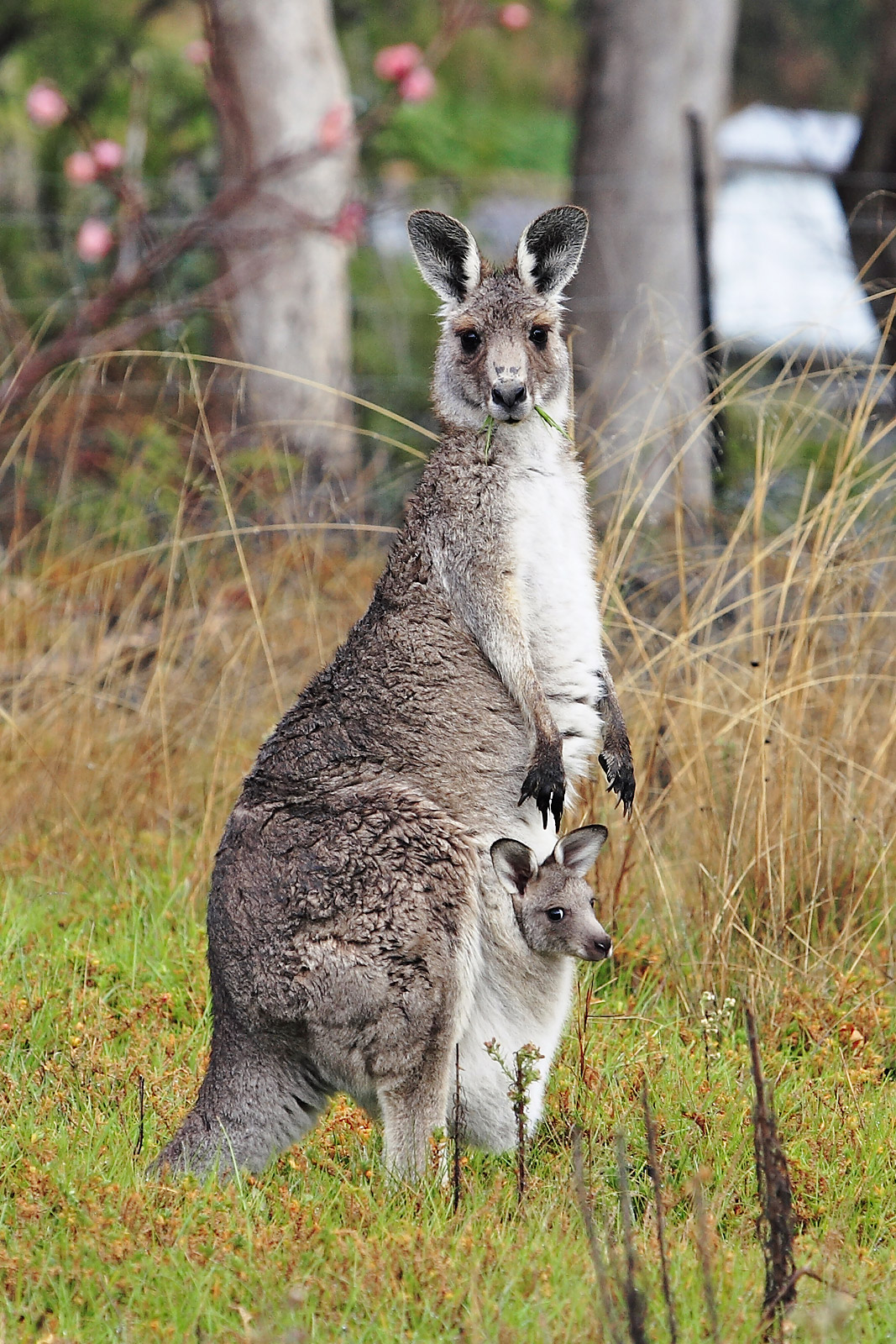
Steven White has posted "British Colonialism, Australian Nationalism and the Law: Hierarchies of Wild Animal Protection". The abstract:
credit: Fir0002/Flagstaffotos
A combination of animal welfare law and nature conservation law establishes a hierarchy of protection for wild animals in Australia, with rare, threatened or endangered native animals receiving the highest levels of protection, plentiful native animals lying in the middle — sometimes well protected, sometimes not — and introduced wild animals at the bottom. In reading beyond the accounts of contemporary law, especially in sociology and environmental history, a plausible argument can be made for the proposition that this prevailing general schema of protection reflects an early 20th century assertion of a distinctive Australian identity, combined with the emergence of a conservation ethic and the decline of attempts to acclimatise British wild animals in Australia. Prior to federation the legal protection of wild animals was quite different, with native animals receiving little protection until the late 19th century. Introduced wild animals were initially protected to allow their flourishing, but by the late 19th century were increasingly being characterised as ‘pests’ and their protection wound back. This article explores how and why attitudes to native wild animals and introduced wild animals in Australia have changed over time, and how these changes continue to be reflected in Australian law.

Wednesday, March 5, 2014

A legal history of zoos

Over at Jotwell, Angela Fernandez's "Forget About Noah's Ark" reviews Zooland: The Institution of Captivity by Irus Braverman (Stanford U.P., 2102). Fernandez writes that the book "is a wonderful read on a topic that is of both historical and current interest". From the review:
File:Tiger audubon zoo.jpg
Tiger at the Audubon Zoo in New Orleans (Wikimedia Commons)
Legal historians will be interested in the shift Braverman describes from zoos as sites of entertainment, a variation on the old menagerie style collection of animals, preferably exotic, that would then perform various colonialist and empire-building functions, to the (arguably) more laudable conservationist rationale and its accompanying practices often targeted at educating adults and children about species and habitat decline and destruction. The real animals are “just the hook” as one of Braverman’s interview subjects, Jim Breheny of the Bronx Zoo, puts it. (P. 41.) They are meant to draw you in. What they draw you into, as Braverman’s book details, is a world of contradictions. Braverman calls what she has found a Foucauldian “power of care,” minute in its regulation of the daily lives of zoo animals and profound in its reach into such fundamental aspects of the animals’ lives as the question of which animals are allowed to reproduce and which are not, which will be put on board “Noah’s Ark” and saved and which will not. The regimentation of the animals’ lives serves another disciplinary end: “Whereas once zoos were in the business of entertainment through taxonomic exhibitions,” Braverman writes, “now they discipline the public into caring about nature.” (P. 90.)
Braverman locates the origins of the shift from the American zoo’s focus to conservation and care in the 1970’s. The Endangered Species Act of 1973 is an important marker, as it prohibited zoos from obtaining new animals from the wild. This put pressure on zoos to coordinate their efforts and their animals in an attempt to maintain a maximum amount of genetic diversity in their animal populations using the “living founders” that came from the wild.
More at Jotwell.

Tuesday, July 9, 2013

Zyg Plater's new book on the snail darter case

Rachelle Adam has brought to my attention the release by Yale University Press of The Snail Darter and the Dam: How Pork-Barrel Politics Endangered a Little Fish and Killed a River by Zygmunt JB Plater, who represented opponents of the Tellico Dam in TVA v Hill. The case is famous for the US Supreme Court's uncompromising stance in prohibiting completion of a dam that would endanger a small and not particularly charismatic fish, the snail darter. However the drama, and the legal, environmental, political, and social issues raised, were considerably broader.