Showing posts with label USA. Show all posts

Tuesday, September 12, 2023

Public rights and standing

Owen Smitherman has posted "History, Public Rights, and Article III Standing", forthcoming in the Harvard Journal of Law and Public Policy. The abstract:
For decades, legal academics have complained about a conflict between history and the doctrine of Article III standing. First in Spokeo v. Robins (2016) and then notably in TransUnion LLC v. Ramirez (2021), Justice Clarence Thomas presented a halfway resolution. Thomas grounded Article III standing in a historical distinction between private and public rights. Suits for violations of private rights would require no showing of concrete injury-in-fact. Suits for violations of public rights would require the showing of special damage, a term borrowed from the public nuisance tort.
This Article questions this effective retention of injury-in-fact for public rights actions. In Part I, I explain Justice Thomas’s nuanced approach to Article III standing. In Part II, I investigate old English and early American materials on special damage to flesh out the meaning of Thomas’s requirement for public rights standing. I find a lack of historical consensus on the content of the special damage standard. Some materials go this way, others go that way, and still others another way. The materials do not align on a precise standard, making it difficult, either as a matter of 1788 original meaning or later liquidation, to operationalize Thomas’s special damage requirement. In Part III, I argue that there are good reasons to doubt that the requirement of special damage is constitutionally relevant to the original meaning of Article III. The Framers did not discuss special damage in relation to Article III. The traditional rationale for the specific damage requirement does not have constitutional significance. And it seems implausible that the Constitution incorporated a legal doctrine in such flux without textual indication. In conclusion, I critique the current Court’s lack of attention to original meaning for Article III standing.
Justice Thomas (Stetson University)

Thursday, August 31, 2023

Cottages as public nuisances

More on public nuisance: Maureen Brady recently posted "Cottages as Public Nuisances: The Long History of Land Use Regulation of the Poor", forthcoming in Depaul Law Review. The abstract:

In the Fourth Book of his Commentaries on the Law of England, in a chapter entitled “Offenses Against the Public Health, and the Public Police or Oeconomy,” William Blackstone sited his discussion of “common nuisances.” Although many things on this list of what we now call public nuisances are familiar—blockages of public roads, disorderly saloons, trades emitting offensive smells or sounds—one stands out. Blackstone described as a typical nuisance the erection of “cottages,” going on to discuss and even criticize the situation of these dwellings alongside uses like fireworks and the keeping of hogs in close quarters.

Blackstone, Washington DC

The aim of this Essay is to examine Blackstone’s discussion of cottages in context, endeavoring to use it toward two ends. The first is to better understand the concept of public nuisance and its limits. As others have chronicled, there has been a renaissance in interest in the tort in recent years, spurred on by multimillion dollar litigation invoking it in contexts ranging from the opioid epidemic to climate change. Here, I engage in a close reading of Blackstone’s passage and its citations, examining why cottages were regulated as public nuisances in the first instance and how that history connects to broader developments in English (and later American) law and society. As it turns out, cottages bore a closer relationship in many ways to public nuisance “classics,” like road blockages and certain public health risks, than it might at first appear.

Sunday, August 27, 2023

The evolution of US NOx standards for cars

Dan Farber at Legal Planet recently posted on "Cars, Smog, and EPA". An excerpt:
For the first 20 years of federal regulation, Congress set the NOx [nitrogen oxides] standards for new cars itself. That’s quite different from the standards for industrial pollution sources, which Congress has always delegated to EPA. The reason may have been the high political stakes in the car industry or the relatively easier task of setting standards for new products in a single industry using a single energy process.
East River and Manhattan Skyline in Heavy Smog (Chester Higgins, Jr., EPA, 1973)
... The initial standard, set in the 1970 Clean Air Act, was 3.1 grams per mile (gpm) for NOx. Achieving that standard was thought to be nearly impossible when Congress created this mandate, but the mandate forced the car companies to make technological breakthroughs with catalytic converters.

Note that the standard is set in terms of pollution per mile rather than pollution per gallon. That means that any increase in fuel efficiency automatically helps a company meet the pollution standards as well. Theoretically, a car could have no pollution control at all but get such phenomenal mileage that it met the pollution standard. Actual mileage has improved but not enough to obviate the need for pollution controls.

Congress adjusted the standards twice. A 1977 amendment reset the limit to 1 gpm in 1981. The 1990 amendments changed the standard to 0.6 gpm, effective in 1994. These are called Tier 1 standards. Apparently Congress did not relish the task of periodically resetting the standards itself  The 1990 Amendments authorized EPA to set standards for 2004 and beyond.

*****

This has to be considered a successful regulatory program. The Biden proposed standard  [of 2023] allow less than 1% of the pollution levels that Congress mandated in 1970.

Friday, August 25, 2023

Water access and historical redlining

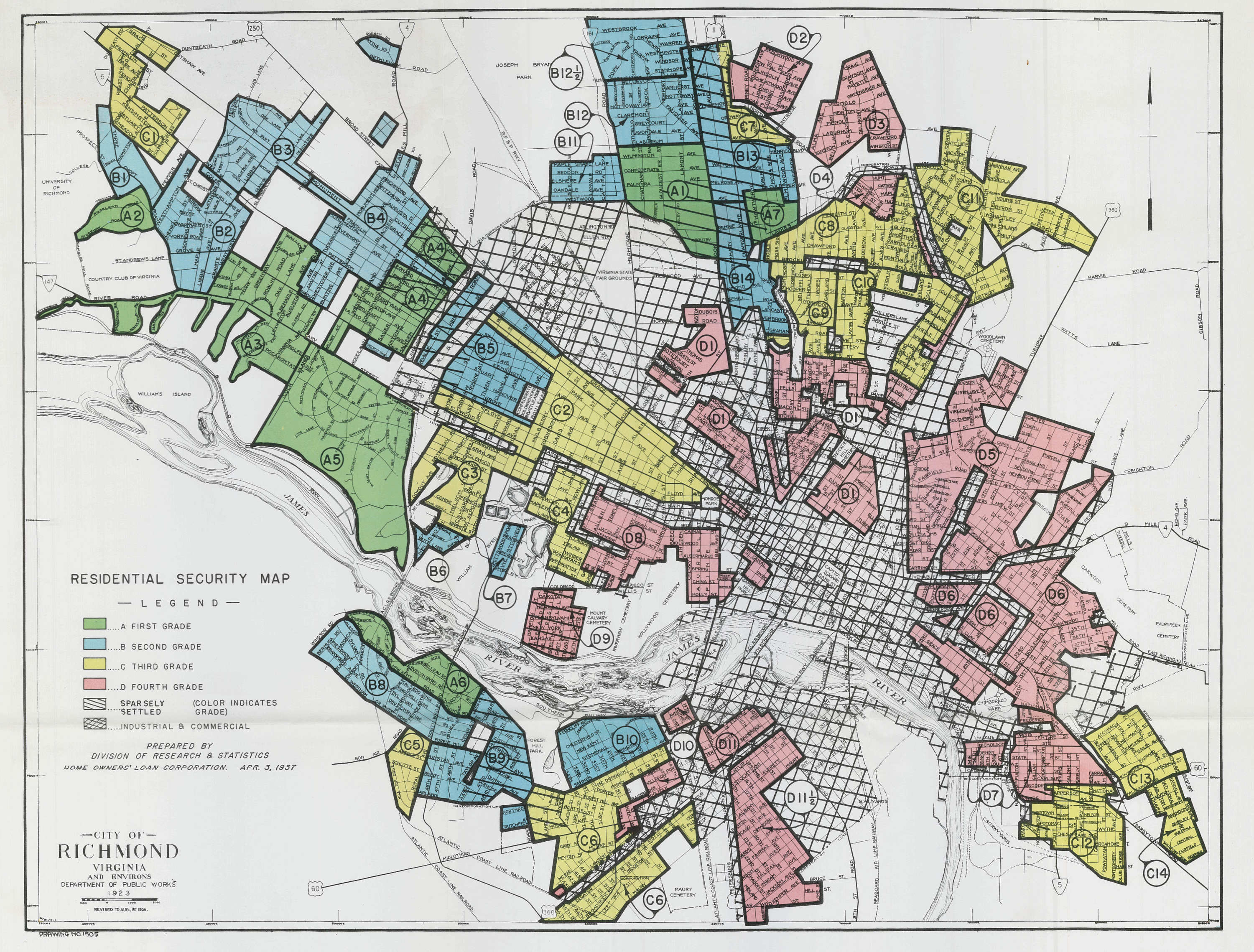
Charles W. Sterling III recently published "Connections Between Present-Day Water Access and Historical Redlining" in Environmental Justice. The abstract:
Although challenges in water and sanitation access are often assumed to be issues of low- and middle-income nations, more than 400,000 homes in the United States still lack access to complete indoor plumbing. Previous research has demonstrated that the remaining plumbing challenges are more prevalent in communities with high Black and Brown populations. This study hypothesizes that the 1930s practice of redlining by the Home Owners' Loan Corporation (HOLC), which systematically denied loans to minority populations, is linked to present-day inadequate plumbing access (i.e., defined as incomplete plumbing above the national average). Digitized HOLC maps for 202 urban areas across the country and U.S. Census data from the 2016 to 2020 American Community Survey were combined to interpolate the modern-day plumbing access for historical neighborhoods (n = 8871 communities). Analysis via binomial logistic regression demonstrated that nationally, redlined communities (HOLC Grade “D”) are significantly more likely to have a rate of incomplete plumbing above the national average compared with greenlined communities (HOLC Grade “A”) (0.1352; confidence interval = ±0.036). This finding was also observed for three of the nation's four census subregions (Northeast, Midwest, and West). Slight differences by region in relationships between the proportion of specific racial/ethnic populations on rates of incomplete plumbing demonstrate the need for targeted place-based interdisciplinary examinations of exclusionary practices. The demonstration of the present-day impacts of redlining after nearly 90 years emphasizes the need to intentionally mitigate past injustices to ensure modern-day equity.

Tuesday, April 4, 2023

Not so fast: Nature versus the Common Law concludes

I haven't posted in the last few weeks, leading my friends at the Legal History Blog to reasonably conclude that my series on Nature versus the Common Law was finished. But now I have some time to post what is in fact the final installment in the series.

The posts in this series, based on my article in Clio@Themis, aimed to illustrate a once-common way of thinking about law and legal claims, in which the natural environment was held not only to provide the physical background on which polities and their legal systems existed, but to demand from these legal systems a measure of accommodation. For some judges, it is true, the demands of nature, however worthy or desirable from a social or economic point of view, had no place in court; a judge's role was to resist such claims in the name of the law. For many others, however, environmental realities might be imbued with normative force powerful enough to outweigh considerations of legal precedent and tradition. Moreover, while environmental differences could sometimes break the chains of black-letter law, environmental similarities might at the same time create new legal bonds, as in the Indian and Canadian cases that looked to the law of the independent United States of America, with is great rivers, for legal guidance. All this is to say that in the context of water law in the British Empire, nature could often be "jurisgenerative", to use Robert Cover's term – creating law.

The environmental rhetoric of these courts may, at first glance, seem but a particular instance of the wider phenomenon of colonial and newly independent courts working to stake out the independence of their legal systems from the law of the old country. Yet this would be a mistake: Most of the judges arguing for nature's normative force were themselves British; and in the cases examined here even judges of the independent United States argued not for a general rejection of the English common law, but for the inapplicability of some of its water law rules due to supposed environmental incompatibility.

In conclusion, though, it should be noted that this study has shown that nature also had a "jurispathic" role, impeding the smooth flow, or "transplant", of legal norms around the empire. Legal norms, in particular the common law, spread around the British Empire through a network of orders, legislation, publications, correspondence, educational institutions, career paths, and more. Yet the spread of norms, never smooth, was hampered by a number of factors, some of them natural : distance, forbidding seas, and monsoon winds, to name a few. These factors impeded the transmission of legal ideas and norms in all areas of law. At the same time, this study has highlighted an additional mechanism through which nature sometimes frustrated the spread of norms: perceived environmental similarity and difference.

Nature thus had a dual normative role in this context: creating new norms while at the same time extinguishing others. One need not take a deterministic view of the place of nature in legal history, nor recognize in nature any sort of agency of the intentional kind, to acknowledge that nature had an important role in constituting the connections that both facilitated and obstructed the global flow of water law in the age of empire.

Yet if the first set of law-impeding environmental factors, deriving from physical impediments to legal communication, has historically applied with similar force across all areas of law, the efficacy of the latter mechanism, based on perceived environmental factors, presumably has been correlated with the degree to which the area of law directly dealt with environmental issues. With regard to water law, as we have seen, whether environmental conditions in fact dictated or determined the rejection of common law norms, it is clear that judicial perceptions of nature did play a role in impeding the spread of English norms in this field. I have argued elsewhere that forest law, too, was at least in some contexts heavily influenced by perceptions of environmental foreignness and change. Further study might reveal similar patterns with regard to other related areas of law, from sanitation regulation to wildlife protection.

Happy spring holidays!

Tuesday, March 14, 2023

The history of Sierra Club v Morton

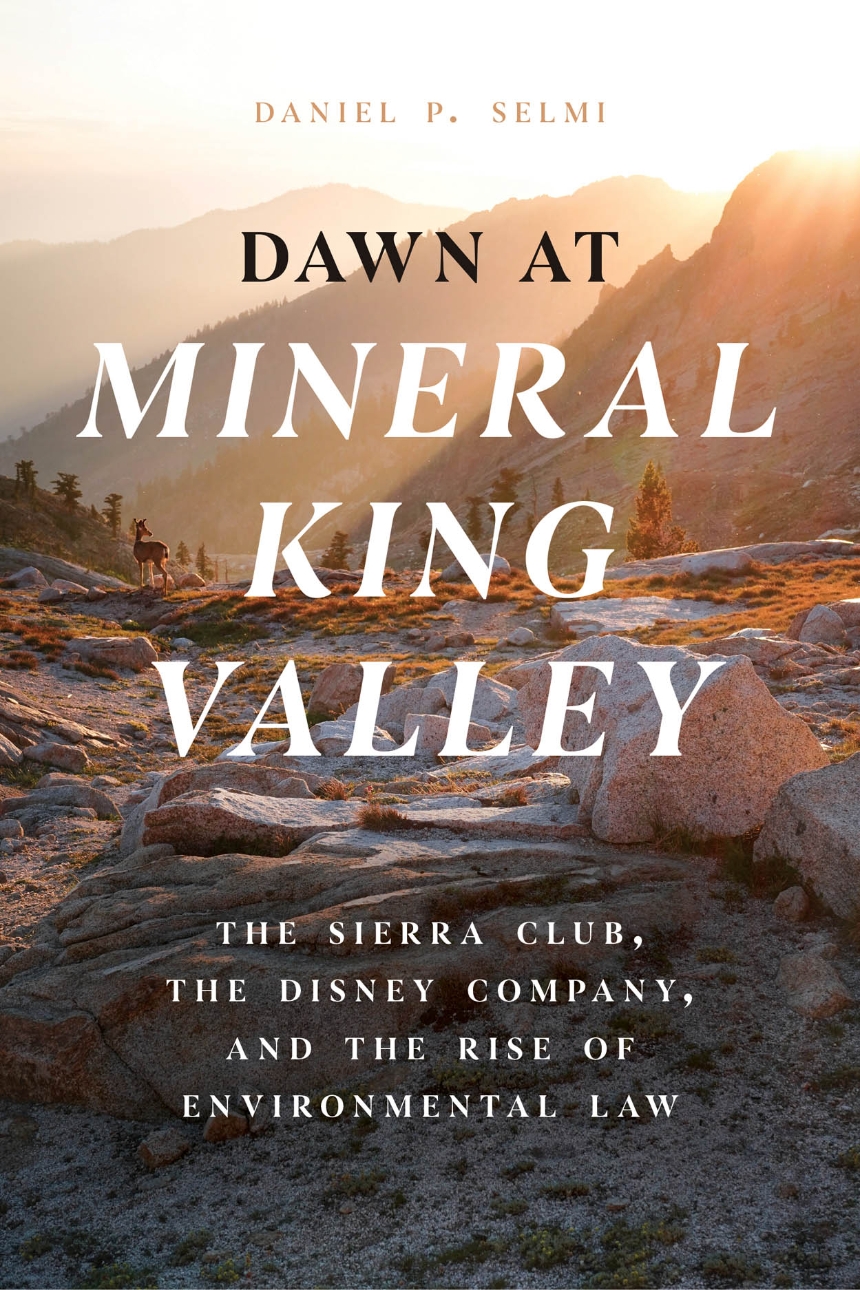
Jotwell recently ran a review by Angela Fernandez of Daniel P. Selmi's Dawn at Mineral King Valley: The Sierra Club, the Disney Company, and the Rise of Environmental Law (U Chicago Press, 2022). Fernandez writes:
Sierra Club v. Morton [known to some as the "Should Trees Have Standing" case - DS] is a seminal 1972 U.S. Supreme Court case on standing, the essential procedural question of who has a legal right to initiate a lawsuit based on a plaintiff’s alleged injury traceable to a defendant’s unlawful conduct. Daniel Selmi’s new book provides a deep dive into the history and context of this famous case, showing that it was about much more than the majority decision’s denial of the Sierra Club’s standing. And it was not, as some have claimed, launched as a test case to establish standing for environmental groups or the entities themselves, the possibility William O. Douglas went into in his famous dissent dear to the hearts of those interested in the Rights of Nature.

*****

Despite the fact that Selmi seeks to de-center standing in his history of the case, or at least destabilize the understanding that standing was what Sierra Club v. Morton was always meant to be about, he presents an excellent and thorough discussion of the issue. Selmi explains that the Sierra Club insisted on its general interest in a case that would impact the environment of concern to its members rather than Club members’ actual use of the area, which the Supreme Court indicated it would have accepted. As Justice White reportedly put it: “Why didn’t the Sierra Club have one goddamn member walk through the park and then there would have been standing to sue.” (P. 204.)

Sunday, March 12, 2023

Nature versus the Common Law VI: Diversion of water

In the last installment in this series we looked at how the English rule on escaping water in Rylands v Fletcher was rejected in British India due to perceived differences in the environments and needs of the two countries. Today we look at a classic issue of water law, complaints by riparian owners of upstream water uses that interfered with their own uses. As with the issue of escaping water, what was considered "natural" could turn, here too, on local natural conditions.

The traditional common law rule of conflicting riparian uses – that an upstream riparian may not divert a stream's water to the (unreasonable) detriment of downstream owners – was explained by the court of King's Bench in 1625 (Shury v Piggot, 81 English Reports 280) in terms of natural law: "a water-course […] doth begin ex jure naturæ, having taken this course naturally, and cannot be averted" and "the nature of this [water-course] is to be current [i.e. to flow]".

In the leading case of Evans v Merriweather in 1842, the Illinois Supreme Court advanced a distinction: An upper riparian might reasonably consume all the water in the stream if his use were a "natural" one, necessary for existence, but not were it to be considered "artificial", for the mere increase of "comfort and prosperity". The court then suggested that the application of this distinction would vary depending on natural conditions:

The supply of man's artificial wants is not essential to his existence; it is not indispensable; he could live if water was not employed in irrigating lands, or in propelling his machinery. In countries differently situated from ours, with a hot and arid climate, water doubtless is absolutely indispensable to the cultivation of the soil, and in them, water for irrigation would be a natural want. Here [in Illinois] it might increase the products of the soil, but it is by no means essential, and can not, therefore, be considered a natural want of man.

What riparian uses were to be recognized as "natural", and therefore permitted, was thus dependent on the climate and environment. Irrigation would be considered an "artificial" use in the American Old Northwest, as it would be in England, but the court had legitimized changing the law if and when the common law spread to arid lands.

This way of thinking was crucial for the development of water law in the arid western states and territories of the United States, in which the traditional common law of riparian rights was rejected in favor of a new system. The new law, known as "prior appropriation", opened up water resources to appropriation by all, not just riparian owners, and allowed them to take as much of the water as they could put to beneficial use, regardless of the effect on later appropriators. An early case from Colorado discussed whether an appropriator could dig a ditch across another's land without permission, an invasion of property that would clearly not be allowed under the traditional common law. Along the way it advanced a general theory of the adaptation of property law to environmental conditions:

Sunday, February 26, 2023

Nature versus the common law IV: Shifting watercourses


In the last posts in this series we looked at court decisions that discussed whether the ownership of rivers should follow the common law or change to reflect local environmental conditions. Another branch of water-related law dealt with the legal consequences of changes in the course of a river or a shoreline over time. The property-law questions thrown up by these changes, under the legal terms "alluvion" and "diluvion", were to whom newly formed dry land belonged – to the former owner of the dry land now submerged, or to the owner of the adjacent riverbed. The English rule, based on Roman law, was that gradual accumulations of land from water belonged to the to the owner of the land to which the new land was added, while gradual losses of land were lost to the landowner and became part of the river (Foster v Wright, 4 CPD 438 (1878)). Sudden changes in the course of a river, on the other hand, were held not to bring about changes in ownership of the bed.

One line of legal thought held that the English common law rules in this area of law applied everywhere. The English Court of Exchequer in 1839 (In re Hull and Selby Rwy, 151 English Reports 139 (Ex 1839)) opined that the common law of alluvion "is not peculiar to this country, but obtains also in others, and is founded on the necessity which exists for some such rule of law, for the permanent protection and adjustment of property." Similarly, seventy-five years later, the Privy Council rejected arguments that the English law did not apply to the Nigerian shoreline due to differences in the local conditions, Lord Shaw stating that the court did not doubt the "general applicability" of the English law of accretion. This, however, was the minority position.

Sunday, February 12, 2023

More on nature versus the common law: American judges on American rivers


As I mentioned in a post last week, the first topic covered in my article "Nature Versus the Common Law: Nature as a Norm in the Water Law of the British World" is the question of whether the water, bed, or other resources of a non-tidal river belonged to the riparian landowners or to the state or public. 

While the civil law (for example Article 538 of the Code Napoleon) distinguished between private and public rivers based on tests of navigability and floatability, the English common law adopted a slightly different distinction : Tidal rivers were held to be the property of the Crown, while rivers and lakes above the reach of the tide were the property of the adjoining landowners, with each riparian owner owning the river from the edge of his dry land up to the median of the water body ("usque filum aquæ" or "ad medium filum"). Non-tidal but navigable bodies of water typically were subject to a public right or servitude of navigation, while the water, the submerged land, and other resources (such as fish) belonged to the riparian owners.

These rules were relatively uncontroversial in England, but in British colonies and the new United States they were often felt to be inappropriate to the environmental reality of other continents, in which rivers might be kilometers wide in some portions and navigable for thousands of kilometers above the reach of the tides, while freshwater lakes might bear a closer resemblance to seas than to the small lakes of England. In this context, a rule under which all non-tidal waters were private seemed problematic to many.

The first reported case in which the tension between the received law of England and the local environment arose was the 1807 Pennsylvania case of Carson v Blazer, in which a landowner along the Susquehanna River, near Harrisburg, demanded compensation from some fishermen who had fished shad from the river alongside his land4. As the Susquehanna at this point was navigable but not a tidal river, the common law rule seemed to be clear – the river, and the right to fish, belonged to the riparian owners. But Chief Justice William Tilghman, presiding over the trial, thought otherwise, distinguishing between the geographies of England and Pennsylvania :

Sunday, February 5, 2023

Nature versus the common law

A little while back I published "Nature Versus the Common Law: Nature as a Norm in the Water Law of the British World" in the French journal Clio@Themis. The article explores some of the areas of water law in which courts around the common law world departed from the established rules of the common law in order to make the legal rules more appropriate, as they saw it, to the local environment. As the article shows, they did so consciously, explicitly granting nature normative force. It also looks at other courts and judges, ones that resisted this kind of normative claim, arguing that the law in new environments had to conform to the old common-law rules, regardless of what nature seemed to demand. 

The question of whether environmental factors required or justified a departure from the inherited rules of the common law arose in courts around British Empire and United States in connection with a variety of legal issues, four of which are examined in the article: a) the question of whether the water, bed, or other resources of a non-tidal river belonged to the riparian landowners or to the state or public ; b) conflicts over property rights following shifts in the course of a river ; c) the issue of the degree of liability of reservoir owners for damage caused to others by escaping waters ; and d) conflicts over whether water might be diverted from a river for irrigation, to the detriment of downstream landowners.

Discovery of the Hudson River, Albert Bierstadt, 1874

I'll be posting some selections from the article later.

Wednesday, February 1, 2023

The legal environment and communal irrigation

The latest issue of the International Journal of the Commons has an article by Steven M. Smith, "Dynamics of the Legal Environment and the Development of Communal Irrigation Systems". From the Introduction (citations removed):

Archinia, Acequia System of El Rancho de las Golondrinas

Given the importance of external forces to the success of the commons, calls to integrate political ecology with the commons literature are becoming a common refrain. The combination can be approached from both directions: how do power structures shape institutions and how do institutions shape power structures? I take a historical perspective to explore both questions and their dynamic relationship. Specifically, I consider how external legal changes alter the incentives for how local users organize themselves and how those changes in local organizations alters the political coalitions, affecting subsequent legal changes.

To explore the question, I document and analyze the evolution of the legal environment and the development of communal irrigation systems, known as acequias, in current day New Mexico, US. Acequias have been held up as a case of a long-lived successful communal management regime of a natural resource . In the region of study, some acequias date back to the 16th century when Spain first colonized the area. The acequias have experienced sizeable shifts in their external legal surroundings, most rapidly and significantly during the US territorial period (1851–1912), that can be used to assess the relationship of external legislation and communal irrigation systems.

Monday, January 30, 2023

50 years ago

Daniel Farber goes back to the history of American environmental law again in his recent Legal Planet post, "50 Years Ago: Environmental Law in 1973". Farber writes:

Like today, 1973 was a time of political turmoil. The bitterly divisive Vietnam War was winding to an end, and much of the news that year was dominated by the Watergate scandal that ultimately brought down President Nixon. One subject stood outside the political turmoil: environmental law. In an EPA survey, 85% of the public thought pollution was a big problem.

The passage of the ESA highlights the extent of the national consensus over the environment. It’s a controversial law today, but it passed the Senate unanimously and the House by a 355-4 margin. In signing the bill into law, President Nixon said: “Nothing is more priceless and more worthy of preservation than the rich array of animal life with which our country has been blessed. It is a many-faceted treasure, of value to scholars, scientists, and nature lovers alike, and it forms a vital part of the heritage we all share as Americans.”  He congratulated Congress for “taking this important step toward protecting a heritage which we hold in trust to countless future generations of our fellow citizens."

After summarizing some judicial decisions of the year, Farber continues:

Wednesday, January 25, 2023

Efficiency and equality in US environmental regulation

Kunal Parker recently reviewed Elizabeth Popp Berman, Thinking Like an Economist: How Efficiency Replaced Equality in U.S. Public Policy (Princeton UP, 2022). There's a lot here that's relevant to the history of environmental regulation. First, Parker's summary of Popp Berman's argument, with obvious implications for understanding historically some mainstays of environmental policy, such as cost-benefit-analysis and market tools for regulation:


The book explores the rise to prominence of an economic “style of reasoning” in U.S. policymaking in the post-World War II decades. Between 1950 and 1980, Popp Berman shows, this style pervaded realm after realm of policymaking, from social welfare programs to the regulation of markets to the management of the environment.

The chief institutionalizers of the economic style of reasoning were not neoliberals or libertarians (these would become truly prominent in government only after the election of Ronald Reagan in 1980). Instead, they were Democrat-appointed economists and the bureaucrats they worked with and influenced. Albeit not ideologically opposed either to social programs or to market intervention, these economists and bureaucrats insisted that social goals be met as efficiently as possible and that market solutions were generally preferable to interventionist ones. Wherever possible, they pushed cost-benefit analyses and reviews within administrative agencies, urged the dismantling of early-twentieth-century market controls, and sought to achieve ends by creating markets for entitlements rather than by imposing standards by fiat. In all this, they shared much with those further to their right.

By the time Ronald Reagan was elected president, the economic style introduced during the Kennedy and Johnson years had become thoroughly entrenched. Indeed, it had become the hegemonic approach to solving all manner of public problems, its ubiquity and self-evidence continually reinforcing each other. Reagan Republicans would employ the economic style, but the ground had been laid for them decades earlier by Democrats. Indeed, Popp Berman argues, Democrats proved far less strategic in using the economic style than Reaganites. Democrats privileged it as a method in context after context and allowed it to subsume their substantive ends. By contrast, Reaganites were more selective and often successfully subordinated it to their substantive ends.

Parker, though, queries whether equality was actually the guiding principle in the pre-efficiency era:

Sunday, January 15, 2023

Voluntarism and deregulation

Rachel S. Gross recently reviewed Jeffrey K. Stine's Green Persuasion: Advertising, Voluntarism, and America's Public Lands (Smithsonian 2021) for H-Environment. Gross writes:

In the 1980s, Hollywood tough guy Charles Bronson took his vigilante reputation to the world of public service. Bronson was a perfect poster boy for the Ronald Reagan-era PR effort, Take Pride in America. In TV ads, Bronson, along with fellow actors Clint Eastwood and Louis Gossert Jr., decried “bad guys who beat up on trees” and encouraged listeners to take voluntary action to help solve the problem (p. 62). The Take Pride ads were a curious take on the pressing environmental issues of the day. To be sure, vandalism did occur but to name that as a central environmental issue and to use Bronson’s image to convey pride in land as a masculine and patriotic concern were deflections. Just what these ads were a distraction from is the question that Jeffrey K. Stine addresses in Green Persuasion: Advertising, Voluntarism, and America’s Public Lands. Stine argues that the Take Pride in America campaign, which pushed voluntarism as a solution for the issues plaguing public lands, was a reflection of the conservative ideology that government was a problem rather than part of a solution. The Take Pride in America program suggested “that the enlightened self-interest of the private sector offered the ideal approach to public lands stewardship” (p. 53).

*****

Stine faces a challenge in that his book is an analysis of a government program that in the author’s own assessment was ultimately ineffectual and unimportant. In addition to showing the program’s lack of effectiveness, Stine also makes the case for why such an analysis is necessary. For Stine, the office was a failure but a revealing one, in that its longevity reveals a political history of conservative approach to environmental (lack of) action. Namely, Take Pride in America and the agenda of voluntarism it pushed via a succession of Republican administrations reflect a partisan divide on environmental policy, where conservatives aimed to deflect attention away from how they underfunded federal land agencies.

Thursday, January 12, 2023

"Environmental law" - a response to Farber

I have some objections to a recent post by Dan Farber at Legal Planet, "Learning to Name Environmental Problems"

Farber raises the interesting issue of when various issues seen today as "environmental problems" became thought of as such by the law, both in terms of seeing various issues – air pollution, water pollution, wilderness protection, and so on – as parts of a larger problem, and with regard to use of modern terms like "environment" and "pollution". But I think his answers are problematic.

Farber focuses on US Supreme Court decisions, finding its earliest uses of "air pollution" and "water pollution" and references to wilderness as something worthy of preservation in decisions from the 1960s. He also goes on to state that "The 1960s were also Congress’s first forays into issues like air and water pollution, wilderness protection, and the endangered species.  These developments set the stage for the blossoming of federal environmental law with the passages of NEPA, the Clean Air Act, the Clean Water Act, and other major legislation in the decade that followed."

Even allowing for methodological nationalism and the focus on the unrepresentative Supreme Court, this is all rather strange.

Paul E. Wolfe, Los Angeles County Air Pollution Control District vehicle, Burbank, 1947-1950?

Monday, November 7, 2022

The US Supreme Court’s earliest pollution cases

Over at Legal Planet, Dan Farber recently posted on "The Supreme Court’s Earliest Pollution Cases". Farber writes:

Well over a century ago, the Supreme Court ruled that it had that power to remedy interstate water pollution. That was in 1901. Six years later, the Court decided its first air pollution case.  Notably, these cases came during the conservative Lochner era when the Court was hardly known for its liberalism.  Quite the contrary. Yet the Court didn’t hesitate to address pollution issues.

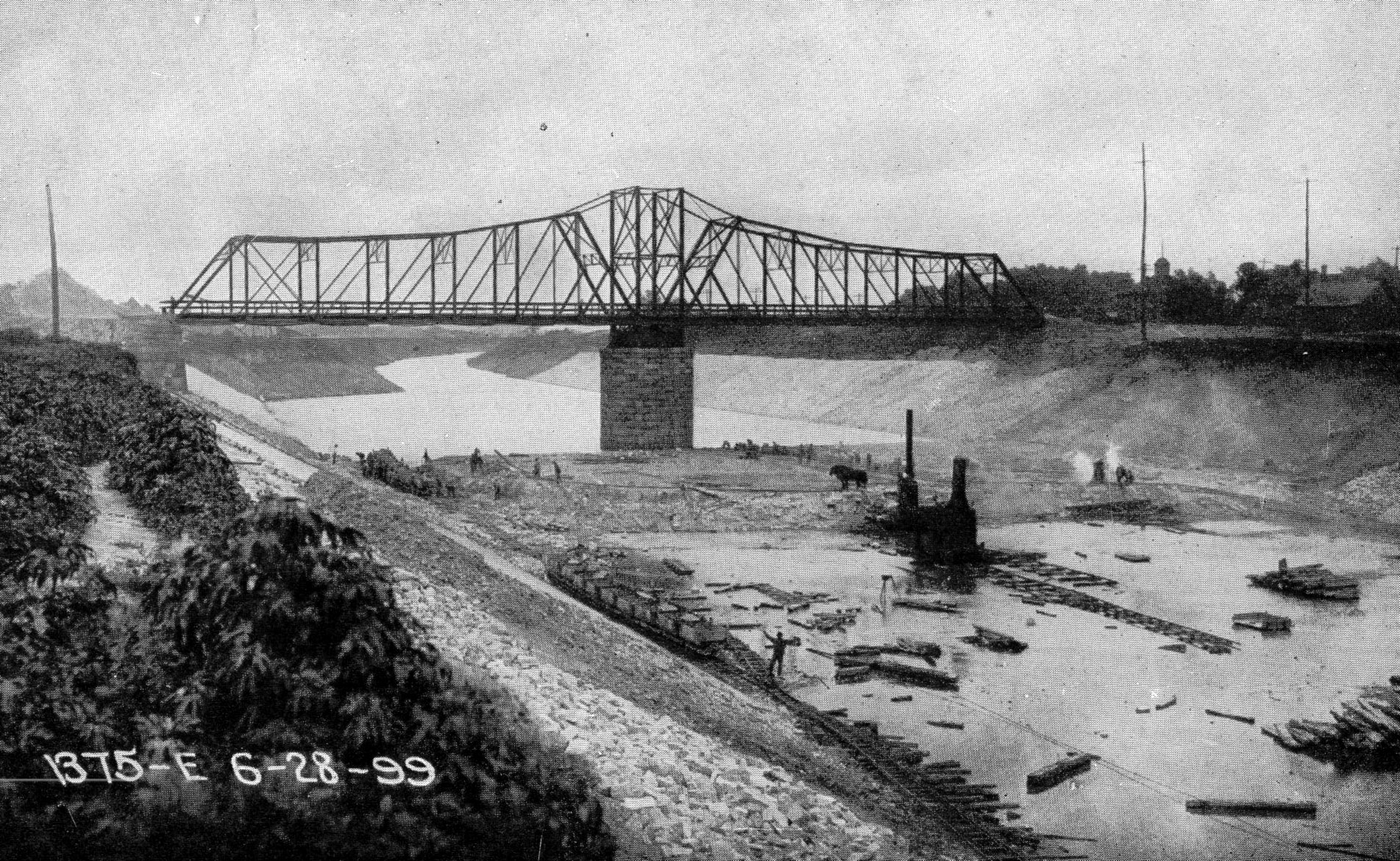
The water pollution case was Missouri v. Illinois.  In a feat of engineering prowess or incredible hubris, depending on how you look at it, Illinois had built a canal to reverse the flow of a river from Lake Michigan to the Mississippi. The canal then became a dumping place for the city’s raw sewage. Missouri claimed that the sewage was befouling the water as far away as St. Louis. The Court had long heard other law suits between states, but this was apparently the first one to involve pollution.

Chicago Drainage Canal being built (from The New Student's Reference Work (1914))

I'm not sure this was really the US Supreme Court's first pollution case - how about the Slaughterhouse Cases? In any case, Farber goes on to also discuss Georgia v. Tennessee Copper Co., an interstate air pollution case. He comments:

These two cases are little known today, but they have cast long shadows.  Very briefly, here were some of their longterm impacts:

  1. International law. This line of precedent got the attention of an international tribunal in the Trail Smelter case, which involving a Canadian smelter polluting across the U.S. border. The tribunal held that a country has a duty to prevent its inhabitants from inflicting serious harm within another country. Thus, Canada had to take responsibility for the pollution. This principle is now famous in international law as the Smelter Trail rule. In turn, that principle of international law was taken up in international concords such as the 1992 Rio Declaration on Environment and Development.

  2. Water pollution. Use of federal common law to pursue water pollution cases enjoyed a big revival in the 1960s and early 1970s. It was ended by the Supreme Court, which held that the then-new Clean Water Act took over the field of interstate water pollution in lieu of court-made rules.

  3. Climate change.  In a groundbreaking climate decision, Massachusetts v. EPA, Justice Stevens invoked this line of cases to emphasize the special interest that states have in access to the Court to protect their interests as sovereigns.  The upshot was to give states standing to sue EPA for failing to take action against carbon emissions. Also, this line of cases was repurposed  early in this century in order to bring lawsuits against major carbon emitters in federal court. The Supreme Court ultimately said that since the Clean Air Act covered climate change, lawsuits based on judge-made federal rules were no longer needed. It left open the possibility of lawsuits based on state law, and state lawsuits against oil companies are now underway.
More on the US Supreme Court and the history of environmental law here.

Tuesday, October 18, 2022

More on the Clean Water Act at 50


Legal Planet's Richard Frank posted today on the US Clean Water Act's 50th birthday. An excerpt:

The CWA as enacted a half-century ago was enormously ambitious and, with the benefit of hindsight, quite naive: in the law’s legislative findings, Congress declared that “it is the national goal that the discharge of pollutants into the navigable waters be eliminated by 1985.”  That obviously did not, and will not, happen.

Nevertheless, and with the possible exception of the Clean Air Act, no law enacted as part of the outpouring of federal environmental legislation in the 1970’s has proven more successful and transformational than the CWA.  The nation’s rivers, streams, lakes and ocean waters are dramatically cleaner and healthier than they were a half-century ago.

That’s primarily due to two key features of the CWA: first, a nationwide permit system designed to mandate aggressive application of pollution control technology to limit pollution from “point sources” such as factories and power plants.  The second feature is a massive infusion of federal funding to state and local governments to upgrade sewage treatment plants across America.

Another key element of the CWA is its incorporation of “environmental federalism” principles.  Subject to federal review and approval (and incentivized by generous federal funding), willing states were allowed to assume responsibility for administering and enforcing the CWA’s federal permit systems.  California was the first state to seek and obtain this delegation of federal CWA authority in 1972, and most–but not all–states have since done so as well.

Yet another important element of the CWA has been its incorporation of the principle of private enforcement.  In virtually all other nations, enforcement of water pollution control and other environmental laws is the sole responsibility of government regulators.  But the CWA authorizes and incentivizes private citizens and organizations to enforce the statute as well.  Today, the private enforcement model is replicated in many of the nation’s environmental laws.  But far more private enforcement actions are brought under the CWA than any other federal environmental statute.  And the number of private CWA enforcement lawsuits far exceeds those brought by federal and state regulators.

More on the history of the Clean Water Act here and here

Tuesday, October 11, 2022

Class and conservation

Recently published in the American Journal of Legal History is William B Meyer's "Class, Conservation, and the Police Power in the American Gilded Age: The Origins of Lawton v. Steele". The abstract:

The leading police power case of Lawton v. Steele, decided by the US Supreme Court in 1894, offers insight into the question of judicial class bias during the decades following the Civil War. Conflict arose in rural northern New York State over restrictions on livelihood fishing by nets imposed to protect sport angling by affluent tourists. Opposition to the restrictions was grounded in a producerist worldview and class consciousness. The matter reached the courts in a challenge to state laws permitting the summary destruction, without legal process, of nets placed illegally. Seemingly prohibited by the Fourteenth Amendment and previous case law, such destruction was upheld by a Supreme Court divided along ideological lines, correlating with the justices’ Whig or Jacksonian antecedents. The dissenters, those of Jacksonian sympathies, argued unsuccessfully against the challenged laws.

Winslow Homer, Adirondack Lake (Blue Monday) (1892)

Wednesday, September 28, 2022

The US Clean Water Act at 50

Another 50th anniversary: Legal Planet reports that the California Environmental Law & Policy Center at U.C. Davis School of Law will convene a conference to commemorate the 50th anniversary of the federal Clean Water Act on Friday, October 7th. Highlights include "a stimulating conversation between two water quality experts who were instrumental in drafting the Clean Water Act in 1972 and California’s landmark Porter-Cologne Act, the state’s comprehensive water pollution control statute that both predated and influenced the CWA."

The free, in-person conference will be held at the U.C. Davis School of Law.  Advance registration is required.


Thursday, August 25, 2022

Bounties and land-use regulation

Jack Whiteley recently posted "Property in Wolves", forthcoming in the Cornell Law Review. The abstract:

From colonial times until the mid-twentieth century, governments paid bounties to kill wolves, mountain lions, and other wild animals. Clearing the wild was a sustained legislative project. Yet interest in these statutes has remained confined to scholarship on wildlife conservation, and important insights for legal theory have gone unobserved.

Based on new research, I argue that these bounty statutes have implications for the history and theory of property. The statutes were, in their intent and effect, land use regulations. For more than three centuries, they encouraged livestock. By removing wild animals, the statutes made livestock-raising a more cost-effective use of land than it otherwise would have been for landowners. And by removing wolves and other ecologically important species, they changed the character of land in ways that diminished the value of wilder uses. The statutes chose winners among land uses, and they operated over a much longer timeframe than conventional accounts, which date land use regulation’s origin to 1916, would suggest.

The statutes also had a deeper consequence. They encouraged private property in land. Predation on livestock is the kind of “large event” that, on a famous theory developed by Robert Ellickson, makes collectively-owned land valuable. By acting to remove the threat of wild animal predation on livestock in settlement communities, governments weighted the scale toward privately-owned, fee-simple land regimes. This discovery raises questions for a popular normative justification for private property in land.

The Article finally offers thoughts as to why animal eradication was such a pronounced public policy. The phenomenon suggests the influence of cultural preferences on property regimes.

Note: Apparently bounties are still with us, as can be seen in the recent poster below. 

(Boise State Public Radio)