Showing posts with label Progressive Era. Show all posts

Tuesday, October 11, 2022

Class and conservation

Recently published in the American Journal of Legal History is William B Meyer's "Class, Conservation, and the Police Power in the American Gilded Age: The Origins of Lawton v. Steele". The abstract:

The leading police power case of Lawton v. Steele, decided by the US Supreme Court in 1894, offers insight into the question of judicial class bias during the decades following the Civil War. Conflict arose in rural northern New York State over restrictions on livelihood fishing by nets imposed to protect sport angling by affluent tourists. Opposition to the restrictions was grounded in a producerist worldview and class consciousness. The matter reached the courts in a challenge to state laws permitting the summary destruction, without legal process, of nets placed illegally. Seemingly prohibited by the Fourteenth Amendment and previous case law, such destruction was upheld by a Supreme Court divided along ideological lines, correlating with the justices’ Whig or Jacksonian antecedents. The dissenters, those of Jacksonian sympathies, argued unsuccessfully against the challenged laws.

Winslow Homer, Adirondack Lake (Blue Monday) (1892)

Wednesday, February 17, 2021

The conservation constitution

A recent issue of Perspectives on Politics has a review by Richard Andrews of Kimberly K. Smith's The Conservation Constitution: The Conservation Movement and Constitutional Change, 1870–1930 (University Press of Kansas, 2020). Andrews writes that while existing works on the history of US conservation policy "focus on the policies expressed in statutes and regulations and on the actions of the administrative agencies, with only limited mention of the legal and constitutional arguments that were battled out in the courts", Smith's book "provides a valuable new complement to these studies by presenting a far more detailed history of the legal and constitutional arguments presented to and ultimately decided by the courts during the period from 1870 to 1930". Andrews continues:

Smith’s primary aim, well summarized in the final chapter (pp. 254ff.), is “to explain how lawyers and judges reworked constitutional doctrine to accommodate the expansion of state power over the natural environment during the Progressive era; and more specifically, how legal decisionmakers conceptualized the natural environment, its relation to human society, and the public interests at stake to create the constitutional ‘common sense’ that federal and state governments have authority to protect natural resources and the integrity of ecosystems in the interest of future generations.” In the process, she discusses the interweaving of principles such as the public trust doctrine, the police power, public nuisance doctrine, parens patriae standing, the interstate compacts clause, and federal constitutional arguments based on the interstate and foreign commerce, property, war, treaty, spending, and eminent domain powers, as well as the interstate nuisance doctrine. She argues that even though many of these issues continue to be argued in the modern era, the sheer number of these constitutional foundations, once accepted by the courts, has ultimately made governmental environmental management authority strongly resilient to challenges. She also urges greater recognition of the roles of skilled lawyers and judges, along with the better-known politicians and citizen advocates, in achieving this stronger role for the state in environmental conservation. Finally, she notes the continuing need for further evolution of our understanding of the Constitution: the Progressive understanding did not address the distributive imperfections of environmental regulation, nor the implications of administrative processes for procedural justice, nor—perhaps most problematic today—the absence of effective capacity for national economic and environmental planning, particularly in international cooperation to address global environmental challenges such as climate change. 

 After some minor criticisms, Andrews adds: 

Wednesday, October 2, 2019

Was the Lochner Court pro-environmental?

Justices of the US Supreme Court, c. 1925
In a recent post at Legal Planet, Dan Farber writes about "pro-environmental" decisions of the US Supreme Court in the Lochner era (roughly 1900-1935), on a wide range of topics: nuisance, takings, wildlife conservation, and public lands. Farber writes that "it is somewhat startling to see just how often the famously conservative Court of that time took the side of environmental protection."

Farber's post raises a host of questions:
Are these cases representative?
"Lochner revisionism" has been in full swing for a while now - does a pro-environment stance support either the traditional or the revisionist view of the era?
Are the legal doctrines invoked in the environmental cases at odds with those behind the court's decisions in areas such as labor law?
Could analyses of the court's opinions based on class, economics, or cultural factors explain the supposed discrepancies? And so on.

Farber adds a postscript:
After this was posted, I learned that Professor Kimberly Smith at Carleton College has actually written a book on the subject, which will appear in October from Kansas University Press.  As she told me, The Conservation Constitution traces how, between 1870 and 1930, the conservation movement reshaped constitutional doctrine to support expanded state and federal authority to protect natural resources. In striking contrast to the usual “Lochner Era” story, she finds that the federal courts during this period were largely supportive of conservation policy. She argues that this favorable attitude owes a great deal to the scientific reputation of the USDA and the talented group of lawyers supporting conservation policy.  I’m eagerly looking forward to reading the book.
So am I.

Wednesday, October 7, 2015

Antimonopoly in Public Land Law

Michael Blumm and Kara Tebeau recently posted "Antimonopoly in Public Land Law". The abstract:
Public land law is often thought to be divided into historical eras like the Disposition Era, the Reservation Era, and the Modern Era. We think an overarching theme throughout all eras is antimonopoly. Since the Founding, and continuing for over two-and-a-quarter centuries into the 21st century, antimonopoly policy has permeated public land law. In this article we show the persistence of antimonopoly sentiment throughout the public land history, from the Confederation Congress to Jacksonian America to the Progressive Conservation Era and into the modern era. 
Antimonopoly policy led to widespread ownership of American land, perhaps America’s chief distinction from England and Europe. The policy fostered acreage limits in federal grants, a preference for bona fide settlers, and eventually an evolution from land sales to free land under the Homestead Act. Antimonopoly principles were also present in public timber, mining, and rangeland policies from the earliest days. In the Progressive Conservation Era antimonopoly fueled a public land withdrawal and reservation movement, landmark leasing and licensing programs that maintained public control over fuel minerals and waterways, and the first explicit federal policy concern over future generations. The modern era has seen the codification of multiple use management, the enactment of comprehensive land planning statutes, and the rise of multi-species concerns, among other antimonopoly policies.
Although antimonopoly policies seem to be under some threat from recent Congresses, a turn toward monopoly would amount to a renunciation of centuries of public land policy. This history strongly counsels against such these proposals as, however imperfectly realized on-the-ground, antimonopoly has been always been cardinal feature of public land law and policy and is deeply embedded in the nation’s identity as a reflection of republican values of individualism and equal opportunity.
More on antimonopoly in American natural resource law here.

Saturday, September 6, 2014

Public utility, past and future

William Boyd recently posted "Public Utility and the Low Carbon Future", in which an interesting historical survey of the concept of public utility in Progressive, American thought serves as the backdrop for discussion of future climate policy. The historical part of the article connects the law of utility regulation to the thought of the American Legal Realists, institutional economists, and pragmatists. From the abstract:
This Article argues that a revitalized and expanded notion of public utility has a critical role to play in efforts to decarbonize the power sector in the United States.
PECO Delaware River Power Plant
In making this argument, the Article looks back to an earlier, more expansive concept of public utility as articulated by Progressives, legal realists, and institutional economists in the early twentieth century. This earlier concept of public utility contains valuable insights for dealing with the current challenges of decarbonization. The Article shows how this broader concept of public utility was substantially diminished by a confluence of external challenges and a sustained intellectual assault mounted by economists and lawyers starting in the 1960s. The narrowed understanding of public utility that resulted, it is argued, has distorted our views regarding the role of markets and disruptive technologies in the sector. In fact, basic public utility principles continue to govern a significant amount of activity across the power sector, including in both wholesale and retail electricity markets. And there are important unrealized possibilities embedded within the public utility concept that hold considerable promise for reforming current regulatory and business models in the face of rapid technological change and growing decarbonization imperatives.
Such principles and possibilities are particularly important in ongoing efforts to increase renewable energy and finance large low-carbon generation projects. They also hold great promise for ongoing efforts to plan for and optimize the integration of increasingly large amounts of distributed energy resources such as rooftop solar, demand response, and energy storage. Indeed, when one looks at the overall scale, complexity, and sequencing of investments needed to decarbonize the power sector over the coming decades (however it comes to be organized), it is clear that the broad concept of public utility offers essential tools for planning and coordinating such investments over the long time horizons contemplated and for managing a system of increasing complexity.

Wednesday, May 21, 2014

The history of public lands, the other way around now

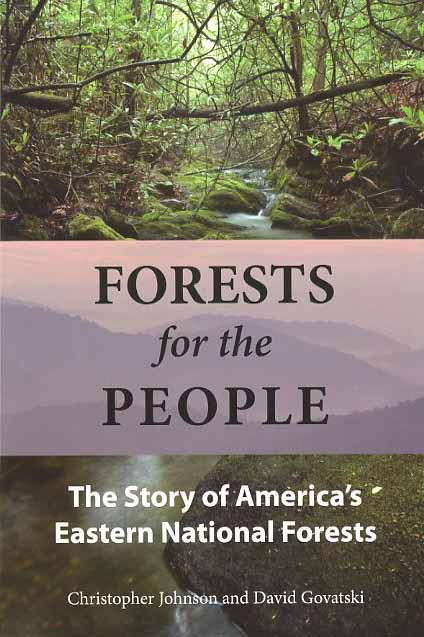
Yesterday's post raised the issue of privatizing public lands. Today's is on the transformation of private lands to public. The latest Environmental History has a book review by Sara Gregg of Forests for the People: The Story of America's Eastern National Forests by Christopher Johnson and David Govatski (Island Press, 2013). Gregg writes that the book:
traces the evolution of new ideas about conserving the eastern forests and their watersheds, and it provides an informative history of the conservation movement, the move to pass the 1911 Weeks Act, and the process of creating the eastern national forests. While the authors overstate the role of public advocacy in early forest conservation a bit, this section captures the fascinating evolution in federal land policy that led Congress to fund the reacquisition of eastern forests in order to protect vulnerable landscapes and regionally important watersheds. It is useful, especially so near to the hundredth anniversary of this landmark conservation law, to reflect on the process by which private lands once again entered the public domain, as well as on the long-term consequences of increased federal oversight.

Saturday, April 26, 2014

Flood control and soil conservation districts

Despite it's future-leaning title, Jerrold Long's "Making ‘Conservation’ Work for the 21st Century – Enabling Resilient Place" has quite a lot of discussion of the history of environmental sensibility and land-use regulation in the US. The abstract:
During the New Deal, as part of a larger effort implementing Progressive-era “conservation” regimes, the federal government authorized the structurally-invasive Flood Control Act of 1936. At the same time, the Standard State Soil Conservation Districts Law promoted the creation of local, place-based efforts to protect or restore locally-valued resources. “Conservation” thus came to signify both the invasive, structural, engineering approach of mid-20th Century flood control, and the local, more responsive and flexible nature of soil conservation districts. But our understandings of our place in the natural world have changed subtly but significantly over the past century. Any legitimate natural resource regime must achieve its resource management goals while balancing its demands with local cultural expectations, which now generally include some desire to protect the natural environment. This article argues – using a case study focused on a small flood control district – that local conservation districts can be used to implement 21st-Century understandings of “conservation” that more accurately reflect local culture and needs. These locally-driven and place-based conservation efforts can improve and protect the aesthetic, health, ecological, and economic resources of a particular landscape, even as they manage that landscape – in part – to satisfy human needs. A system succeeding on all goals would be truly socio-ecologically resilient, promoting resilient ecosystems, a resilient local culture and economy, and a resilient local legal system – together creating a resilient place.